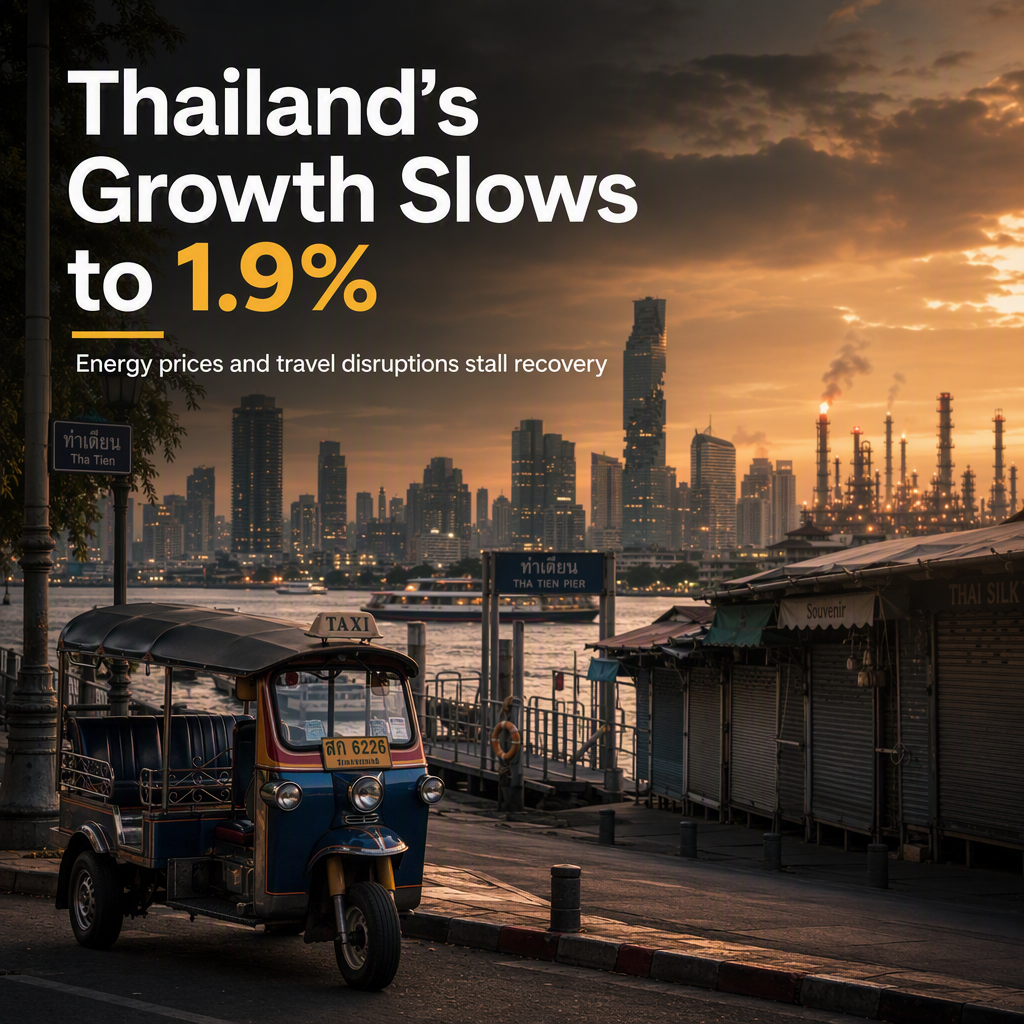
Thailand's economy grew by 1.9% year-on-year in the April-June quarter of 2026, according to official data released on Monday. This marks a slowdown from the 2.8% growth recorded in the previous quarter, with the deceleration attributed to higher energy prices that dampened consumption and disruptions in travel caused by the ongoing conflict in the Middle East [1].
The number of visitors to Thailand declined in the first seven months of 2026, further impacting the country's economic performance. Tourism, a key sector for Thailand, has been particularly affected, underscoring the nation's vulnerability to external shocks and fluctuations in global energy prices [1].
Thailand is not alone in facing these challenges, as four out of six major ASEAN economies also reported weaker expansion during this period, largely due to the war in Iran and its ripple effects on the region [1].
No forward-looking statements, analyst opinions, or market reactions were provided in the article [1].
CONCLUSION
Thailand's Q2 GDP growth slowdown to 1.9% reflects the country's exposure to global energy price volatility and external shocks, particularly in the tourism sector. The decline in visitor numbers and broader regional weakness highlight ongoing economic challenges for Thailand and its ASEAN peers.