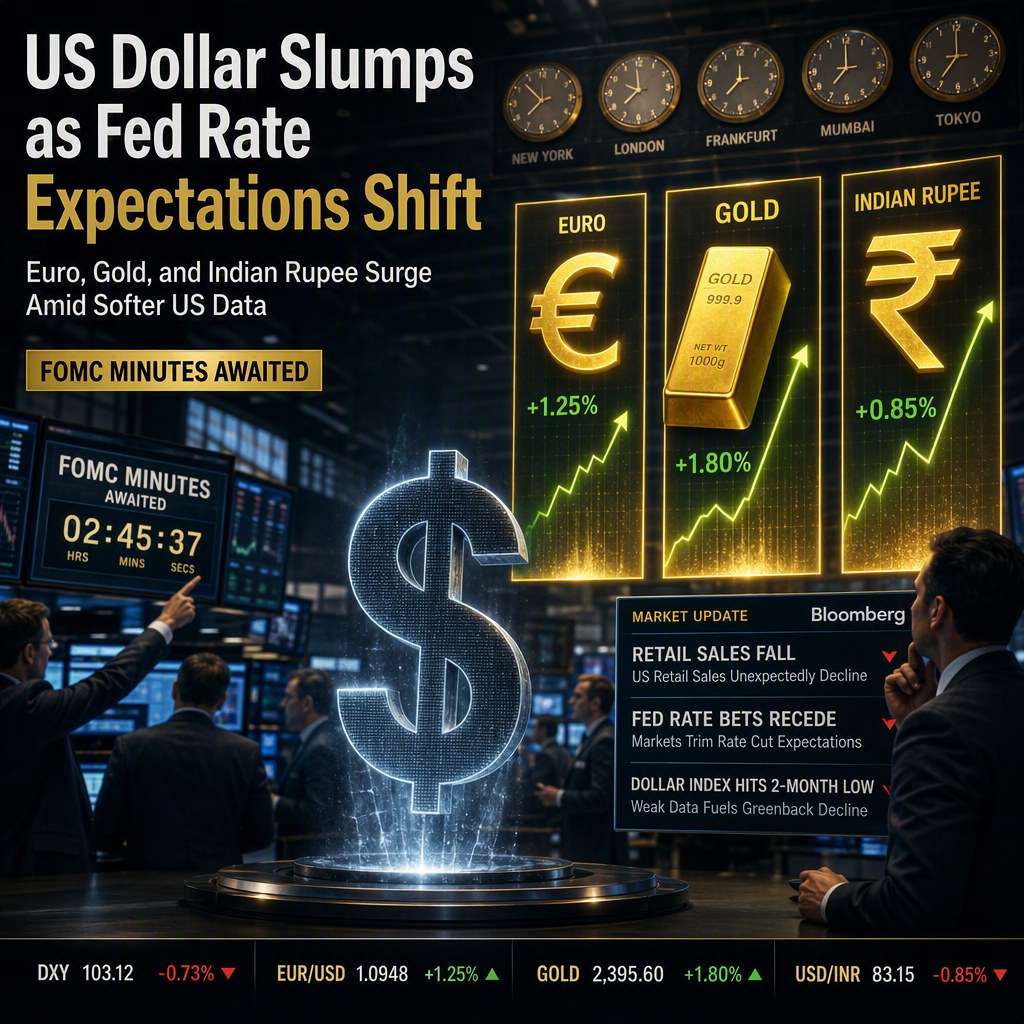
Recent US economic data has triggered a broad weakening of the US Dollar (USD), with significant implications across major asset classes. The Euro (EUR/USD) rallied to a two-month high during the Asian session, building on last week's bounce from the 1.1500 mark and now eyeing a move beyond the 1.1600 round figure. This momentum is attributed to the USD Index (DXY) languishing near the lower end of its monthly range, following Friday's US Census Bureau report that Retail Sales fell 0.6% in July—the biggest monthly drop since May last year—signaling a slowdown in consumer spending and moderating price pressures. Strategists at Scotiabank note the steepening US 2/30s yield curve, which has reached 108bps, as a further headwind for the USD, reinforcing their view that near-term risks are geared towards the DXY slipping back to the mid-98 area [1].
Gold (XAU/USD) has also benefited from the weaker USD, building on Friday's bounce from the $4,300 neighborhood and remaining close to its highest level since June 5. The commodity, however, struggles to break decisively above the $4,400 mark amid mixed fundamental cues. The drop in US Retail Sales and a dip in the University of Michigan's Consumer Sentiment Index to 51 in August from 55.2 in July have further tempered expectations for an immediate Fed rate hike. Despite this, volatile energy prices and persistent geopolitical uncertainties—including the US-Iran standoff and fresh Ukrainian attacks on Russian refineries—are keeping inflation fears alive and capping gold's upside. According to CME Group's FedWatch Tool, traders are pricing in around a 65% chance that the Fed will raise borrowing costs by the end of this year, warranting caution for USD bears and gold bulls as the market awaits the FOMC Minutes on Wednesday [3].
The Indian Rupee (INR) has traded stronger against the USD after two days of losses, with the USD/INR pair around 95.50. The Reserve Bank of India (RBI) announced an early closure of its FX swap facility for FCNR deposits, which successfully attracted nearly $57 billion. Market traders expect USD/INR to fluctuate between 95.00 and 95.50 this week, with a potential short-term rush among overseas clients before the facility closes on August 31. Analysts project that the RBI will either initiate a shallow rate-hiking cycle starting in December or maintain its pause across the remainder of 2026. India's inflation remains contained, with headline CPI edging up to 4.45% year-over-year in July from 4.38% in June, supporting the RBI's steady policy stance. The USD/INR pair holds losses as the USD declines amid weaker US data and shifting central bank expectations, with markets now pricing in a 33.1% chance of a Fed rate hike next month, down from 44% last week [2].
Across all sources, the market focus is now shifting to the release of FOMC Minutes on Wednesday, which will provide further cues about the Fed's future policy path and influence USD price dynamics. The fundamental backdrop suggests that the path of least resistance for the Euro and Gold remains to the upside, while the Indian Rupee may face challenges as the RBI's FX swap facility closes and global flows adjust [1][2][3].
CONCLUSION
The US Dollar has weakened across the board as receding Fed rate hike bets, driven by softer US economic data, have boosted the Euro, Gold, and Indian Rupee. Market participants are now awaiting the FOMC Minutes for further guidance on the Fed's policy outlook. The prevailing sentiment favors continued USD weakness, but geopolitical risks and inflation concerns may temper aggressive moves in the near term.