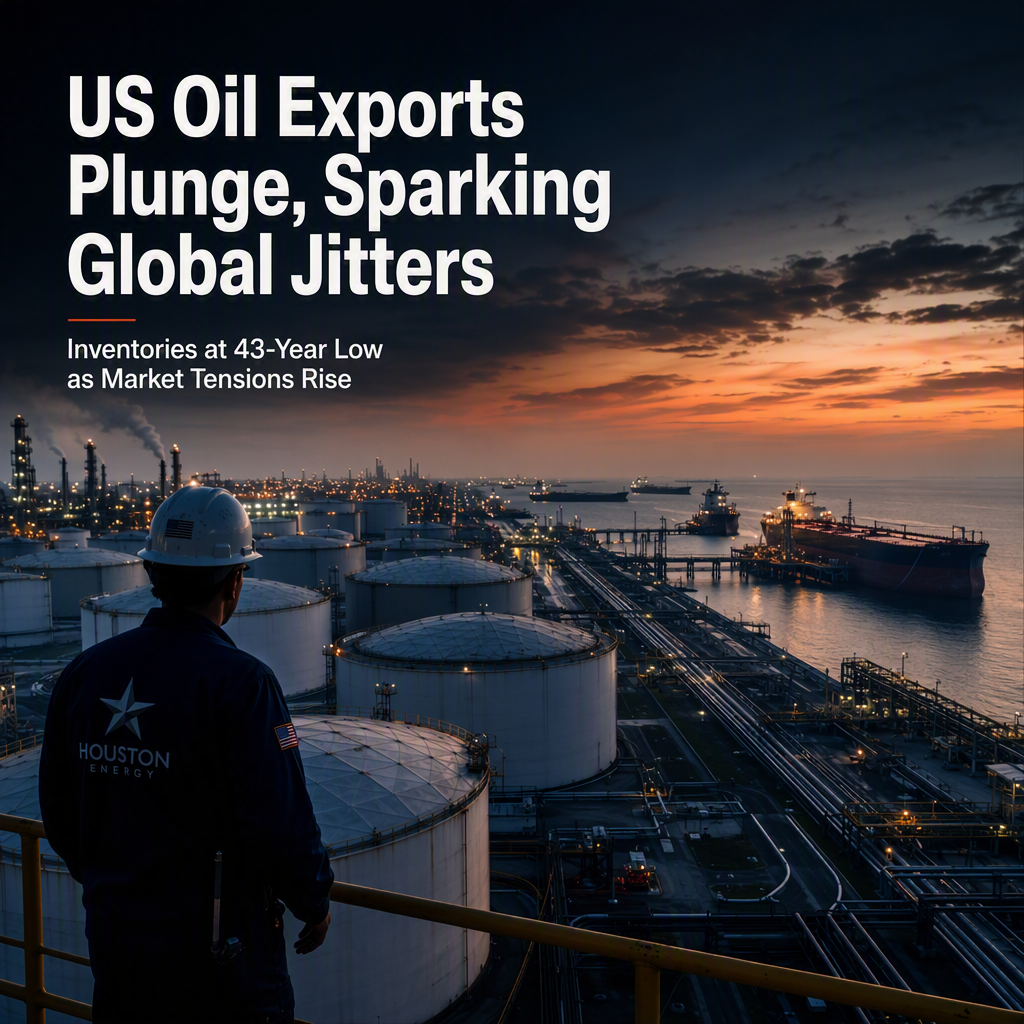
U.S. crude oil exports have experienced a significant decline as the country grapples with stretched inventories and flat production levels, a situation exacerbated by ongoing uncertainty surrounding the Iran conflict [1]. This drop in exports is particularly impactful for importers such as Japan, which had increasingly relied on U.S. crude as an alternative to Middle Eastern supplies [1]. The current market tightness is attributed to both stagnant domestic output and the depletion of the Strategic Petroleum Reserve (SPR), which has reached its lowest level in 43 years following policy decisions aimed at curbing high gasoline prices ahead of the U.S. midterm elections [1].
The reduction in U.S. oil exports has heightened volatility and supply risk for global importers, with analysts warning that the ability to maintain stable exports will depend on resolving geopolitical tensions and achieving a rebound in U.S. production [1]. Market participants are closely monitoring inventory data and production forecasts, as any further tightening could drive oil prices higher [1]. One Houston-based energy analyst emphasized the precarious position of the U.S., stating, "The U.S. is walking a tightrope between supporting allies with energy exports and maintaining sufficient reserves at home. With inventories at historic lows and production flat, any additional disruption could send prices sharply higher" [1].
Traders are also focusing on key technical levels for West Texas Intermediate (WTI) crude, with resistance noted near recent highs. A breakout above these levels could trigger further buying momentum, while any signs of inventory builds or increased production may offer some relief to the market [1].
CONCLUSION
The sharp decline in U.S. oil exports, driven by low inventories and flat production, is creating significant uncertainty and risk in global energy markets. With the Strategic Petroleum Reserve at a 43-year low and geopolitical tensions unresolved, market participants are bracing for potential price spikes and increased volatility.