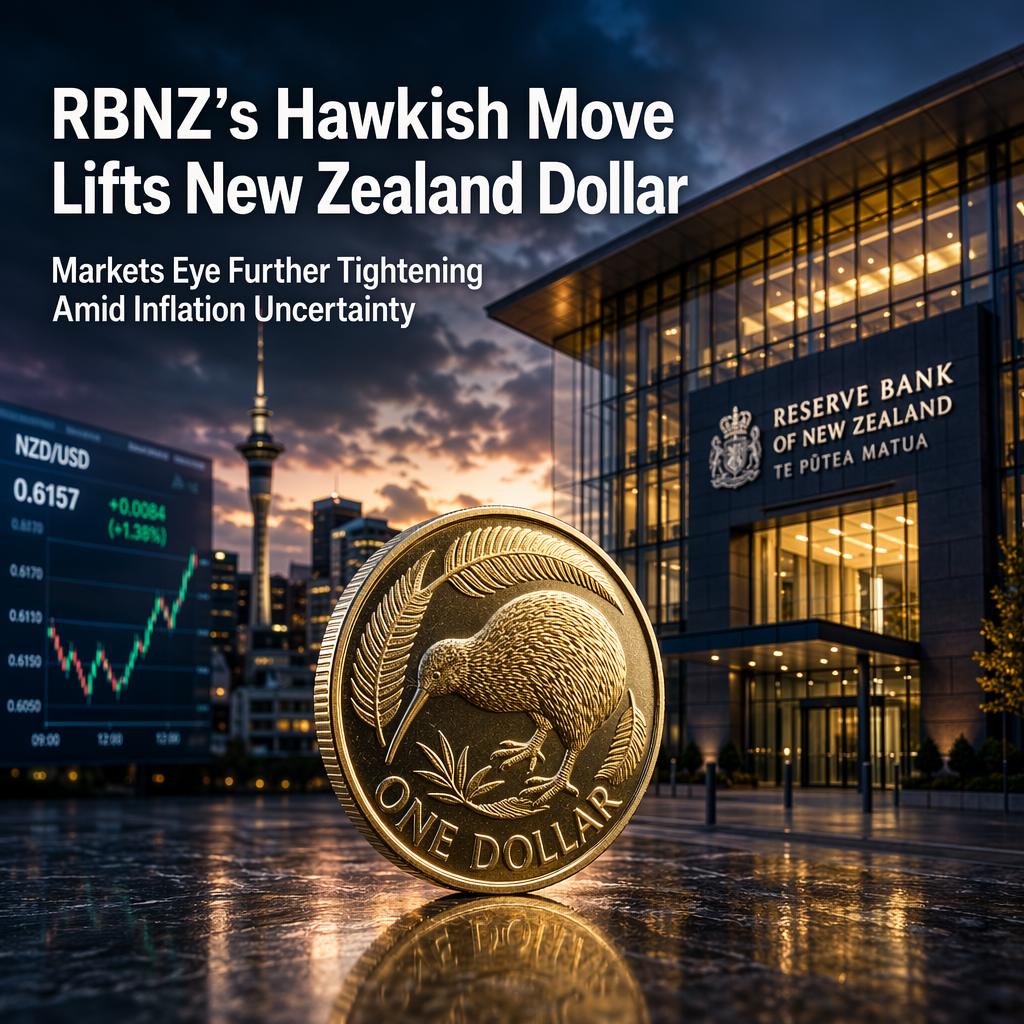
The Reserve Bank of New Zealand (RBNZ) raised its official cash rate by 25 basis points to 2.50%, a move that was in line with ING's forecast and market expectations [1]. According to ING’s Francesco Pesole, the central bank's accompanying statement was more hawkish than anticipated, with the RBNZ indicating that further rate hikes 'appear likely at upcoming meetings,' although the exact timing remains 'highly uncertain' [1]. The RBNZ emphasized persistent non-tradable inflation, which has been a concern even prior to recent global events [1].
The decision was reached by consensus within the Committee, as reflected in the meeting minutes, which did not record any dissenting votes. Pesole notes that while some members may have preferred to hold rates, the lack of dissent suggests a desire to maintain the market’s hawkish expectations [1]. Market pricing, as indicated by OIS-embedded expectations, points to an additional 38 basis points of tightening by the end of the year [1].
ING maintains its forecast for another rate hike around September or October, but highlights that risks are skewed to the dovish side. The analysis suggests that a delay in further tightening is more likely than two additional rate increases, especially as the next set of projections is expected to show inflation returning to target by mid-2027 [1].
Following the rate hike, the New Zealand dollar (NZD) experienced a rally, which ING believes is more sustainable in the near term than previously anticipated. However, the report cautions that dovish risks may become more apparent later in the year, and ING continues to target a NZD/USD exchange rate of 0.59 by year-end [1].
CONCLUSION
The RBNZ's hawkish rate hike has provided near-term support for the New Zealand dollar, with markets now expecting further tightening. However, ING highlights that dovish risks remain, and a delay in additional hikes is possible as inflation is projected to return to target by mid-2027. The overall market takeaway is cautiously optimistic for the NZD in the short term, but with potential headwinds later in the year.