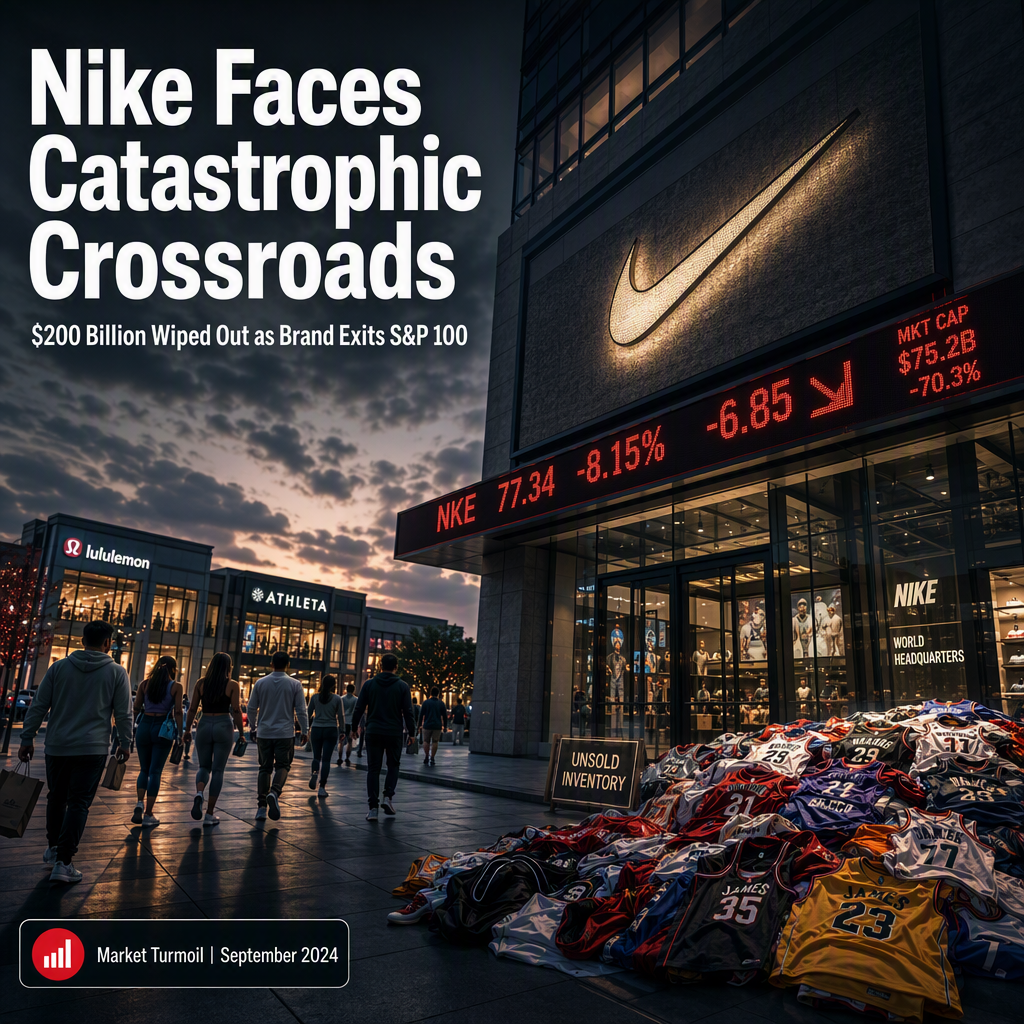
Nike is facing a significant downturn, with its stock set to be removed from the S&P 100 index effective September 21 after an 18-year tenure, following a decline that has erased approximately $200 billion from its market capitalization [1]. The company has been widely criticized online for releasing what many perceive as a low-effort series of NBA jerseys, contributing to its negative public image and stock performance [1]. On the 'Don't @ Me' show, commentators Dan Dakich, Dan Zaksheske, and Jason Hammer discussed several factors behind Nike's struggles. Zaksheske attributed the decline to complacency, likening Nike's situation to Disney and suggesting the company is 'resting on their laurels' and failing to innovate [1]. Hammer highlighted Nike's strategic misstep in alienating retailers by attempting to shift directly to consumers, a move that backfired as post-COVID shoppers preferred in-store experiences, and Nike's displays were absent [1]. Dakich pointed to increased competition from brands like Athleta and Lululemon, which are thriving, and suggested Nike has lost touch with female consumers, a key demographic, stating, 'Women have said, 'Bulls---, don't insult us'... it is freaking women, and (Nike) p----d them off' [1]. The panel agreed that Nike is at a 'catastrophic crossroads' and must undertake significant introspection and strategic changes to regain its former market leadership [1]. No specific analyst forecasts or forward-looking statements were provided, but the sentiment was that only time will determine if Nike can recover [1].
CONCLUSION
Nike's removal from the S&P 100 and massive market cap loss underscore deep-rooted issues in strategy, innovation, and consumer engagement. The company's challenges with retailer relationships and competition, particularly among female shoppers, have contributed to its current predicament. Market sentiment is strongly negative, and Nike faces urgent pressure to address these concerns if it hopes to reclaim its position in the athletic apparel industry.