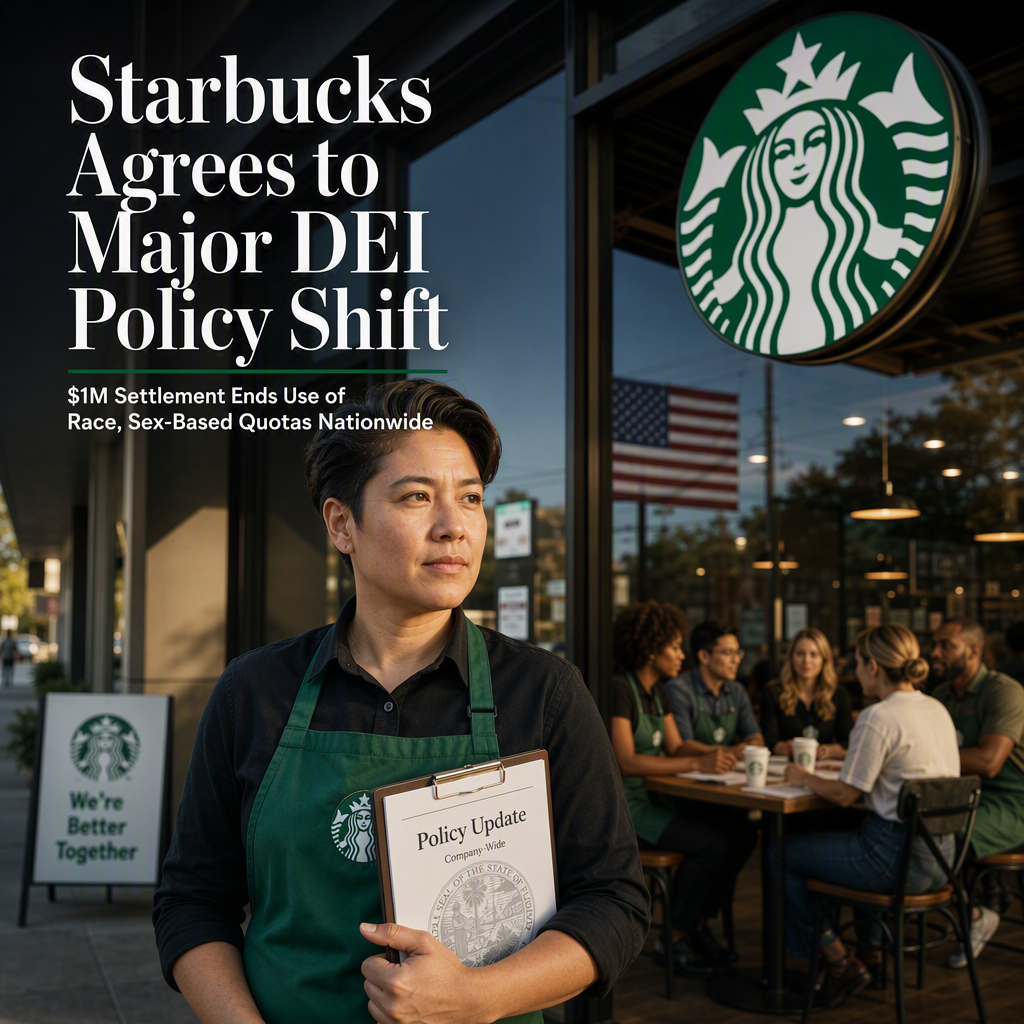
Starbucks has reached a nationwide settlement with the state of Florida, resolving a civil rights lawsuit that accused the coffee company of using race- and sex-based goals, quotas, and preferences in its employment practices. As part of the agreement, Starbucks will pay $1 million to the Florida Department of Legal Affairs and will discontinue the use of race- and sex-based criteria in hiring, promotions, pay, executive compensation, mentorship programs, supplier selection, and board composition across all its U.S. operations [1].
The settlement, confirmed by Florida Attorney General James Uthmeier's office, applies to all Starbucks locations nationwide, not just those in Florida. Starbucks also agreed not to participate in organizations that require increased racial diversity on its board of directors. The company’s chief legal officer must submit annual certifications of compliance with Florida’s civil rights law for the next four years [1].
The lawsuit, filed in December 2025, alleged that Starbucks’ diversity, equity, and inclusion (DEI) initiatives had evolved into discriminatory practices, citing 2020 company goals to have people of color fill 40% of retail and manufacturing jobs and 30% of corporate positions by 2025. The complaint also claimed that, prior to March 2024, executive bonuses were tied to diversity goals and that some employees were paid more than others of the same experience and skills based on race [1].
Starbucks resolved the matter without admitting any liability or wrongdoing. Pilar Ramos, Starbucks’ executive vice president and chief legal officer, stated, “We’re pleased to have resolved this matter without admission of wrongdoing and appreciate the constructive engagement of the Attorney General’s Office throughout this process. We will continue to focus on offering great jobs and career opportunities to our partners... while making a positive impact on the communities we serve in Florida and around the world” [1].
CONCLUSION
The settlement marks a significant shift in Starbucks’ employment practices, as the company agrees to end race- and sex-based goals and quotas nationwide and pay $1 million to resolve the lawsuit. While Starbucks did not admit wrongdoing, the agreement signals increased scrutiny of corporate DEI initiatives and may influence similar cases or policies in the future.