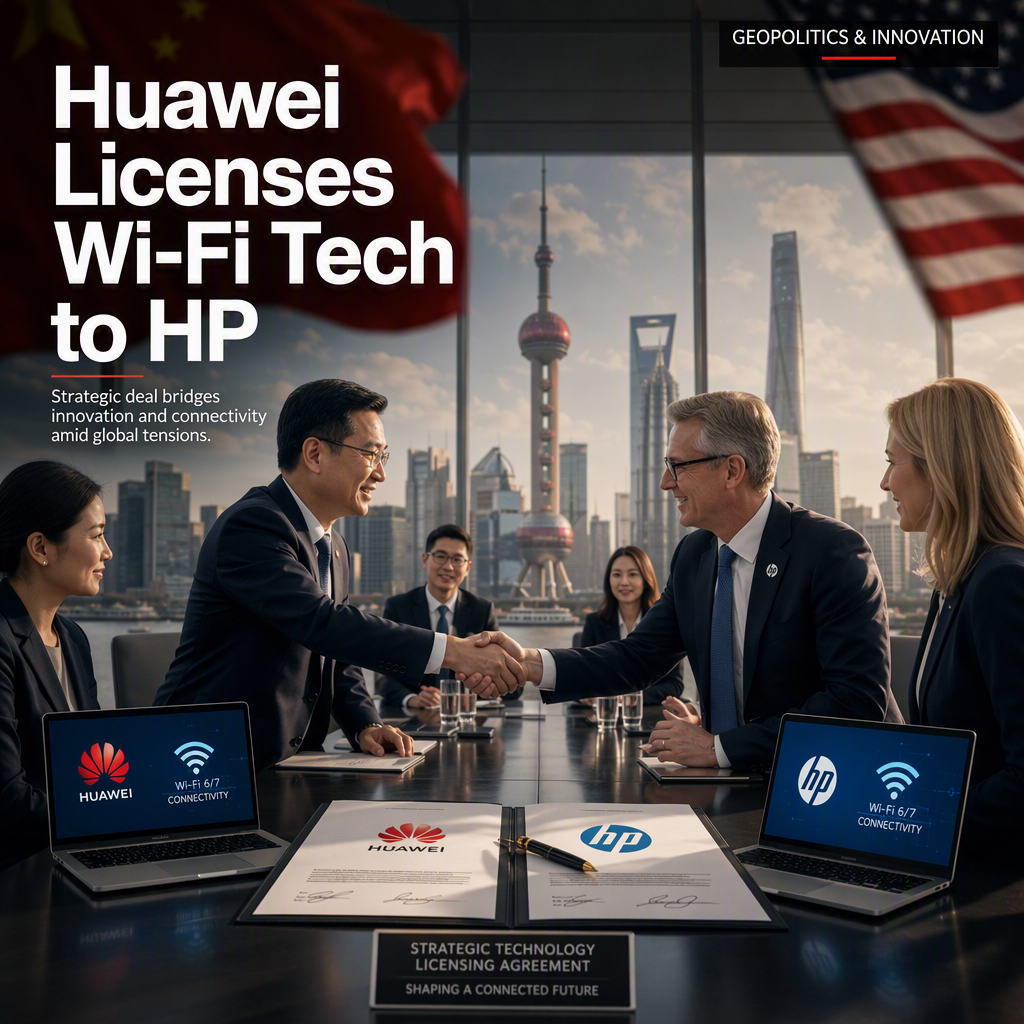
Chinese technology giant Huawei has entered into a multi-year licensing agreement with HP, granting the U.S. computer maker access to key connectivity technologies for use in computers and other electronic peripherals sold globally [1]. The deal is positioned as a significant milestone for Huawei in its ongoing strategy to monetize intellectual property and expand its global footprint, particularly as it faces continued scrutiny from U.S. authorities [1]. The timing of the agreement is notable, coming just ahead of a scheduled meeting between U.S. President Donald Trump and Chinese leader Xi Jinping, highlighting the importance of technological collaboration amid ongoing geopolitical tensions [1].
The specific Wi-Fi technologies licensed are expected to enhance HP's product offerings worldwide, potentially improving performance and compatibility with future wireless standards [1]. Financial terms of the agreement were not disclosed [1]. Industry analysts suggest that this move could signal a shift in the technology landscape, with intellectual property licensing becoming increasingly critical for cross-border business, especially as U.S.-China relations remain uncertain [1].
Market sentiment is generally positive, as both companies stand to benefit: HP gains access to advanced connectivity solutions, while Huawei strengthens its presence in Western markets [1]. Analysts also note that companies able to secure such agreements may enjoy competitive advantages in innovation and product differentiation [1].
CONCLUSION
Huawei's licensing deal with HP marks a strategic step for both companies, enhancing HP's product capabilities and expanding Huawei's influence in Western markets. The agreement underscores the growing importance of intellectual property licensing amid geopolitical uncertainty, with market sentiment leaning positive for firms able to secure such cross-border partnerships.