
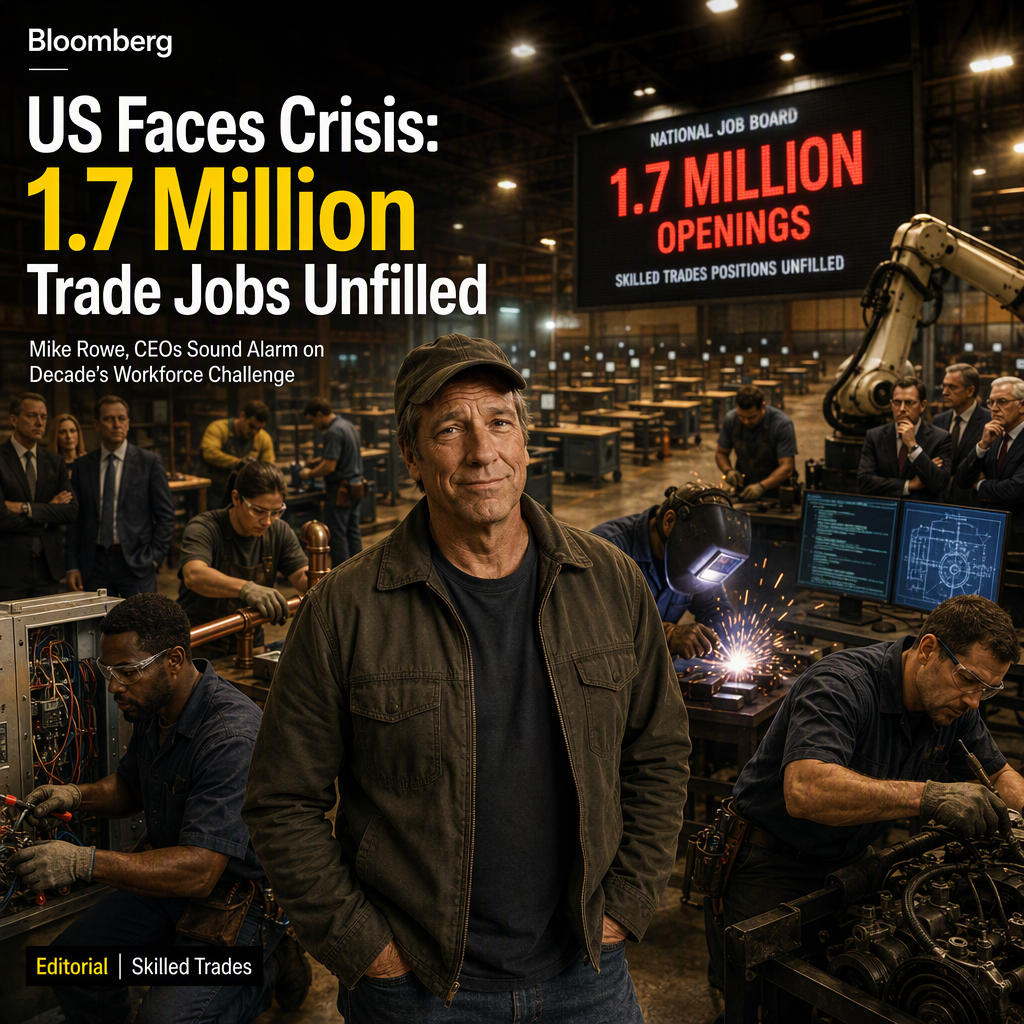
Mike Rowe, CEO of the mikeroweWORKS Foundation, appeared on FOX Business' 'Varney & Co.' to address the escalating skilled labor gap in the United States, emphasizing its status as the 'problem of the decade' [1]. According to a national report from the Alliance for America’s Skilled Trades, the U.S. is projected to have approximately 1.7 million skilled trades job openings each year through 2035, while current training programs are only producing about 55 workers for every 100 needed [1]. Rowe noted that the shortage is not uniform across all occupations or states, but the issue is broadly affecting dozens of trades nationwide [1].
Rowe shared that corporate leaders are increasingly concerned, with CEOs regularly reaching out to him about workforce challenges. He stressed that the problem will persist unless approached differently, stating, 'This workforce thing is the problem of the decade, and it's not gonna go away until we come at it from a different angle' [1]. He also highlighted that skilled trade workers in data centers can earn six-figure salaries, underscoring the lucrative opportunities available in these fields [1].
Attitudes toward trade careers are reportedly shifting, influenced by the rising costs of four-year degrees and apprehensions about artificial intelligence's impact on the job market. Rowe observed a significant increase in demand for trade training through his foundation, noting a tenfold rise compared to the same period last year, and suggested that AI is a contributing factor to this change [1].
While the article does not provide specific market reactions or analyst forecasts, the data and commentary suggest that the skilled labor shortage could have substantial implications for industries reliant on trades, potentially affecting infrastructure development and maintenance [1].
CONCLUSION
The U.S. skilled trades sector faces a critical labor shortage, with demand far outpacing supply and growing concern among major employers. Shifting attitudes toward trade careers and the influence of AI are driving increased interest in training programs, but the gap remains significant. This ongoing shortage is likely to impact infrastructure and related industries unless addressed with new strategies.