
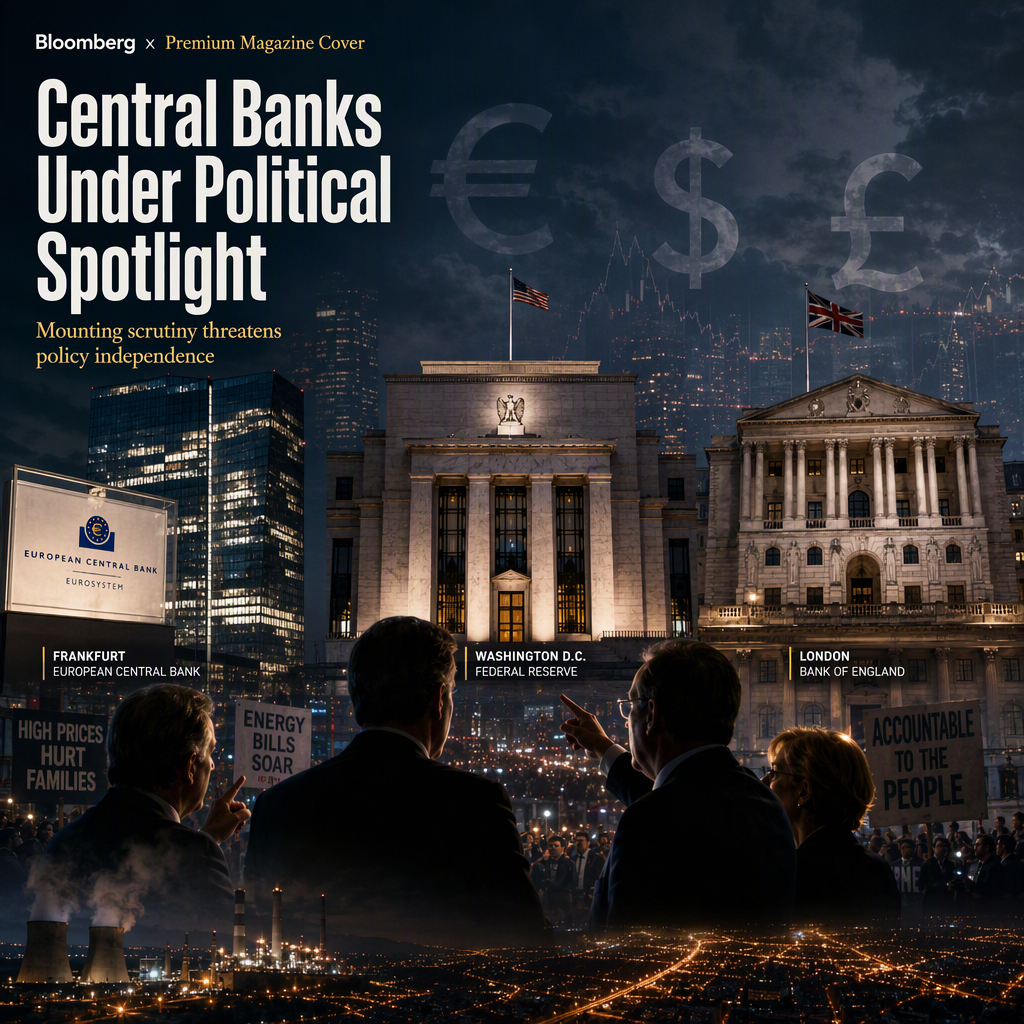
Rabobank’s RaboResearch Global Economics & Markets highlights that central banks, including the European Central Bank (ECB), the Federal Reserve (Fed), and the Bank of England (BOE), are experiencing increased political scrutiny and pressure regarding their roles in the political economy [1]. In Europe, Prime Minister Meloni has reportedly urged European Commission President von der Leyen to permit countries to exceed spending limits to address the ongoing energy crisis. The ECB is expected to monitor these developments closely due to their potential impact on inflation [1].
In the United States, former Fed Chair and current FOMC voter Powell was cleared of criminal misconduct related to $2.5 billion in renovations of the Fed building. However, the investigation identified 'deficiencies' in his project leadership, raising questions about the appropriateness of such oversight for a significant role and budget [1].
In the United Kingdom, former Prime Minister Truss reiterated in an interview her claim that she was ousted from office by a 'liberal deep state' that included the Bank of England, which she had previously threatened to reform [1].
The report suggests that these developments indicate central banks are under mounting political pressure, which could potentially lead to changes in their roles or mandates [1].
CONCLUSION
Central banks in Europe, the US, and the UK are facing heightened political scrutiny and calls for potential reforms. These pressures may influence future policy decisions and the operational independence of central banks, with possible implications for inflation and economic stability.