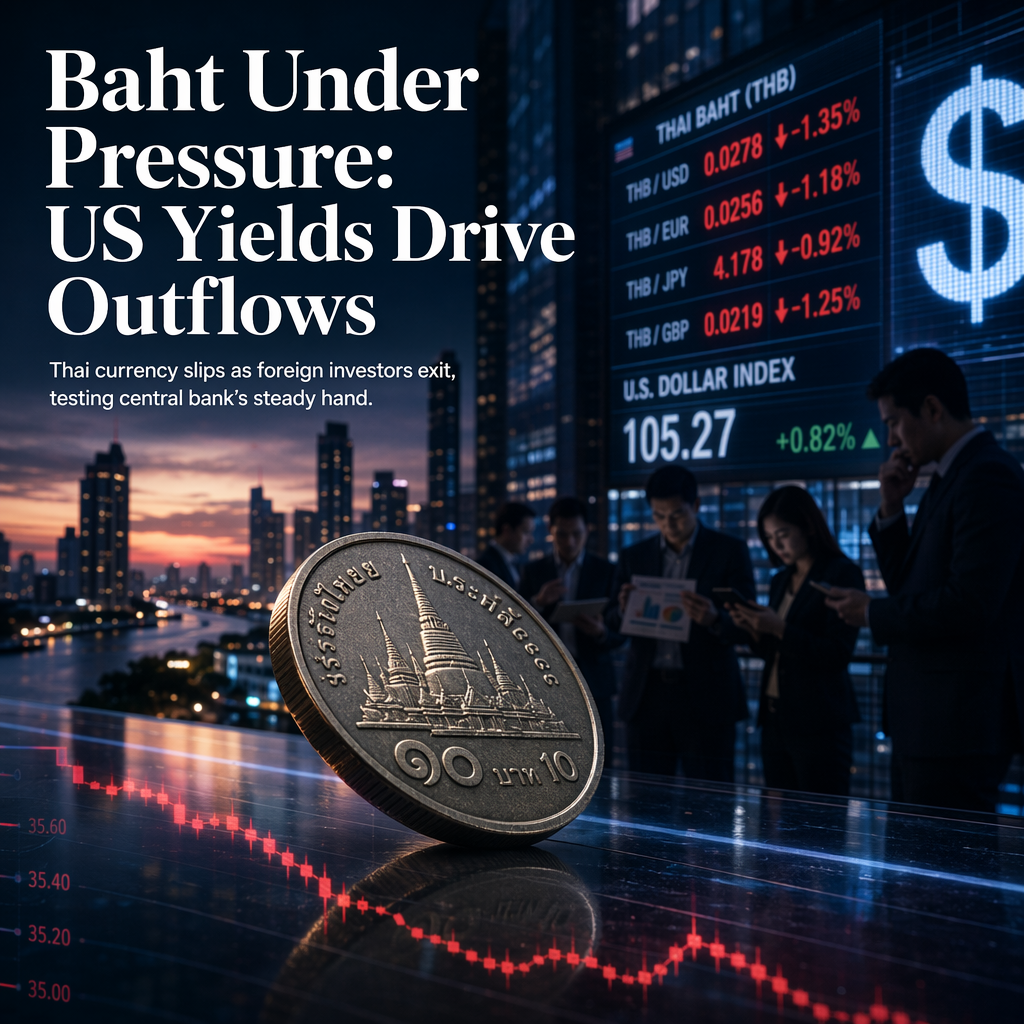
The Thai Baht continues to exhibit a negative bias against the US dollar, according to MUFG’s Lloyd Chan, as broad-based weakness persists across Asian currencies following the recent FOMC meeting [1]. The Bank of Thailand maintained its policy rate at 1% on June 24, 2024, a move that was widely anticipated by the market [1]. Policymakers expect firmer growth for Thailand this year, but concerns remain over the low and uneven nature of the recovery, with subdued credit growth and deteriorating loan asset quality in the SME segment [1].
Thailand’s relatively low yield profile, combined with easing inflation pressures due to lower oil prices, is expected to allow the central bank to continue its accommodative, growth-supportive stance [1]. However, the persistence of elevated US yields is exerting pressure on portfolio flows, resulting in net foreign outflows from Thailand in June, reversing the inflows seen in May despite the relief from lower oil prices [1]. This shift in portfolio flows is cited as an additional headwind for the baht [1].
MUFG maintains a near-term negative bias on the baht, emphasizing that the high-for-longer US rates environment is likely to remain a headwind for regional currencies, particularly those with lower yields such as the Thai Baht [1].
CONCLUSION
The Thai Baht remains under pressure due to high US yields and recent portfolio outflows, despite the Bank of Thailand’s steady policy rate and expectations for firmer growth. Market sentiment is negative in the near term, with analysts highlighting ongoing headwinds for the currency.