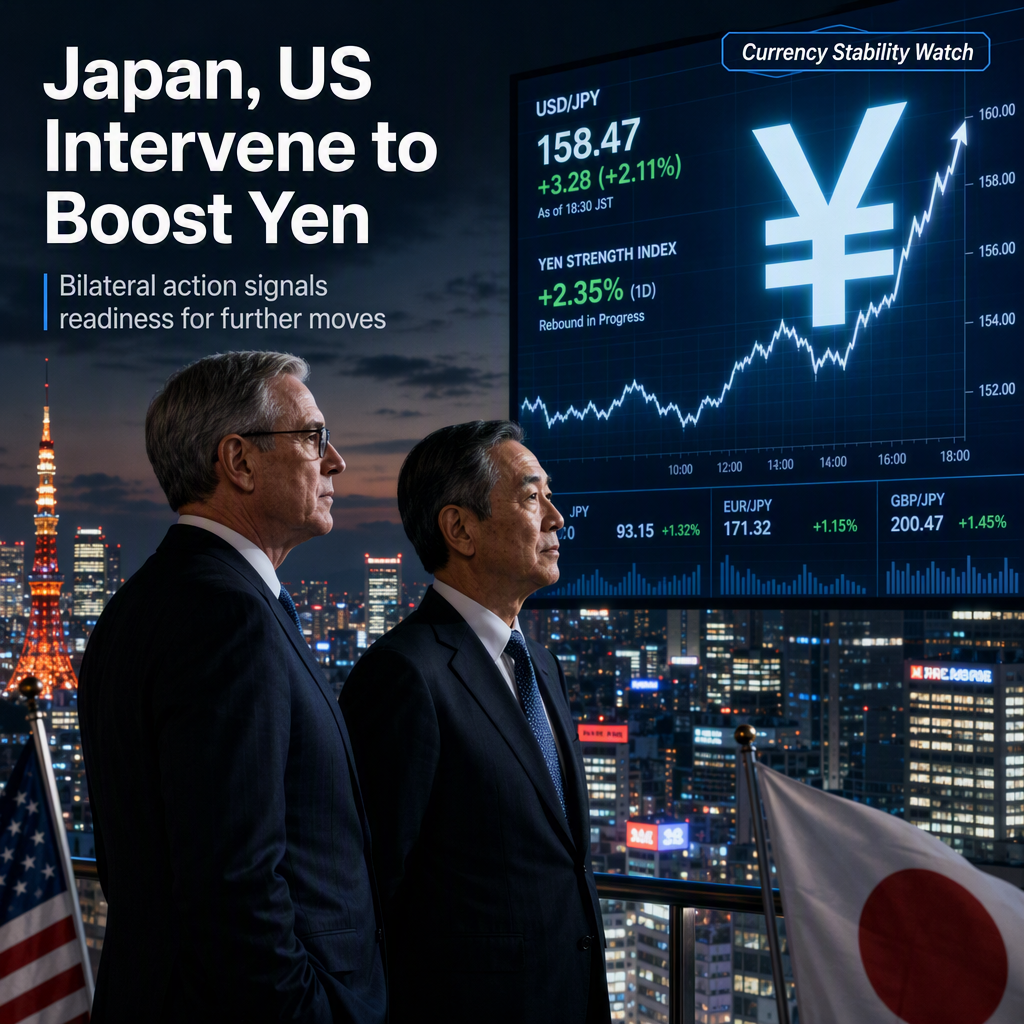
Japan and the United States executed a coordinated intervention to support the yen on Friday, marking the first joint action since 2011, as confirmed by Japan's Finance Ministry on Monday morning [1][2]. The intervention was prompted by the yen trading near a 40-year low against the dollar, with a series of interventions launched as the currency approached historic lows [1][2]. Following these actions, the yen surged sharply, strengthening to levels not seen since mid-May, and market sentiment shifted as authorities demonstrated their resolve to defend the currency [1][2].
Japanese Finance Minister Katayama stated that the government 'won't hesitate to act again' if speculative moves continue to pressure the yen, emphasizing ongoing vigilance and readiness to take further measures to maintain stability [1][2]. The U.S. Treasury has also signaled to banks that further yen intervention is possible, reinforcing the coordinated stance between the two countries [2]. Former U.S. President Donald Trump commented that Tokyo had sought 'a little bit of help' from the U.S. in supporting the yen, highlighting the significance of bilateral cooperation in currency stabilization efforts [1].
A significant yen-buying operation reportedly totaling up to $44 billion was conducted on Thursday, which helped reverse the currency's slide, although no specific intervention amounts were disclosed in the first article [2][1]. Technical analysts are now watching for the yen to hold above key support levels established after the intervention, with resistance seen near recent highs reached during the initial recovery [1][2]. The intervention has heightened market sensitivity to further developments in Japan-U.S. currency policy coordination, and traders are closely monitoring signals from both the Bank of Japan and U.S. Treasury [1][2].
Bank of Japan Chief flagged upside inflation risks and suggested that faster rate hikes may be possible, adding to speculation that the central bank could adjust its monetary policy to support the yen [2]. Analysts note that foreign M&A activity in Japan is contributing to yen weakness, as overseas buyers convert currency to complete acquisitions, while some U.S. fund managers remain hesitant to invest in the yen, viewing it as 'significantly undervalued' despite recent movements [2].
CONCLUSION
The coordinated intervention by Japan and the U.S. has led to a sharp recovery in the yen and signaled a strong commitment to currency stability. Both governments have indicated readiness for further action, and market participants are closely watching for additional moves or policy adjustments. The event has significantly increased market sensitivity to future developments in Japan-U.S. currency coordination.