
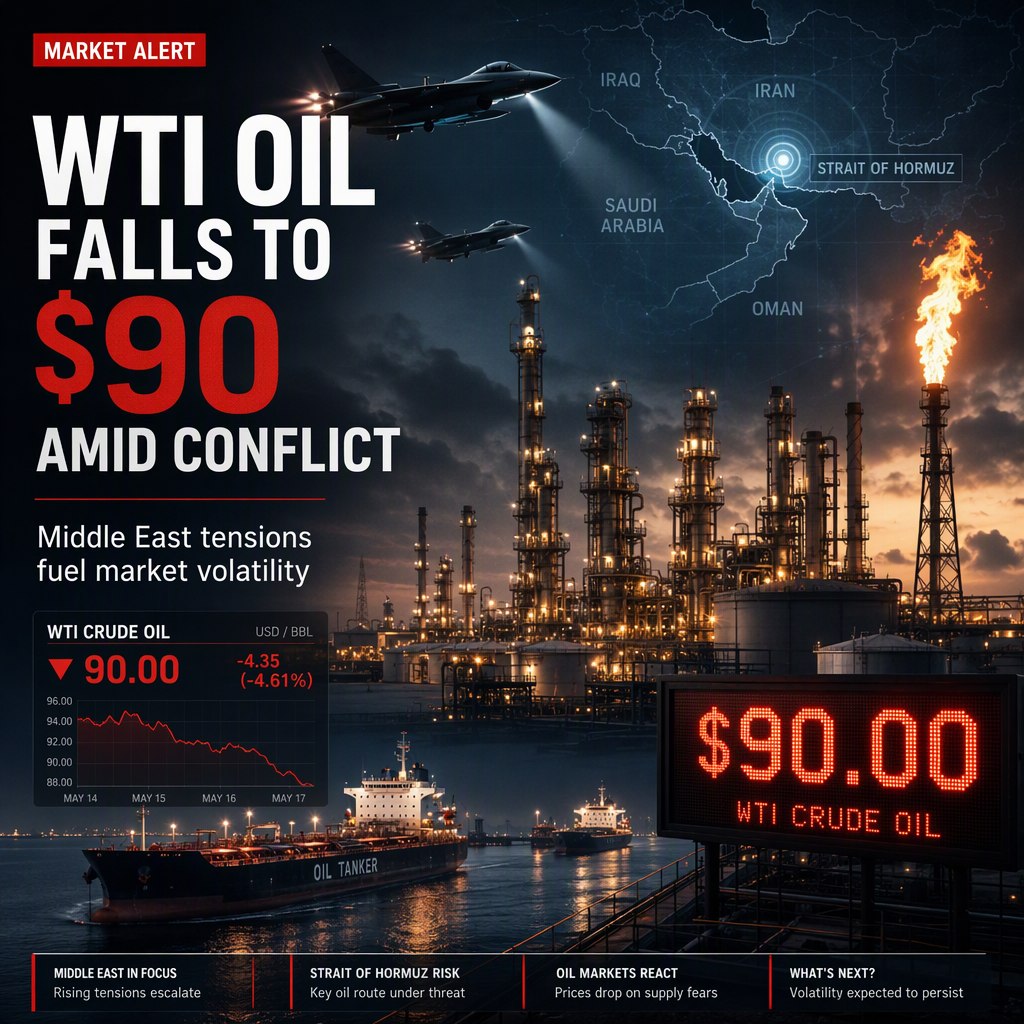
West Texas Intermediate (WTI) crude oil prices declined to around $90.00 per barrel during Asian trading hours on Monday, following two consecutive days of gains, despite escalating conflict and supply risks in the Middle East [1]. The drop comes after deadly attacks on Riyadh’s King Khalid International Airport, where Houthi militants targeted the airport twice over the weekend, resulting in 12 deaths and more than 300 injuries [1]. In response, US President Donald Trump is considering joining Saudi Arabia in retaliating against Iran-backed Houthis in Yemen [1].
Further compounding supply concerns, a drone attack struck an oil tanker near the Sohar anchorage off Oman, just outside the Strait of Hormuz, underscoring ongoing vulnerabilities in the region despite indications of higher crude exports from the Persian Gulf [1]. Geopolitical uncertainty also persists regarding Russia and Ukraine. President Trump claimed that Russia and Ukraine have agreed to an 'energy ceasefire,' but provided no details. Ukrainian President Volodymyr Zelenskyy stated he was unaware of any such agreement, though he indicated Kyiv would accept a ceasefire if Moscow agreed [1].
To address potential supply disruptions caused by Hurricane Isaias, the US Department of Energy approved an emergency exchange involving up to 4 million barrels of crude oil from strategic reserves [1]. Market participants, particularly systematic traders, are experiencing volatility as WTI hovers around the $90 per barrel level, which TD Securities identifies as a key trigger point for trend-following strategies. The price action around this level has led to rapid shifts in positioning among CTAs (Commodity Trading Advisors) [1].
CONCLUSION
WTI crude oil prices have retreated to $90 per barrel despite heightened geopolitical risks and supply disruptions in the Middle East. Market volatility is expected to persist as traders react to both regional tensions and technical price levels. The situation remains fluid, with further developments in the Middle East and energy policy likely to influence oil prices.