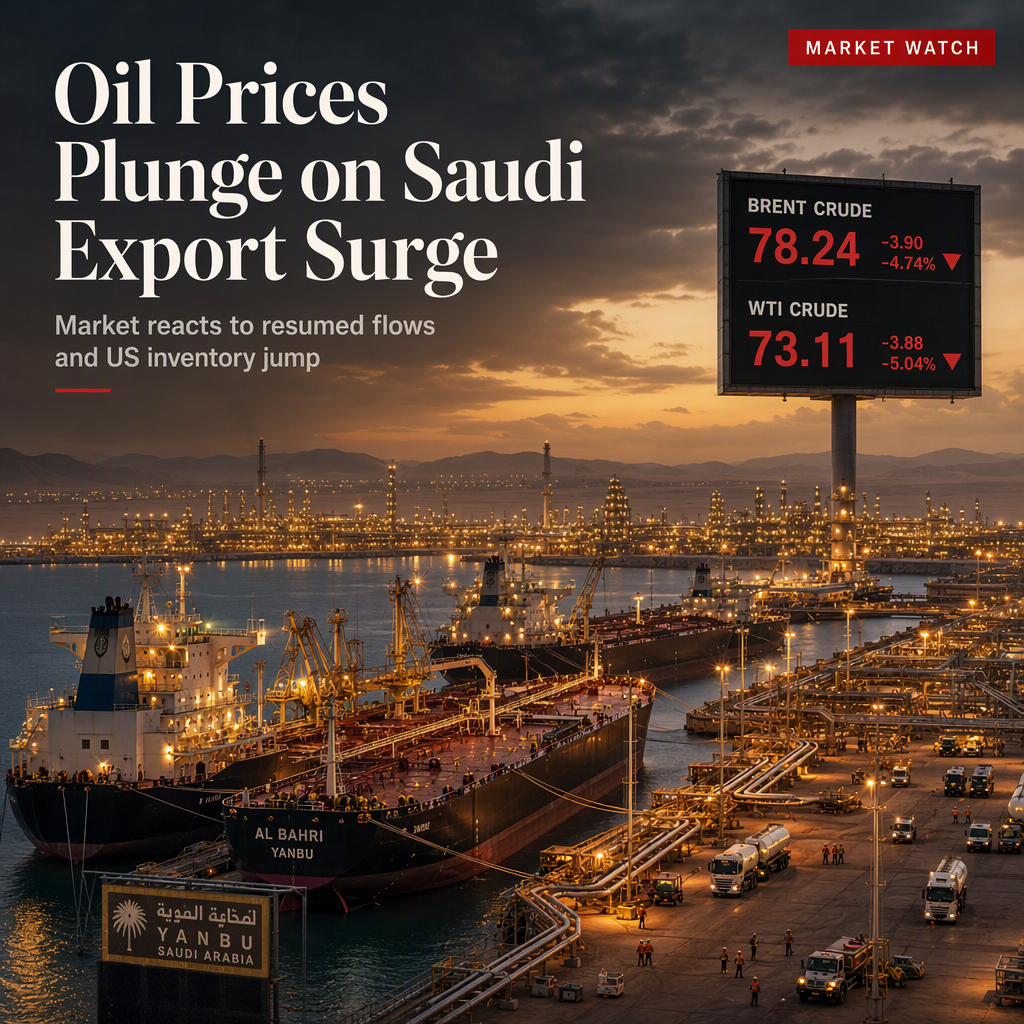
Oil prices experienced a sharp decline on Wednesday, with Brent crude falling below $99 per barrel and WTI trading near $89 per barrel, marking a significant sell-off in the market [1]. This downturn was primarily attributed to expectations of increased Saudi crude exports, progress in diplomatic talks between the US and Iran, and a larger-than-anticipated build in US crude inventories, all of which alleviated concerns over potential supply disruptions in the Middle East [1]. Brent crude has now fallen for six consecutive sessions, its longest losing streak since August 2025, resulting in cumulative losses exceeding 9.5% [1].
Saudi Arabia has restarted operations at its East-West pipeline and may soon resume exports from the Yanbu terminal. This pipeline, which bypasses the Strait of Hormuz, has a capacity of approximately 7 million barrels per day and is expected to gradually restore lost export flows, potentially boosting global crude supplies in the coming weeks [1].
On the geopolitical front, President Donald Trump described recent discussions with Iranian officials as "very productive," raising hopes for further diplomatic progress and reducing fears of prolonged supply disruptions in the region [1]. Despite the recent correction, oil prices remain more than 60% higher year-to-date [1].
Additional downward pressure on prices came from the latest API data, which showed US crude inventories rose by 1.7 million barrels last week, compared to expectations of a 578,000-barrel draw. In contrast, gasoline and distillate stocks each fell by 2.2 million barrels [1]. The market is now awaiting the EIA inventory report for further confirmation [1].
CONCLUSION
Oil prices have come under significant pressure due to the anticipated resumption of Saudi exports, progress in US-Iran diplomacy, and a surprise build in US inventories. While the recent sell-off has been notable, prices remain substantially higher year-to-date, and market participants are closely watching upcoming inventory data for further direction.