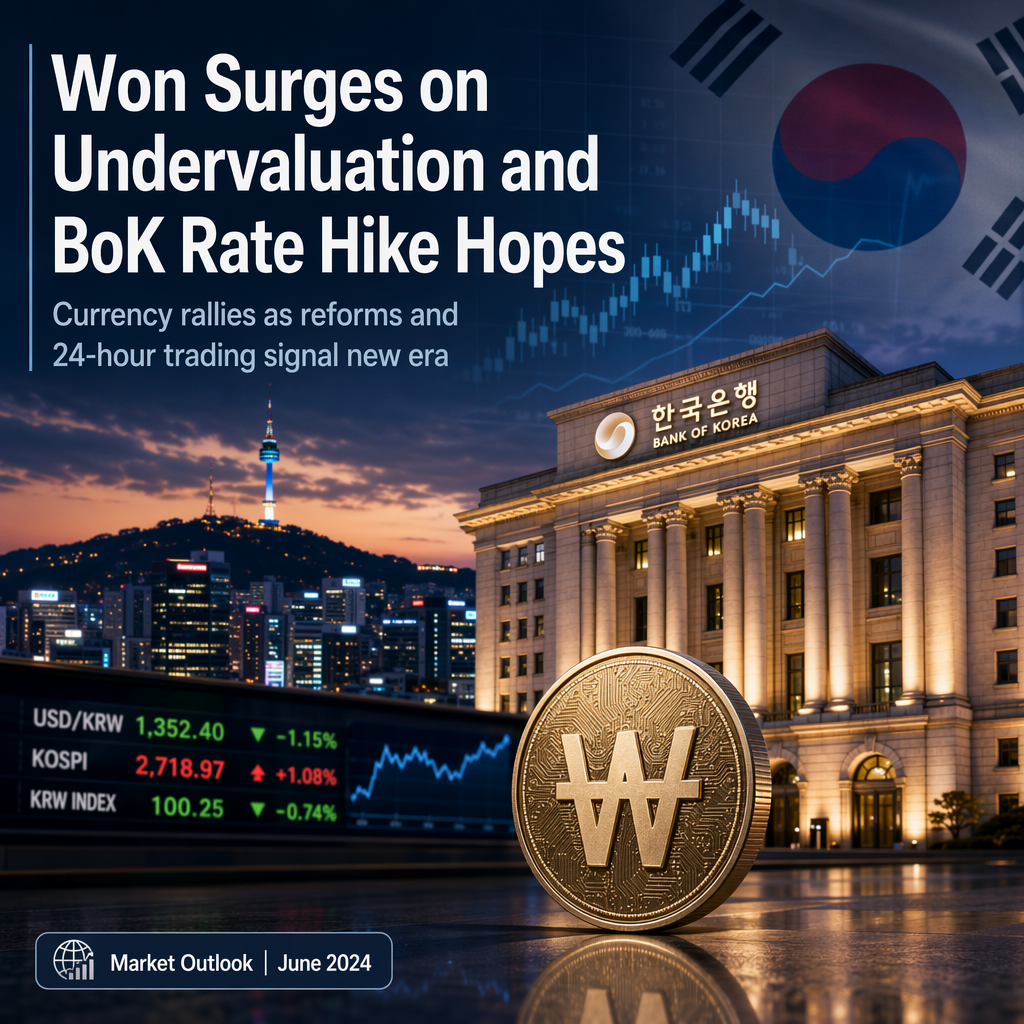
Brown Brothers Harriman’s Elias Haddad reports that the South Korean Won (KRW) has experienced an extended broad rally, coinciding with the underperformance of Korean equities, particularly the KOSPI, so far this month. This underperformance has led to a decline in the weight of Korean equities in global portfolios, which in turn reduces the need for foreign investors to trim positions and repatriate funds, thereby diminishing KRW outflows [1]. Haddad notes that if the KOSPI regains leadership, rebalancing outflows are likely to re-emerge against the KRW [1].
The outlook for the KRW remains positive, with Haddad highlighting that the currency is approximately 11% undervalued based on Real Effective Exchange Rate (REER) metrics [1]. Additionally, the Bank of Korea (BoK) is expected to begin raising interest rates at its next meeting scheduled for July 16, which could further support the currency [1].
In terms of structural developments, the South Korean government has confirmed plans to unveil its 'roadmap for won internationalization' by the end of July. The launch of 24-hour onshore KRW trading on Monday marks the first major step in this process. Over time, increased international use of the KRW is anticipated to boost underlying demand for the currency [1].
No specific market reactions or analyst opinions beyond Haddad’s outlook are mentioned in the article. The focus remains on the undervaluation of the KRW, the upcoming BoK rate hike, and the government’s efforts to internationalize the currency [1].
CONCLUSION
The South Korean Won is benefiting from a combination of undervaluation, reduced outflows due to equity underperformance, and an anticipated rate hike by the Bank of Korea. Structural reforms, including the launch of 24-hour trading and a roadmap for internationalization, are expected to further support long-term demand for the currency. Market sentiment is positive, with medium impact expected as these developments unfold.