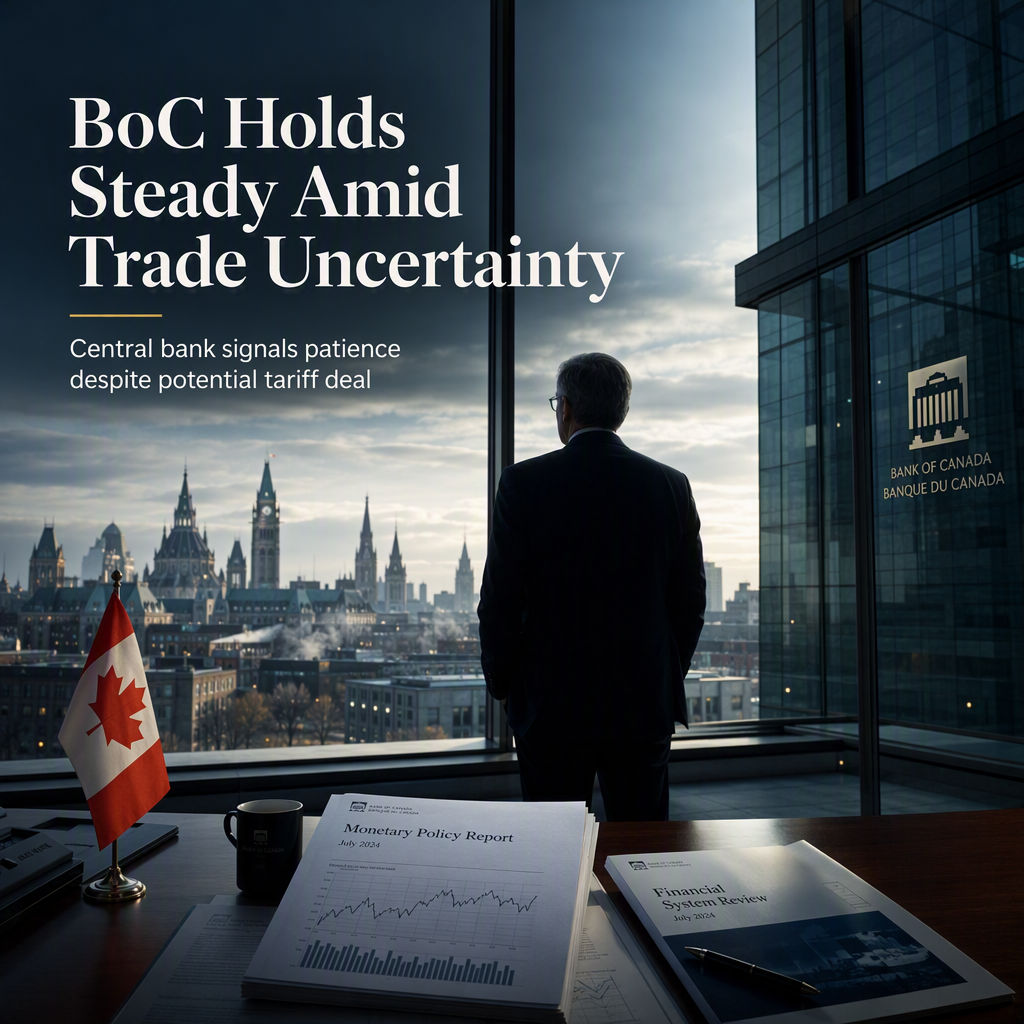
According to TD Securities’ Robert Both, the Bank of Canada (BoC) is expected to maintain a cautious stance even if a tariff agreement is reached, citing the need for more data on how lower tariffs will impact exports and output. Key trade figures that could inform the BoC’s decision-making will not be available until November, leading analysts to predict that the central bank will not rush to adjust its policy stance in the near term [1].
TD Securities forecasts that the BoC will keep rates on hold through 2026, with the first rate hike anticipated in January. This outlook persists despite a narrowing output gap, indicating that the central bank is prioritizing a data-driven approach over reacting to easing trade risks [1].
The BoC has previously highlighted trade tensions as a significant dovish risk, noting in June that new trade restrictions could prompt further rate cuts. However, with the possibility of a tariff deal and the presence of excess supply, the BoC is expected to remain patient and observe how exports respond before making any policy changes. TD Securities also notes that while high oil prices could have spillover effects, the current economic backdrop supports a wait-and-see approach [1].
CONCLUSION
The Bank of Canada is likely to maintain its cautious policy stance even if a tariff deal is finalized, awaiting more concrete data on trade impacts. TD Securities expects no rate hikes until January, with the central bank prioritizing patience amid ongoing economic uncertainties.