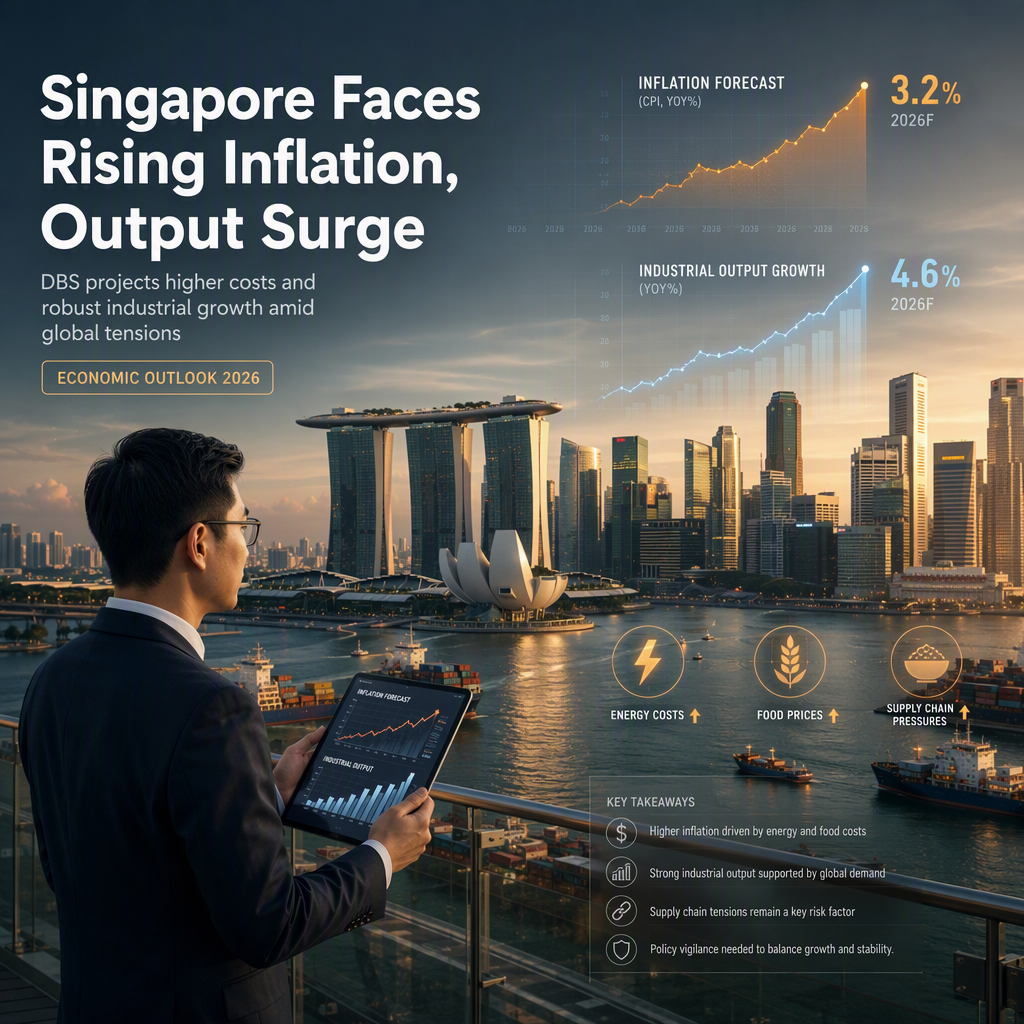
DBS economists Taimur Baig and Radhika Rao project that Singapore's headline inflation will rise to 2.4% year-on-year in July, up from 1.9% in June, while core inflation is expected to increase to 2.3% from 1.6% over the same period. This anticipated uptick is attributed to higher energy and food costs, with a notable 17% increase in electricity tariffs in the third quarter of 2026 and firmer food price increases cited as key drivers [1].
The economists also forecast that Singapore's industrial production growth will accelerate to 9.0% year-on-year in July, compared to 7.2% in June. This growth is primarily led by robust expansion in the electronics and precision engineering sectors, which continue to benefit from strong global demand for artificial intelligence-related hardware [1]. However, the report notes that factory performance remains uneven, as rising cost pressures and supply chain disruptions, particularly in the Strait of Hormuz, are negatively impacting the chemicals and general manufacturing clusters [1].
DBS suggests that the build-up in underlying price pressures likely validated the central bank's decision to slightly increase the appreciation pace of its currency policy band during its July review. Policymakers are expected to maintain vigilance and a slightly hawkish stance toward upside inflation risks, especially given ongoing disruptions and conflict in the Middle East [1].
CONCLUSION
DBS anticipates higher inflation and stronger industrial output for Singapore in July, driven by energy and food costs as well as demand for AI hardware. Policymakers are expected to remain cautious, maintaining a hawkish stance amid persistent supply chain disruptions and geopolitical tensions.