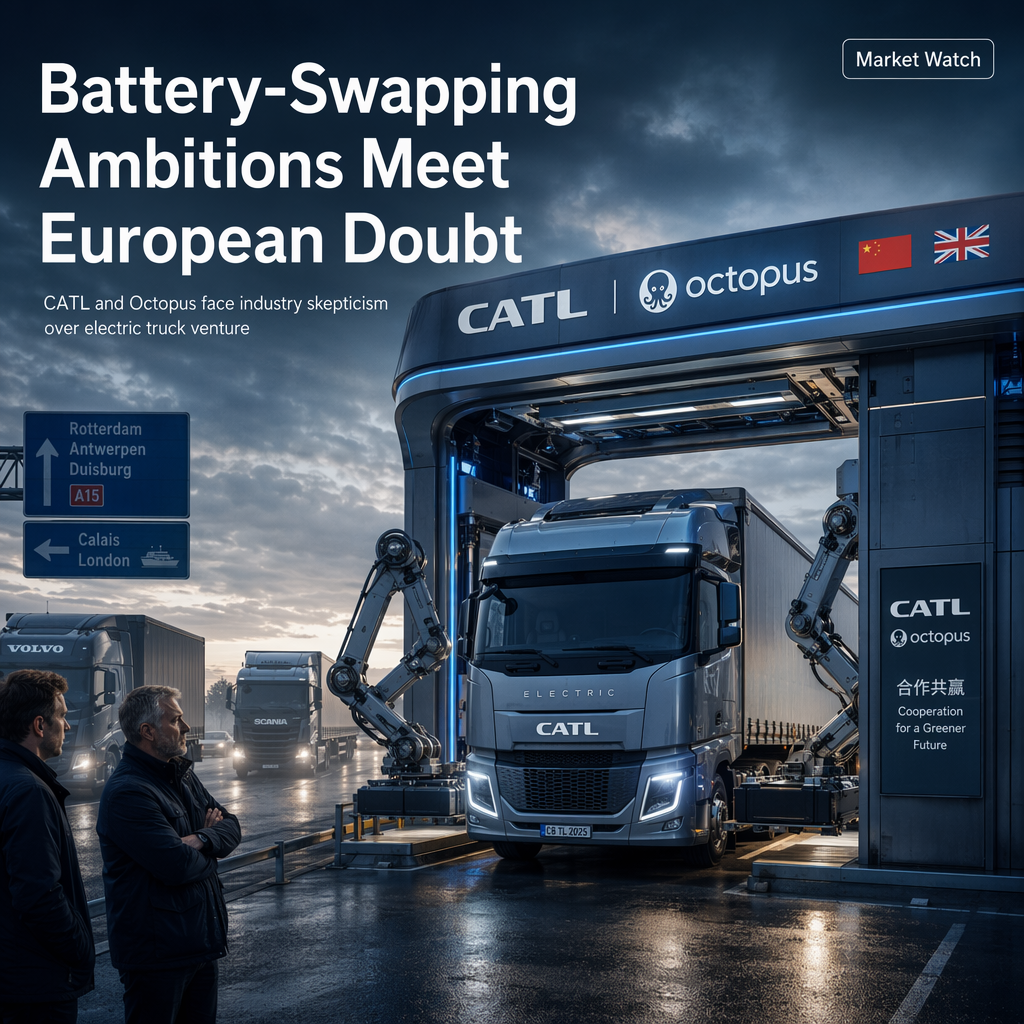
Britain's largest household energy provider, Octopus, has announced a joint venture with China's CATL to establish a battery-swapping network for electric trucks across Europe [1]. The initiative aims to reduce charging downtime for electric trucks by replicating a model already in use in China, where regulatory coordination has enabled standardization of battery-swapping technology [1].
Despite the ambitious plan, the European electric truck sector has expressed skepticism regarding the feasibility and necessity of such a network. Major European truckmakers, including Volvo and Scania, are reportedly preparing measures to counter potential market disruption from the CATL-Octopus venture, as critics argue that existing fast-charging infrastructure already meets operational demands [1]. Industry sources highlight the significant technical challenges in creating a universal battery-swapping system compatible with the diverse range of truck models in Europe [1].
Market analysts caution that unless CATL and Octopus can secure commitments from major European truck manufacturers to adopt standardized designs, the investment may not deliver the expected returns [1]. The initiative is seen by some as a strategic move by CATL to gain a foothold in the competitive European market, which is already experiencing increased competition from Chinese electric truck startups [1].
Market sentiment remains cautious, with stakeholders awaiting further technical details and commitments from original equipment manufacturers (OEMs) before offering support for the project [1]. No specific financial data, price levels, or trading advice were disclosed in the article [1].
CONCLUSION
The CATL-Octopus battery-swapping venture faces significant skepticism from the European electric truck industry due to technical and market compatibility concerns. Market participants are adopting a wait-and-see approach, with the project's success hinging on the ability to secure OEM support and overcome standardization challenges.