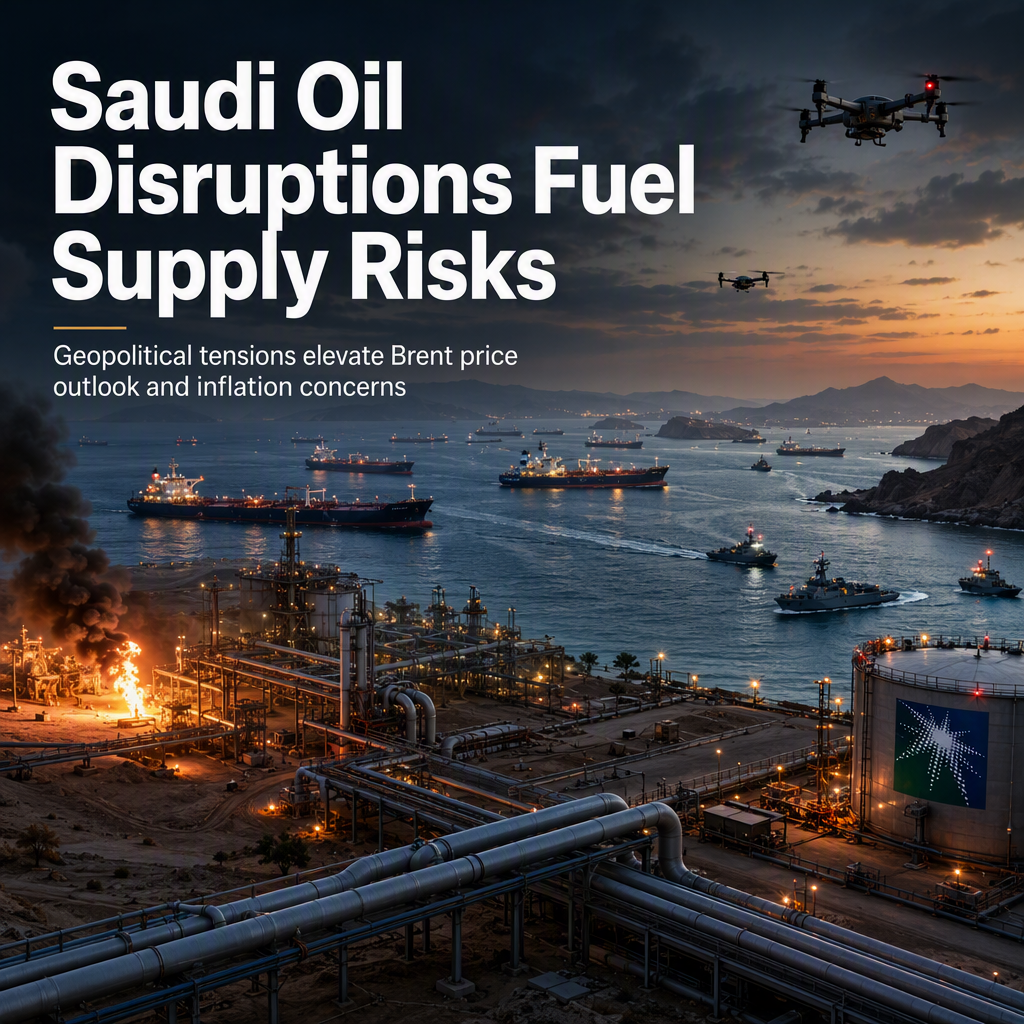
According to OCBC strategist Christopher Wong, oil market risks have increased following disruptions to Saudi export infrastructure and renewed concerns over key shipping routes, specifically the Strait of Hormuz and Bab el-Mandeb [1]. Over the weekend, Saudi Arabia temporarily shut its East-West pipeline after a drone attack, impacting a critical alternative export route, while traffic through the Strait of Hormuz remains heavily disrupted [1]. Additionally, developments around Bab el-Mandeb have heightened worries about another major shipping chokepoint, and reports of a vessel being struck in the Strait of Hormuz have further contributed to market unease [1].
Wong notes that these events raise the risk that Brent crude's recent retreat from near $110 per barrel may not continue much further [1]. He highlights that a renewed rise in oil prices could complicate the inflation outlook, support higher yields, and weigh on risk sentiment in broader markets [1]. Conversely, a swift restoration of Saudi pipeline operations or signs of de-escalation in the region could reduce the geopolitical premium currently priced into oil markets [1].
Market participants are closely monitoring the speed at which Saudi pipeline operations resume and whether attacks on shipping and energy infrastructure broaden, as these factors will influence the direction of oil prices and market sentiment [1]. For now, Wong asserts that the balance of risks for oil remains tilted to the upside due to ongoing geopolitical tensions and supply disruptions [1].
CONCLUSION
Geopolitical disruptions to Saudi oil exports and heightened risks at key shipping chokepoints have increased supply concerns, keeping upward pressure on Brent crude prices. The market is closely watching for any restoration of flows or de-escalation, but for now, risks remain skewed toward higher oil prices and potential negative impacts on inflation and risk sentiment.