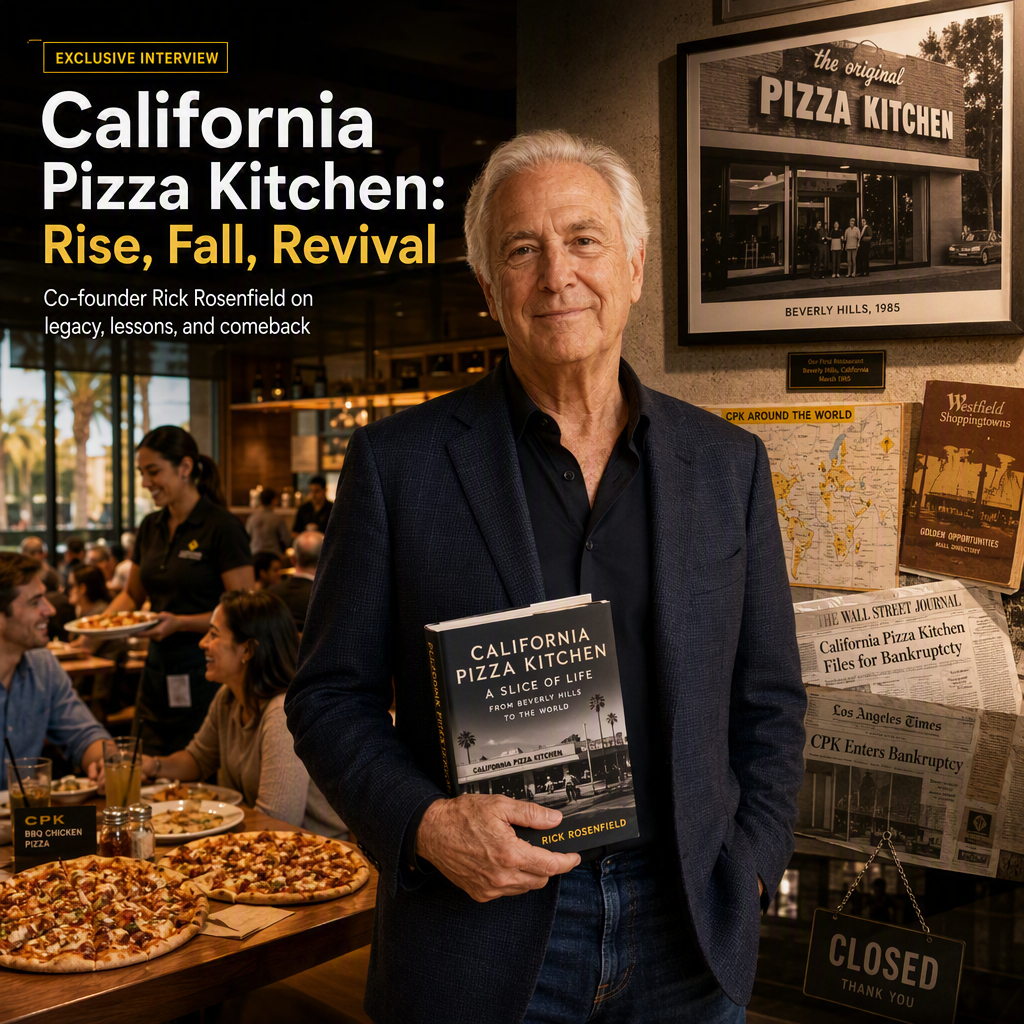
California Pizza Kitchen (CPK), founded in 1985 by Rick Rosenfield and Larry Flax, rapidly grew from a single Beverly Hills storefront to a household name, popularizing California-style pizza across the U.S. and internationally. The chain's signature Original BBQ Chicken Pizza and its polished approach to casual dining helped it expand to more than 120 restaurants in 10 countries, with a peak of over 200 locations worldwide [1]. CPK's growth was fueled by a real estate strategy targeting upscale shopping malls, which differentiated it from traditional fast food outlets [1].
In 2011, CPK was acquired by Golden Gate Capital for $470 million, positioning the San Francisco-based private equity firm as a major player in the restaurant and retail sector [1]. However, nine years later, CPK filed for Chapter 11 bankruptcy protection on July 30, 2020, citing financial troubles exacerbated by the COVID-19 pandemic [1]. Co-founder Rick Rosenfield attributed the chain's difficulties to cultural changes imposed by Golden Gate Capital, stating, "I believe that they damaged the culture from day one" [1].
Rosenfield's reflections highlight both the chain's meteoric rise and the challenges faced during its ownership transition and subsequent bankruptcy. The release of his book, "The California Pizza Kitchen Story: How Two Federal Prosecutors Changed the Way America Eats Pizza," on July 21, underscores the founders' enduring influence and the brand's legacy [1].
While the article does not provide specific market reactions or forward-looking analyst opinions, it emphasizes the chain's comeback and continued presence in the industry, suggesting resilience despite past setbacks [1].
CONCLUSION
California Pizza Kitchen's journey from a single Beverly Hills location to a global brand was marked by innovation and rapid expansion, but also by significant challenges following its acquisition and bankruptcy. The chain's ability to rebound highlights its enduring appeal and adaptability in the competitive restaurant sector. Market sentiment appears cautiously optimistic, reflecting both the brand's legacy and its ongoing recovery.