
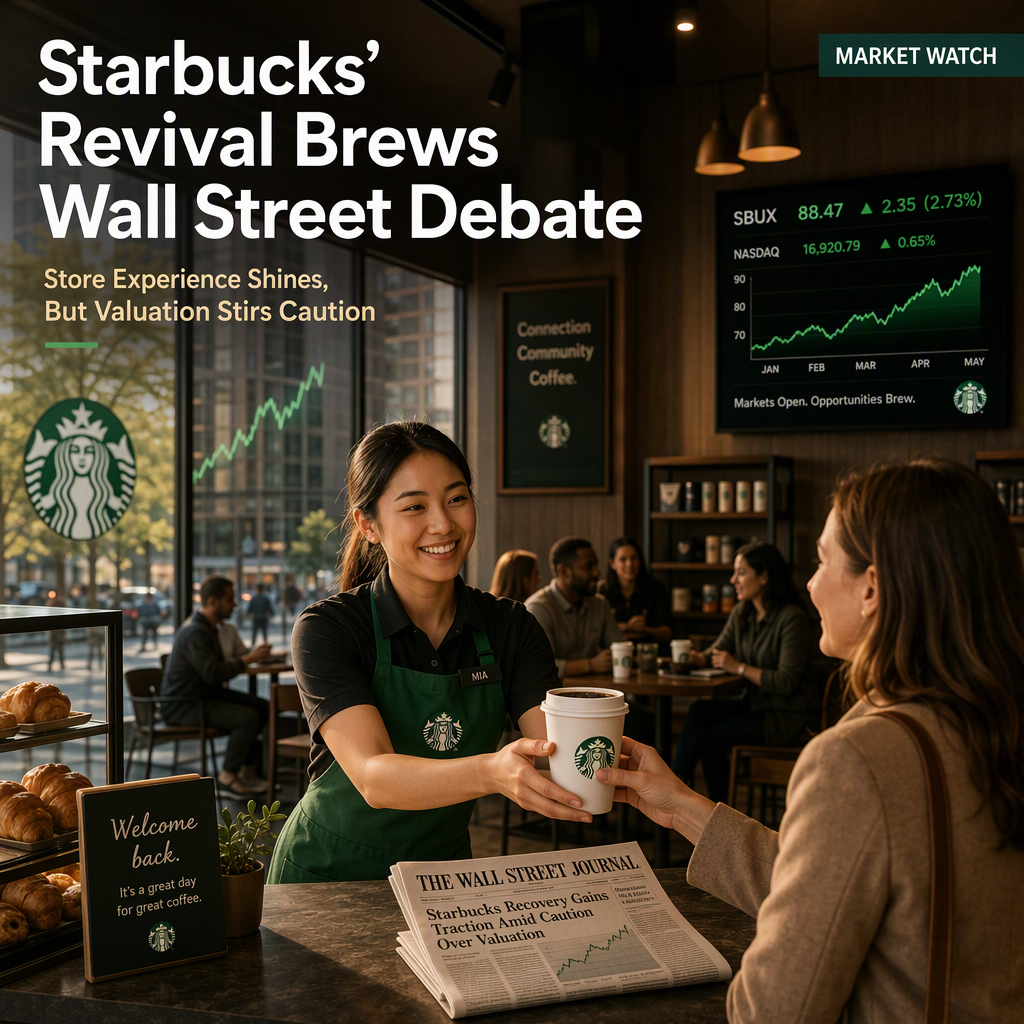
Starbucks has been implementing a recovery plan aimed at revitalizing its in-store experience, which had suffered due to the rise of mobile ordering, longer lines, and overwhelmed staff. The new CEO, Brian Niccol, has focused on improving store cleanliness and employee engagement, resulting in a more welcoming atmosphere that feels closer to a local business rather than a corporate chain. These efforts appear to be yielding positive results, as Starbucks shares have risen 12% this year, although the stock remains well below its recent highs and has shown little net movement over the past five years [1].
Despite operational improvements, Starbucks faces challenges related to its valuation. The company trades at approximately 30 times the consensus forward adjusted EPS estimate of $3.12, and its enterprise value is 17.6 times forward estimated EBITDA, significantly higher than the industry average of around 12x. This demanding valuation is seen as a limiting factor for the stock's upside potential [1].
Financial flexibility has been enhanced by the divestiture of 60% of Starbucks' China retail operations, finalized in April. This move is expected to support future capital returns, including potential share buybacks and a continued commitment to dividends [1].
From an options trading perspective, implied volatility in Starbucks options has been consistently higher than realized volatility over the past two years, indicating that options are expensive relative to the stock's actual movement. As a result, a short premium strategy, such as selling a November $85 put and a November $105 call for a net credit of $2.25, is suggested. If the stock remains stable, this trade could yield a 16% annualized return, though there are risks if the stock moves significantly outside the $82.75 to $107.25 range [1].
CONCLUSION
Starbucks' turnaround efforts are showing signs of success, reflected in improved store experiences and a 12% year-to-date share price increase. However, high valuation metrics and limited recent stock performance temper enthusiasm, while options traders may find opportunities in the current volatility environment. The company's strengthened financial position following its China divestiture could support future shareholder returns.