
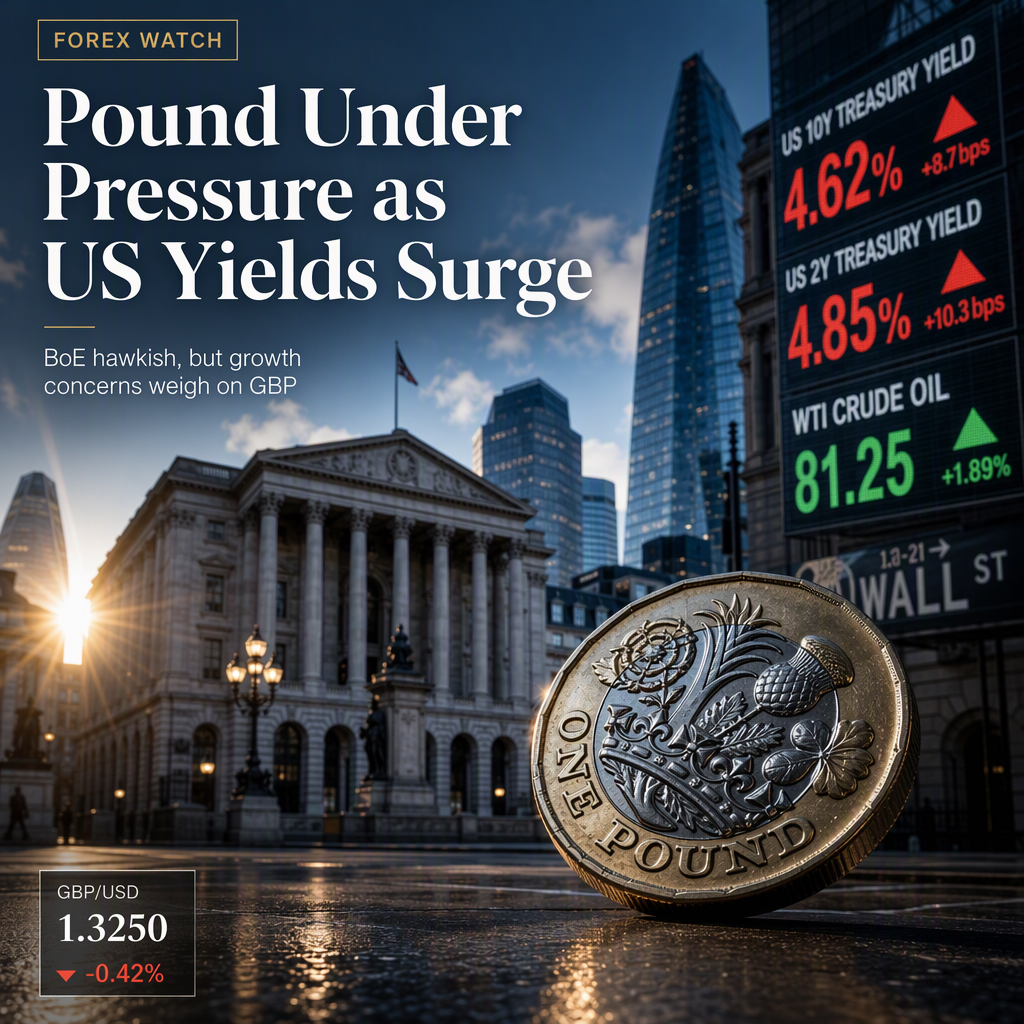
The British Pound (GBP) softened against the US Dollar (USD), with the GBP/USD pair declining to near 1.3250 during early Asian trading hours on Tuesday. This movement was primarily driven by US Treasury yields remaining above 5%, their highest levels in decades, which bolstered the US Dollar and weighed on the Pound. The rise in long-end Treasury yields was attributed to energy supply risks and robust US economic data, which have heightened inflation concerns and led traders to anticipate further Federal Reserve rate hikes. Marc Chandler, chief market strategist at Bannockburn Forex, noted that the US rejection of an Iranian offer led to a spike in oil prices, further pushing up US yields and strengthening the dollar more broadly [1].
Despite the pressure from the US side, hawkish remarks from Bank of England (BoE) policymakers provided some support for the Pound. BoE Deputy Governor Ramsden stated that there could be a case for raising the Bank Rate if upside pressure on the inflation outlook continues to build. Ramsden was among the majority on the BoE's Monetary Policy Committee who voted to keep rates unchanged this month, emphasizing that the BoE's policy stance was already restrictive compared to the US Federal Reserve, which has continued to hike rates since the start of the Iran war [1].
Analysts at HSBC cautioned that the Pound is likely to remain under pressure in the near term due to weak UK labor demand and sluggish private sector momentum, especially as the US economy appears more resilient. They highlighted that markets are already pricing in around 100 basis points of tightening from the BoE by July 2027. However, higher energy prices are complicating the policy outlook, as they raise inflation risks even as UK growth momentum remains weak, presenting a challenging environment for the BoE and GBP/USD [1].
BoE Deputy Governor Ramsden's comments were notably hawkish, scoring 8.4/10 on the FXS Speechtracker, well above the historical average. He emphasized external inflation pressures from energy, weather, and AI-related supply chains, as well as domestic effects on food prices and potential second-round impacts. Ramsden's explicit openness to further tightening, should inflation risks persist, signals heightened vigilance and could support the GBP if incoming data confirm the upside inflation narrative [1].
CONCLUSION
The British Pound is currently under pressure due to elevated US yields and a resilient US economy, despite hawkish signals from the Bank of England. While BoE policymakers remain vigilant on inflation and open to further tightening, weak UK growth and labor demand are likely to weigh on the Pound in the near term. Market participants are closely watching upcoming data and central bank commentary for further direction.