
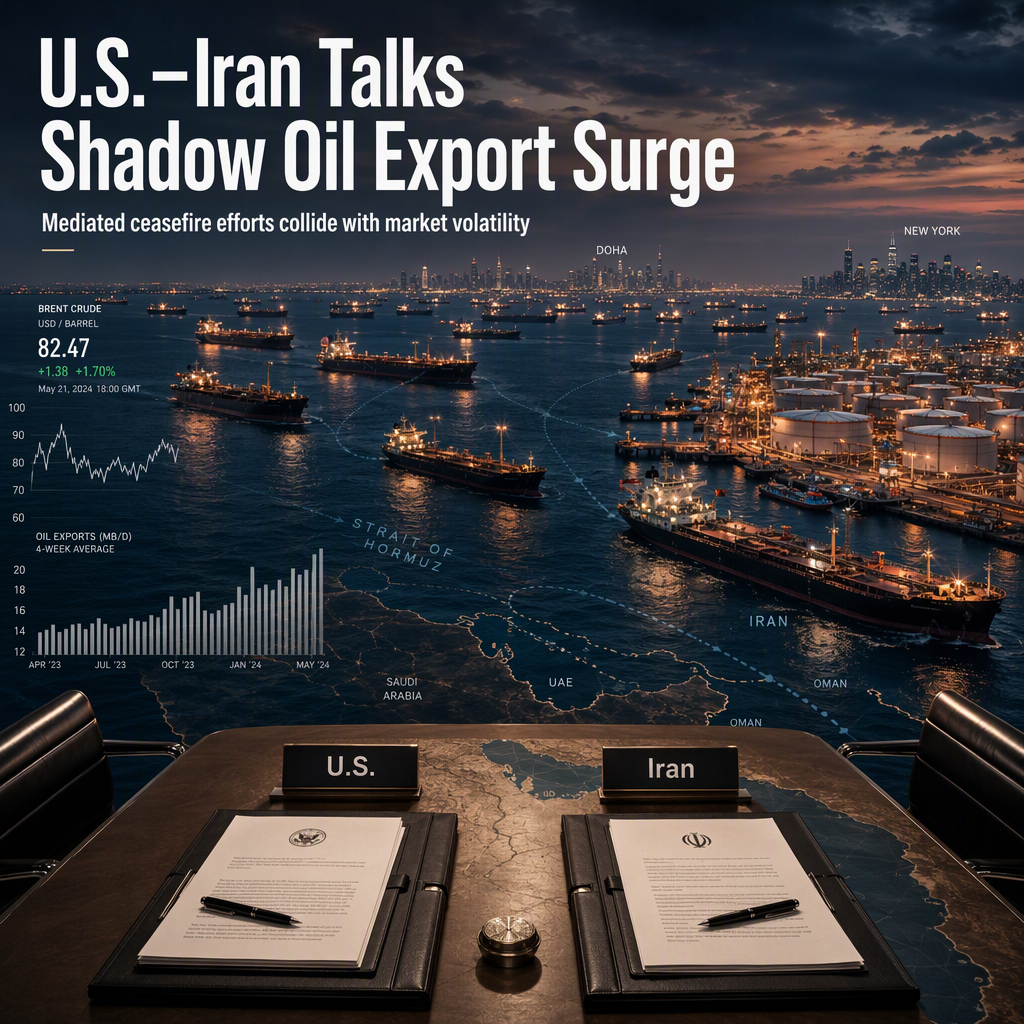
U.S. and Iranian officials engaged in separate indirect talks with mediators on Monday, aiming to revive efforts for a ceasefire after seven months of war in the Middle East. These discussions come as Middle Eastern crude exports have rebounded this month to near their highest levels since the conflict began in February, with Kpler data indicating exports are just under 80% of pre-conflict levels [1]. Iranian Foreign Minister Abbas Araghchi met with Qatari mediators in New York and stated he expects a response from Washington by Tuesday, emphasizing ongoing efforts to find solutions that meet Iran's conditions. Araghchi noted, 'Whenever the Qataris have a response, they know how to get it to us' [1].
Iran's proposal, initially presented during the United Nations General Assembly, includes a four- to five-day U.S. timeline to release frozen Iranian funds, lift sanctions on Iranian oil, and end the naval blockade of Iranian ports, with nuclear talks to begin within seven days. Tehran has linked the reopening of the Strait of Hormuz to these steps [1]. However, President Donald Trump rejected the plan on Sunday, calling it 'unacceptable' and asserting that Iran seeks a swift deal due to economic pressure. Trump reiterated on Monday that U.S. officials had spoken with mediators but did not provide further details, stating, 'We're going to win. It's going to go pretty quickly' [1].
Despite the rebound in crude exports, the Strait of Hormuz remains below normal operational levels, with Kpler's real-time tracking showing total clearance at 10,591 kilobarrels a day on Saturday, compared to a pre-war baseline of 17,133 kilobarrels a day [1]. The ongoing standoff is also impacting U.S. fuel markets, as retail diesel prices are near a record high of $6.53 per gallon. The Trump administration is considering an export ban, which Kpler estimates would keep approximately 1.2 million barrels a day within the U.S., potentially overwhelming Gulf Coast storage facilities [1].
CONCLUSION
The indirect talks between the U.S. and Iran, alongside a rebound in Middle Eastern crude exports, signal tentative diplomatic movement but no breakthrough yet. President Trump's rejection of Iran's proposal and persistent market disruptions, including high diesel prices and potential export bans, underscore ongoing volatility. The situation remains fluid, with significant implications for global oil supply and U.S. fuel markets.