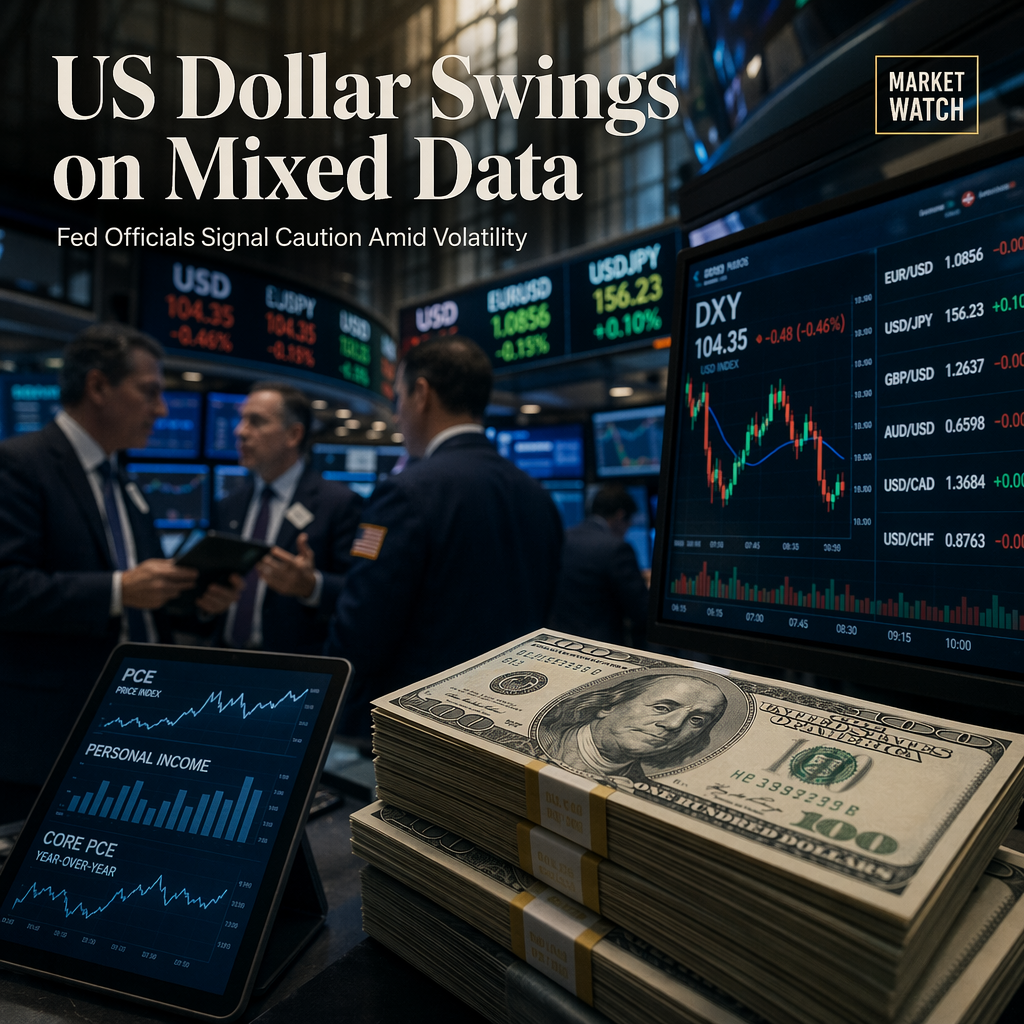
The US Dollar experienced choppy trading as markets digested the latest Personal Consumption Expenditures (PCE) Price Index data, according to TD Securities strategists. The rates curve steepened on Thursday after a weaker-than-expected headline PCE report, while personal income and spending figures came in above expectations, adding complexity to the outlook for the US Dollar [1].
Core PCE accelerated to 0.32% month-over-month in May (3.4% year-over-year), while the headline PCE was stronger due to energy, registering 0.45% month-over-month (4.1% year-over-year). Market-based core PCE was a more subdued 0.24% month-over-month in May, suggesting that inflation is not necessarily running rampant, with much of the strength attributed to financial services [1].
Federal Reserve officials provided cautious commentary. Fed's Goolsbee expressed concern about inflation from services, stating it would make him more nervous than inflation from goods or oil. Meanwhile, Williams indicated no inclination toward rate hikes and suggested that rate cuts could be delayed until 2027-2028 [1].
Looking ahead, markets are awaiting the release of the University of Michigan confidence data and remarks from Fed's Kashkari at the Aspen Ideas panel. With limited fresh drivers and anticipation of news from the Middle East, rates are expected to remain choppy in the near term [1].
CONCLUSION
Markets responded to mixed US economic data with increased volatility, as softer headline PCE was offset by stronger income and spending figures. Fed officials signaled a cautious approach, with no immediate moves on rates expected. Investors are likely to remain on edge, awaiting further data and geopolitical developments.