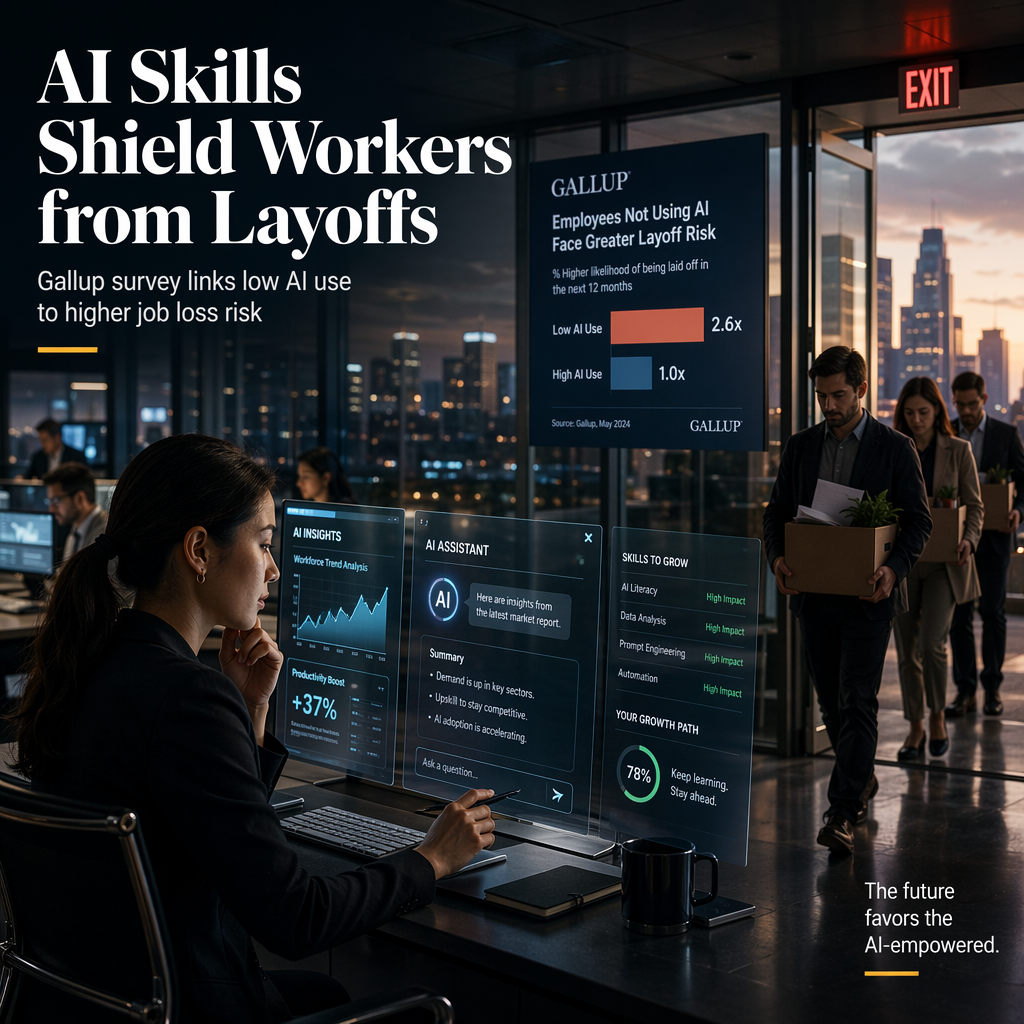
A recent Gallup survey has found a significant correlation between American workers' use of artificial intelligence (AI) and their likelihood of being laid off. According to the data, 62% of workers who have been laid off were non-users of AI, defined as those who used AI once per year or less, compared to 50% of currently employed workers who fell into the same category. In contrast, 28% of currently employed workers reported using AI daily or a few times per week, while only 22% of laid-off workers reported similar usage in their previous roles [1].
The survey highlighted that the tech sector is experiencing higher layoff exposure than other industries, with a particularly strong pattern between AI usage and layoffs. Tech workers who used AI on a monthly basis or less were three times more likely (18%) to have been laid off than those who used AI at least monthly (6%). Gallup noted that this pattern persists even after accounting for factors such as age, education, industry type, and the length of time since being laid off, indicating that AI non-users are more vulnerable in the job market [1].
Despite these findings, the majority of workers who experienced layoffs did not cite AI or automation as the primary reason for their job loss. Only 1% of respondents mentioned AI and automation, while more common reasons included organizational restructuring and downsizing (15%) or the elimination of a role (3%). However, Gallup suggested that AI may still be influencing workforce decisions, even if it is not explicitly communicated to employees as the cause of layoffs [1].
The survey also reported that about 21% of U.S. employees indicated their companies had layoffs in the first quarter of 2026, a figure that has remained steady after a sharp increase from the second quarter of 2022 to the third quarter of 2025 [1].
CONCLUSION
Gallup's findings suggest that regular use of AI may offer some protection against layoffs, particularly in the tech sector. While most workers do not perceive AI as the direct cause of job cuts, the data indicates that AI adoption is increasingly relevant to job security and workforce decisions.