
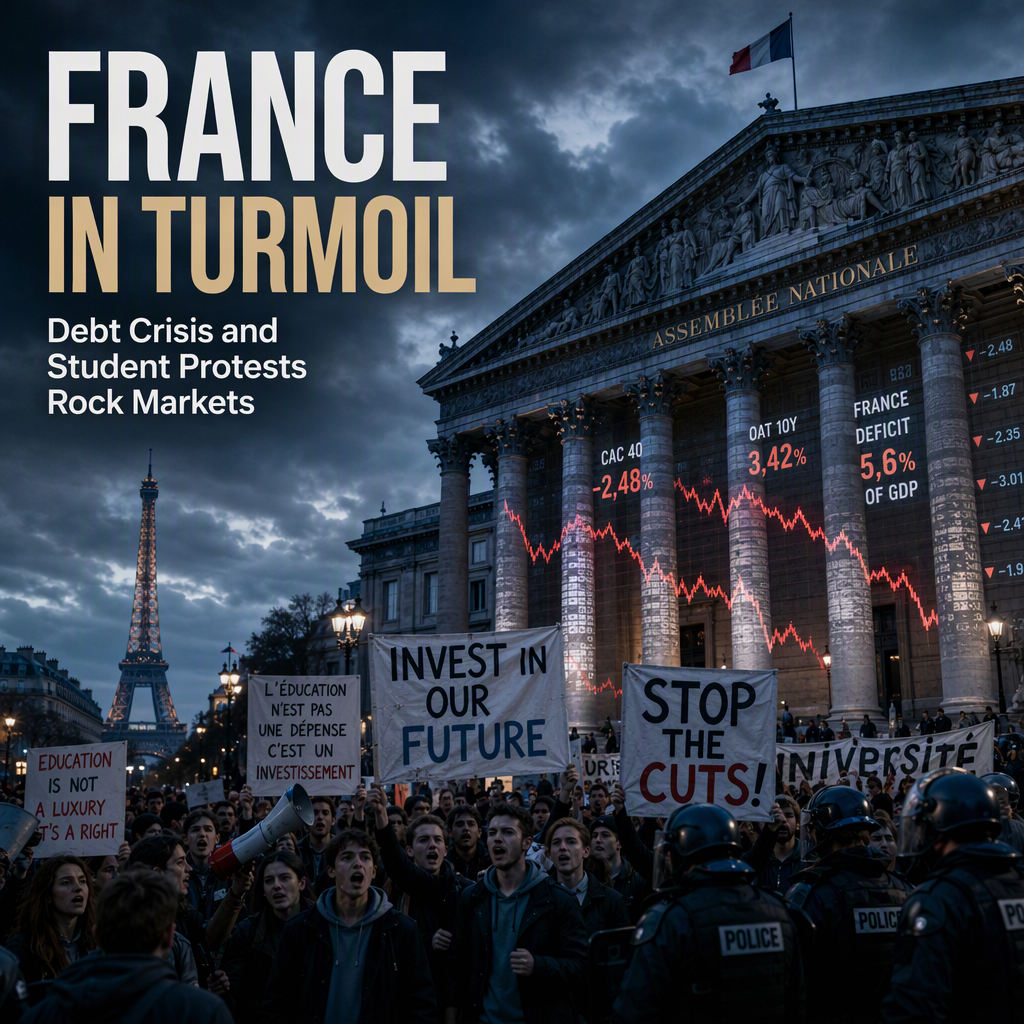
France's National Assembly began debating the revenue side of the 2027 budget on October 13, 2026, amid mounting concerns over the country's fiscal outlook and debt crisis fears [1]. In 2025, France reported a budget deficit of 5.1% and a debt level of 115.6% of GDP, placing significant pressure on lawmakers to consolidate public finances [1]. The debate occurs against a backdrop of widespread student protests over education resources, intensifying the political challenges as the 2027 presidential election approaches [1].
France has maintained one of Europe's highest deficit-to-GDP ratios for nearly a decade under President Emmanuel Macron, with government spending on social protections such as pensions and healthcare remaining elevated compared to peers [1]. Economic growth has been insufficient to offset these expenditures, exacerbating fiscal strains [1]. The political environment is further complicated by parliamentarians' reluctance to compromise on spending cuts, contributing to economic and political uncertainty that is weighing on the euro [1].
Market reactions have been pronounced, with French government borrowing costs reaching their highest levels in nearly 25 years as bond markets respond to the lack of fiscal consolidation [1]. The widening spread between French and German bond yields has sparked speculation about potential intervention by the European Central Bank (ECB) to stabilize markets, though experts such as Antonio Fatas of INSEAD Business School caution that the ECB would not intervene solely to 'bail out' France unless a broader European crisis emerges [1].
The situation has drawn international attention, with warnings from the IMF and commentary from Nobel laureate Paul Krugman suggesting that France may have become 'too big to save' [1]. The ongoing budget battle and student unrest have raised fears of contagion across the euro zone, recalling the legacy of the Sovereign Debt Crisis that previously affected several European countries [1].
CONCLUSION
France's escalating debt crisis, high deficit, and political turmoil are driving up borrowing costs and unsettling markets. With the 2027 presidential election on the horizon and no clear path to fiscal consolidation, the situation poses significant risks for both France and the broader euro zone. Market participants remain wary, and intervention by the ECB appears unlikely unless the crisis spreads further.