
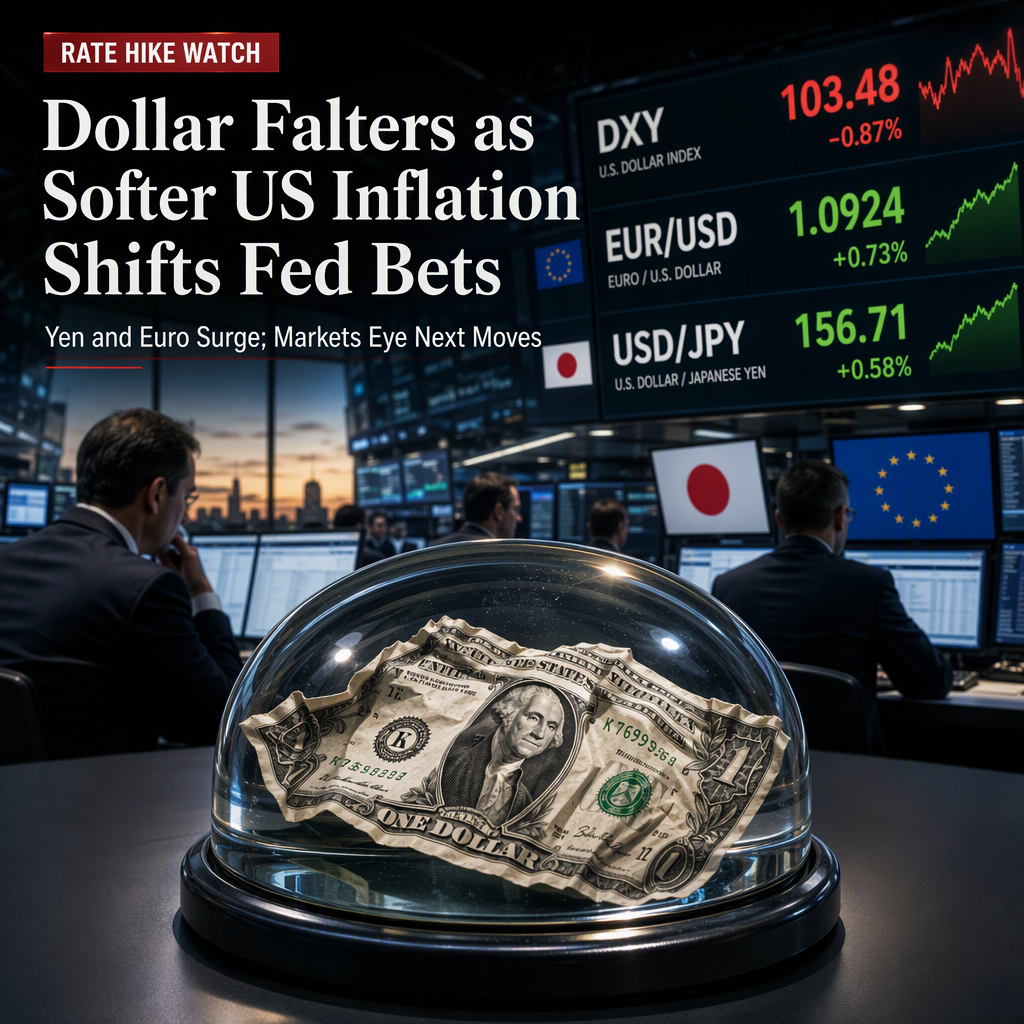
The US Dollar came under selling pressure on Wednesday following softer-than-expected US inflation data, as measured by the Personal Consumption Expenditures (PCE) Price Index. Annual headline inflation remained unchanged at 3.4% in August, below the 3.7% expected by markets, and July's reading was revised lower to 3.4% from 3.7% [1][2]. The core PCE Price Index, closely watched by the Federal Reserve, held steady at 3% year-on-year, also below the 3.3% market forecast, with July revised down to 3% from 3.3% [1][2]. On a monthly basis, headline PCE rose 0.3% and core PCE increased 0.2%, both missing expectations [1][2].
This softer inflation prompted traders to trim bets on an October Fed rate hike. According to the CME FedWatch Tool, the probability of a rate increase in October dropped to around 35%-37%, down from nearly 70%-71% earlier in the week [1][2]. However, expectations for a December hike rose to nearly 60%, up from 49.4% a day earlier [1]. The US Dollar Index (DXY) fell 0.21% to around 101.20, after touching an intraday low of 101.03 post-PCE release [1][2].
Despite the weaker inflation, other US economic data showed resilience. The ADP Employment Change report indicated private-sector employment increased by 90K jobs in September, beating the 70K forecast and accelerating from 36K in August [1][2]. Second-quarter GDP growth was revised higher to an annualized rate of 2.2% from 1.5%, reversing the previous slowdown and supported by strong consumer spending and business investment [1][2]. These stronger growth and labor figures give policymakers more room to focus on inflation, keeping the possibility of another Fed rate increase later this year alive [2].
The market reaction was notable: USD/JPY fell 0.30% to around 156.80, with the pair retaining a bearish near-term bias and trading below key moving averages [1]. EUR/USD gained 0.20% to 1.1363, rebounding from its lowest level since May 2025, though still set to end September lower [2]. On the European side, preliminary inflation figures showed acceleration in Germany (3.3%), France (3.4%), Italy (4.1%), and Spain (5%), increasing pressure on the ECB to tighten policy further [2]. Traders await Friday's US Nonfarm Payrolls and Eurozone inflation reports for further direction [2].
CONCLUSION
Softer US inflation data has led markets to push back expectations for a Fed rate hike, weakening the US Dollar and supporting gains in the Yen and Euro. However, strong US growth and labor data keep the possibility of further tightening alive, with attention now shifting to upcoming payroll and inflation reports for additional clues. The market impact is high, as shifting rate hike bets drive currency volatility.