
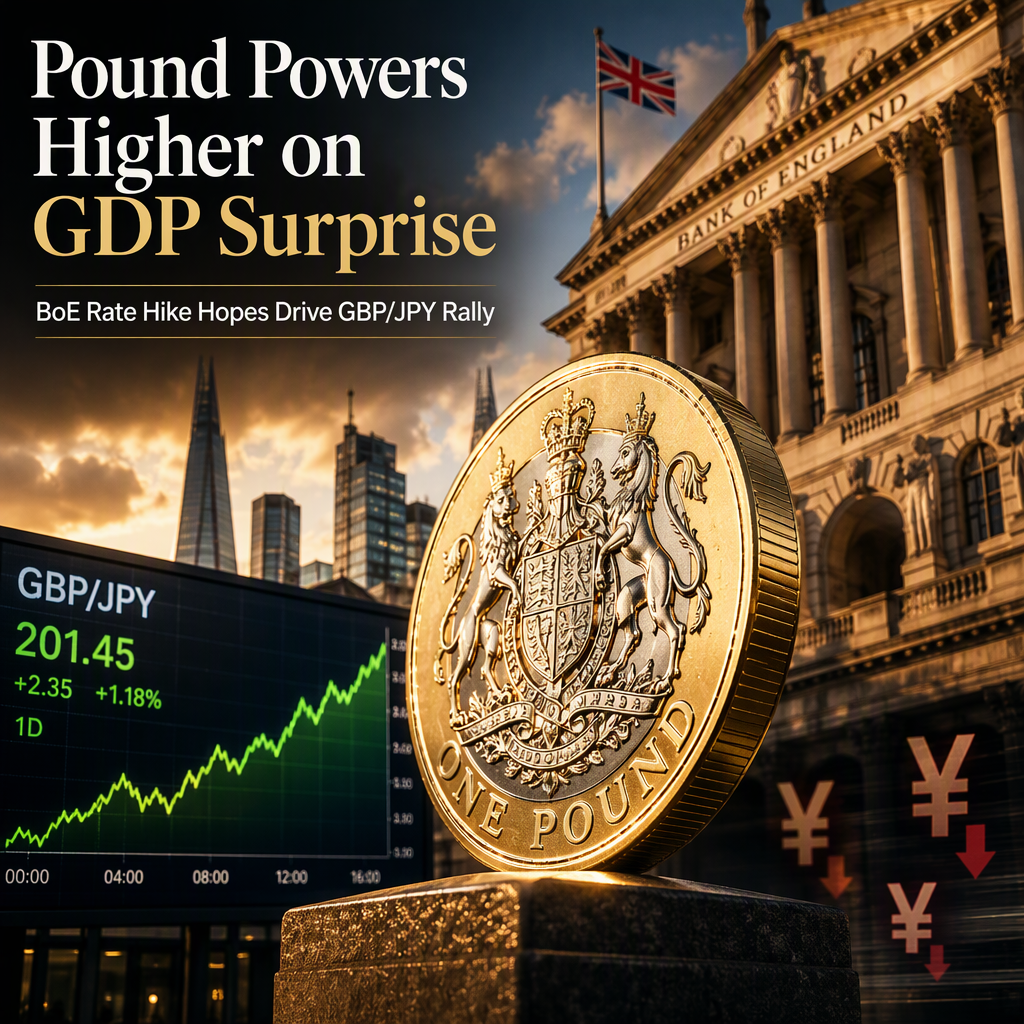
The British Pound (GBP) rebounded sharply against the Japanese Yen (JPY) on Wednesday, with the GBP/JPY cross trading around 208.65 after recovering from a low of 206.89 earlier in Asian trading hours. This rebound followed the release of stronger-than-expected UK economic growth data, which showed that the UK economy expanded by 0.5% quarter-on-quarter in the second quarter, surpassing both the preliminary estimate and market expectation of 0.4%. On an annual basis, UK Gross Domestic Product (GDP) grew by 1.4%, also exceeding the earlier estimate and consensus forecast of 1.2% [1].
The Pound was the strongest major currency on the day, gaining 0.40% against the Japanese Yen and outperforming other major currencies such as the US Dollar and Euro. The positive growth figures have reinforced expectations that the Bank of England (BoE) could raise interest rates later this year, with traders pricing in around 33 basis points of rate increases by year-end and more than 100 basis points by the end of 2027, according to LSEG data cited by Reuters [1].
Strategists at BBH noted that the Pound was boosted by the upward revision to UK Q2 real GDP growth. However, they cautioned that attention will now turn to the October 28 Autumn Budget, which is expected to include tax rises and spending cuts as Chancellor John Healey seeks to build a solid fiscal buffer against uncertainty. The upside for GBP/JPY may remain limited in the near term, as intervention warnings from Japanese officials are keeping the Yen's losses in check [1].
CONCLUSION
Stronger-than-expected UK GDP data has driven a sharp rebound in the British Pound against the Japanese Yen, fueling expectations of further Bank of England rate hikes. However, upcoming fiscal policy announcements and potential Japanese intervention may temper further gains in the currency pair.