
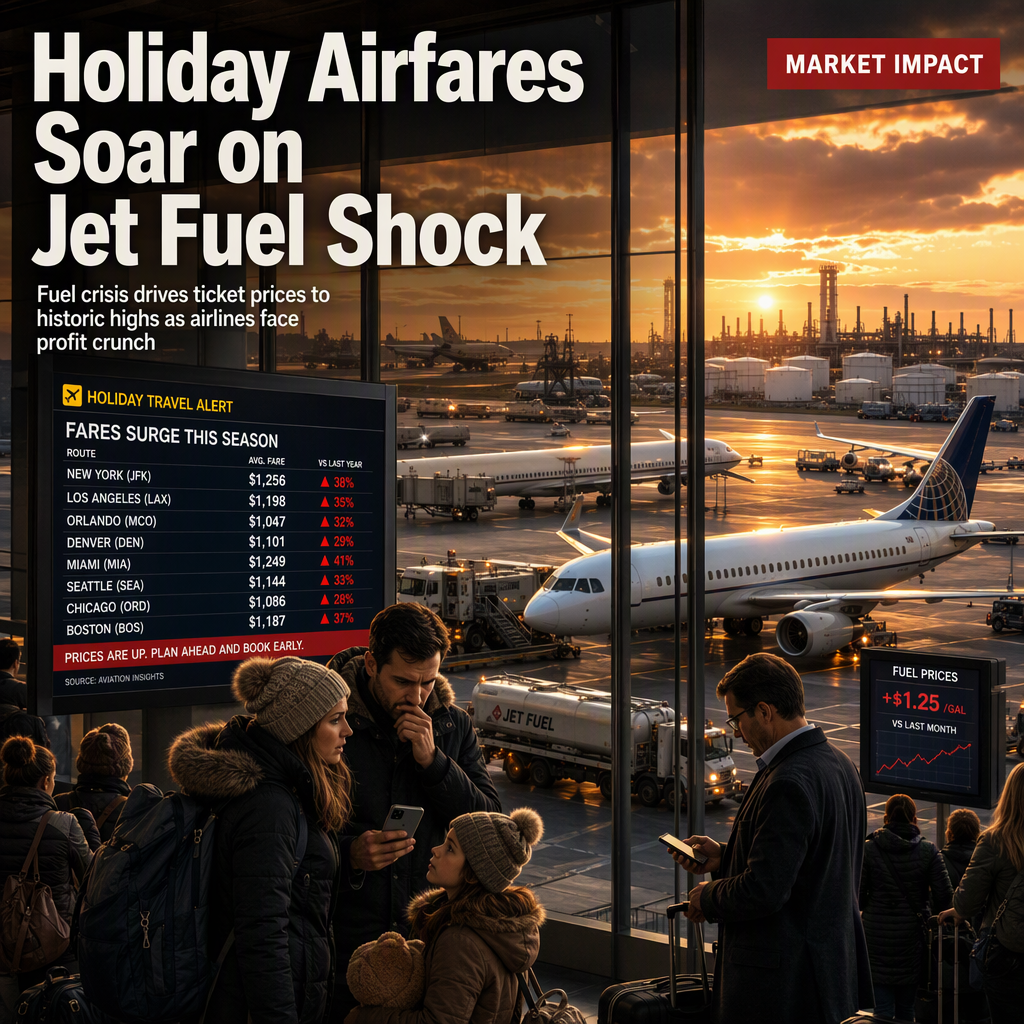
U.S. airfares have experienced a significant increase, rising 23.4% in August compared to the previous year, with fares for Thanksgiving and Christmas also sharply higher [1]. This surge is attributed to elevated and volatile jet fuel costs, which have been driven up by the Iran war that began at the end of February, causing disruptions in the Strait of Hormuz and pushing fuel prices to multi-year or record highs [1]. Jet fuel, the largest expense for airlines after labor, has seen price increases outpacing crude oil due to supply scares and high demand [1].
Despite slightly fewer people flying this year—security screenings at U.S. airports were down 1% through September 20 compared to the same period in 2025—overall travel demand remains strong, even with higher ticket prices [1]. According to fare-tracking platform Hopper, as of September 24, domestic round-trip tickets for Thanksgiving were priced at $402, up 31% from last year, while Christmas fares were up 23% at $452 per round-trip [1]. Hopper economist Hayley Berg noted that many customers are booking holiday flights earlier than usual, indicating resilient demand despite higher costs [1].
Airlines have responded to increased fuel expenses by raising fares, adding fuel surcharges, and increasing checked baggage fees [1]. They are also adjusting capacity and enhancing premium offerings by adding more luxurious seats, sometimes at the expense of standard coach seats, to capitalize on demand for pricier options [1]. However, the higher fuel costs are offsetting revenue gains, leading analysts and carriers to cut or reassess profit expectations [1]. Airline executives, including Qantas Airways CEO Vanessa Hudson, do not anticipate relief in fuel costs soon and are focused on maintaining appropriate capacity settings in the face of ongoing demand and cost pressures [1].
The United States' intermittent truce talks with Iran have contributed to ongoing fuel price volatility, but airlines are maintaining higher fares as customers continue to book flights [1]. The combination of resilient travel demand and elevated operating costs is making airline profits harder to achieve this year [1].
CONCLUSION
U.S. airfares have climbed sharply due to persistent jet fuel price increases and supply disruptions, with holiday travel costs notably higher than last year. While demand remains robust, airlines are struggling to translate higher revenues into profits as fuel expenses continue to rise. The market impact is high, with ongoing volatility in fuel prices and cautious profit outlooks from both analysts and airline executives.