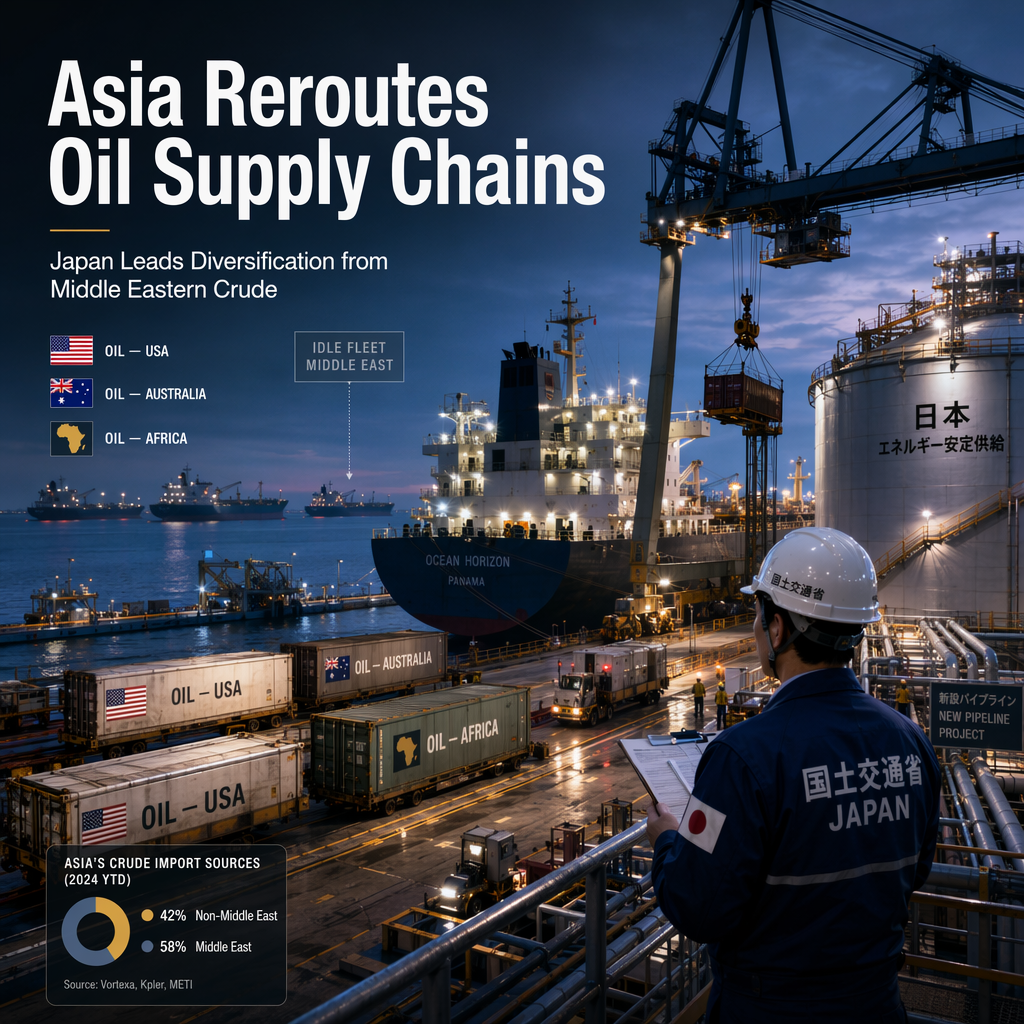
Asian oil importers, led by Japan, are intensifying efforts to diversify away from Middle Eastern crude supplies, even as oil prices have returned to pre-U.S.-Iran conflict levels [1]. The Japanese government announced that it expects to source 100% of its oil through routes other than the Strait of Hormuz in July, reflecting a strategic move to reduce reliance on the region due to ongoing geopolitical risks [1]. This shift is driven by concerns over supply security rather than price alone, as the conflict in Iran and broader instability in the Middle East have made traditional supply routes less attractive [1].
To mitigate these risks, Asian buyers are increasingly turning to alternative sources such as the U.S., Australia, and African countries, and are securing long-term contracts and investing in infrastructure to support diversified sourcing [1]. Market analysts suggest that this structural change in supply chains could have lasting effects on global oil trade patterns and pricing dynamics [1]. Technical analysis indicates that crude oil prices have stabilized, with support levels at $70 per barrel and resistance near $85, but the market remains sensitive to further geopolitical developments [1].
A senior analyst at a Tokyo-based energy consultancy emphasized that the risk premium for Middle Eastern oil now encompasses not just price volatility but also the threat of sudden supply disruptions, leading Asian importers to accept higher costs for more predictable supply routes [1]. Japan is reportedly on track to meet its target of sourcing all oil through alternative routes for at least the month of July, supported by investments in storage, logistics, and increased purchases from the U.S. and Australia [1].
Market sentiment is described as cautious, with traders closely monitoring regional developments and adjusting positions accordingly. While immediate risks have receded, technical indicators warn that volatility could return if tensions in the Middle East escalate again [1].
CONCLUSION
Asian importers, particularly Japan, are prioritizing supply security over price by diversifying away from Middle Eastern oil, a trend expected to persist despite recent price stabilization. This strategic shift could reshape global oil trade patterns, with market sentiment remaining cautious amid ongoing geopolitical risks.