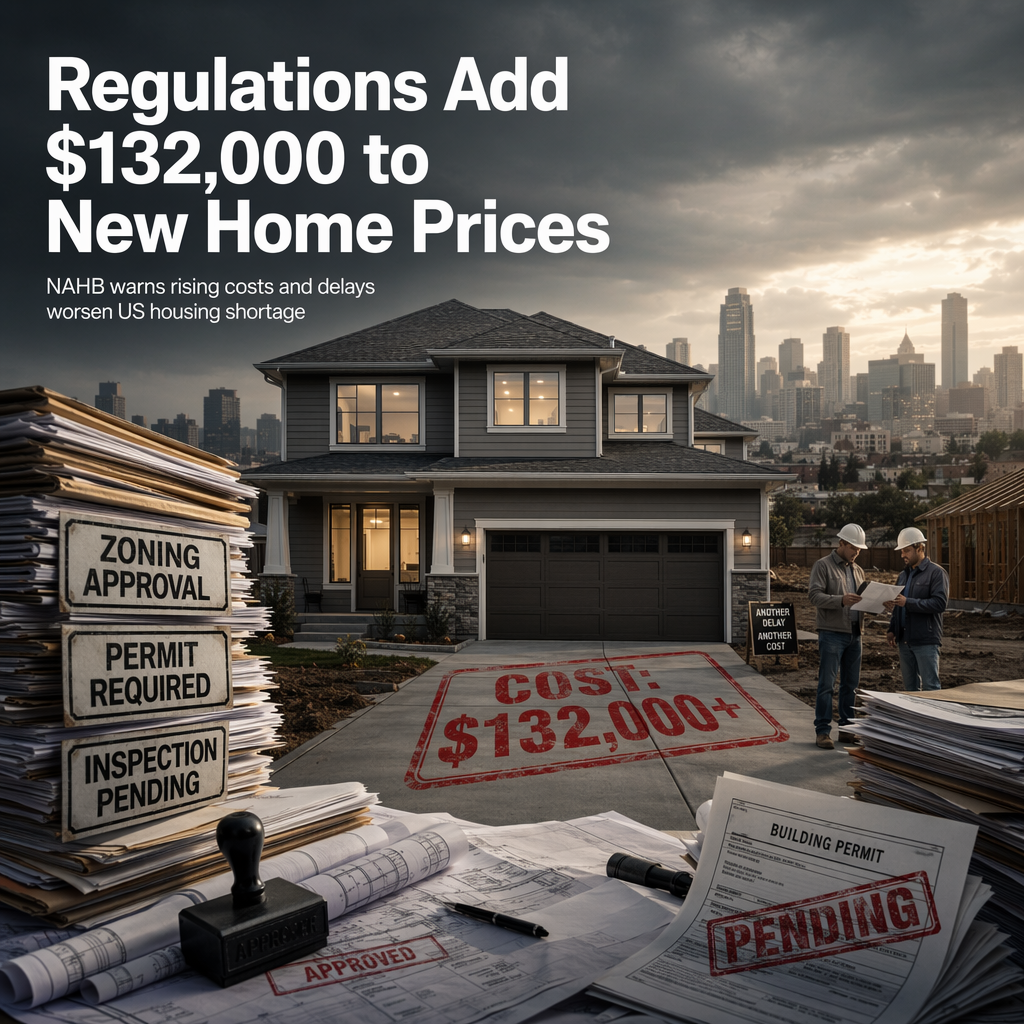
A new study from the National Association of Home Builders (NAHB) reveals that government regulations now add approximately $132,000 to the cost of a typical newly built home in the United States, accounting for 26.4% of the final price of a new single-family home [1]. This estimate is based on Census Bureau data, which showed the average sales price of a newly built home sold in January was $499,500 [1]. The regulatory burden has increased sharply in recent years, rising from $93,870 in 2021 to $131,734 today—a jump of roughly 40% over five years [1].
The NAHB study identifies changes to building codes over the past decade as the largest single regulatory burden, adding about $40,288 to the cost of a typical new home [1]. Other significant costs include zoning approvals, permit and inspection fees, environmental and traffic studies, land-use requirements, labor regulations, and delays in obtaining approvals [1]. According to the report, 94.2% of developers surveyed said regulations typically cause project delays, and 88.2% reported facing development standards that exceed what they would ordinarily build [1].
NAHB Chief Economist Robert Dietz stated that 'costly and inefficient regulatory policy is clearly impeding the ability of builders to increase the housing supply,' and suggested that easing permitting bottlenecks, density limits, and inefficient zoning rules would help reduce costs and support needed housing growth [1]. NAHB Chairman Bill Owens highlighted that the nation is short about 1.2 million homes and argued that reducing barriers to construction could help boost housing supply [1].
Market sentiment among builders remains subdued. The latest NAHB/Wells Fargo Housing Market Index showed builder sentiment fell to 35 in June, marking the 14th consecutive month of low confidence, as affordability challenges persist amid elevated mortgage rates and high home prices [1].
CONCLUSION
The NAHB study underscores the significant impact of government regulations on new home costs, with regulatory burdens rising sharply in recent years. Industry leaders warn that these costs are worsening housing affordability and builder sentiment remains weak, suggesting continued challenges for the housing market unless regulatory barriers are addressed.