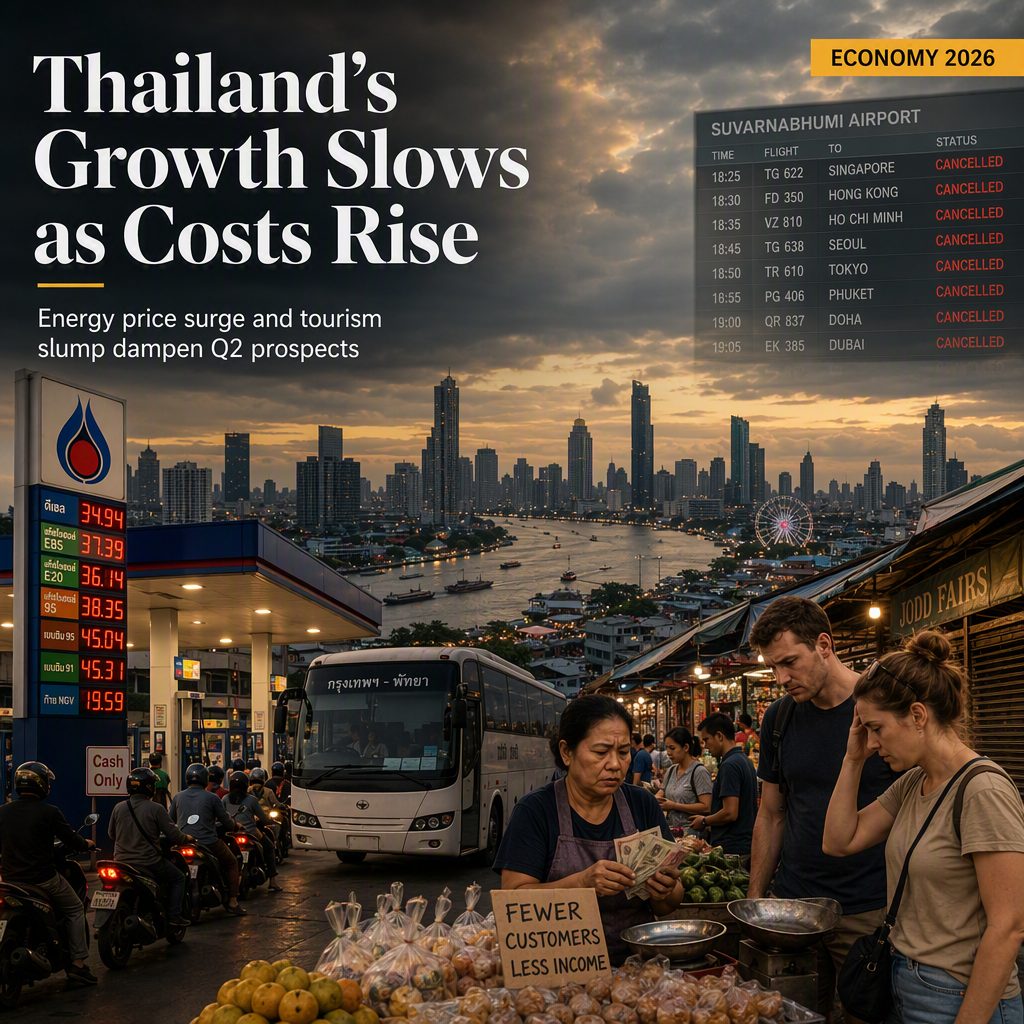
Thailand's economy expanded by 1.9% year-on-year in the April-June quarter of 2026, according to official data released on August 17, marking a slowdown from the 2.8% growth recorded in the previous quarter [1]. The deceleration was attributed to higher energy prices, which constrained household spending and pushed up inflation, thereby reducing disposable income [1]. Additionally, the ongoing conflict in the Middle East, specifically the war in Iran, disrupted travel and led to a decline in the number of visitors to Thailand during the first seven months of 2026 [1]. This downturn in tourism, a critical sector for Thailand's economy, further contributed to the weaker overall expansion [1].
The impact of elevated energy costs and travel disruptions was not limited to Thailand; four out of six major ASEAN economies also reported weaker expansion during the same period, with Thailand being among the most affected [1]. Official data highlighted that the tourism sector, which had shown signs of recovery in late 2025, faced renewed challenges as geopolitical tensions escalated, resulting in fewer arrivals and reduced spending [1].
Despite these headwinds, Thai officials emphasized that the country's economic fundamentals remain resilient. However, they cautioned that near-term risks persist due to external shocks and volatile commodity markets, suggesting ongoing uncertainty for the remainder of the year [1].
CONCLUSION
Thailand's Q2 GDP growth slowdown to 1.9% reflects significant challenges from rising energy prices and a decline in tourism, both exacerbated by geopolitical tensions in the Middle East. While officials maintain confidence in the country's economic resilience, persistent external risks and volatility are likely to weigh on near-term prospects.