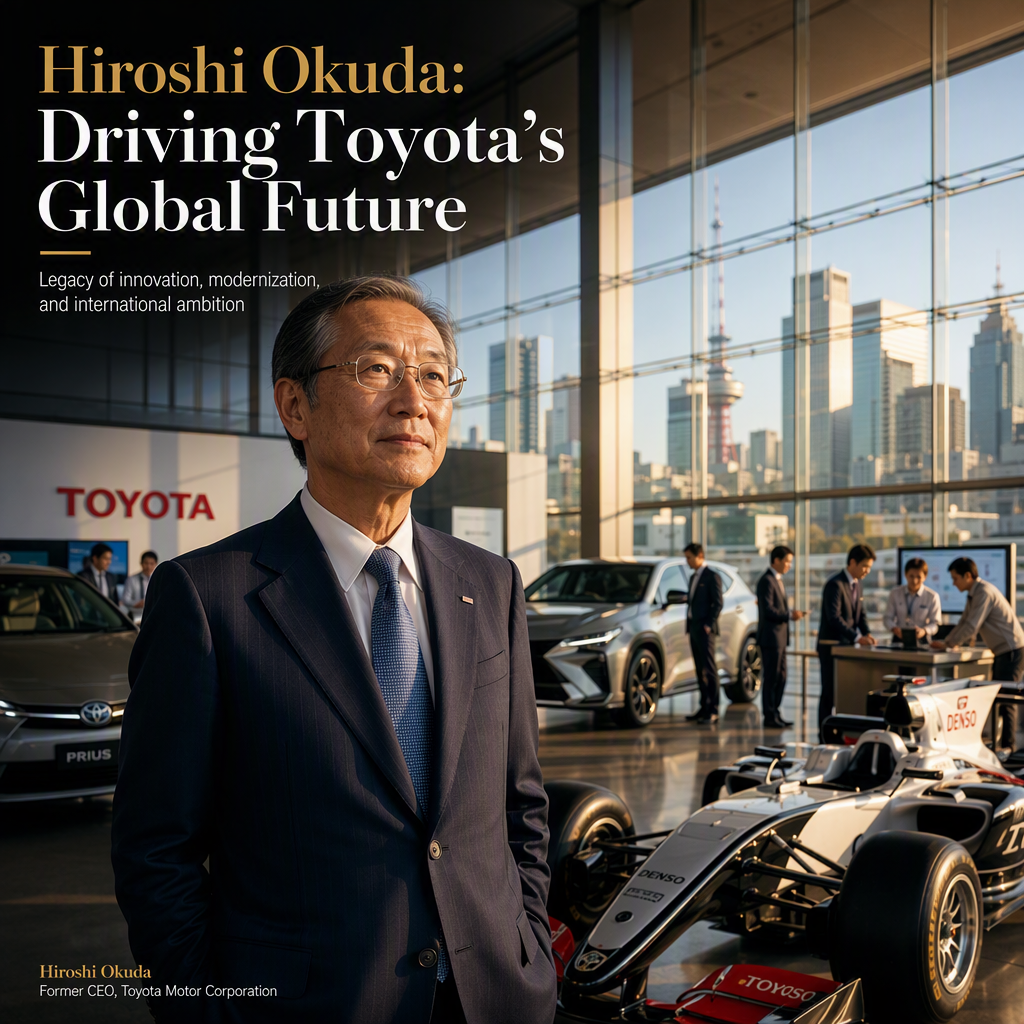
Hiroshi Okuda, the late former president of Toyota Motor and former chairman of the Japan Business Federation, is remembered as a transformative figure in Japanese business who played a pivotal role in Toyota's globalization and modernization efforts [1]. Okuda notably announced Toyota's entry into Formula One racing in Tokyo in January 1999, marking a significant step in the company's international ambitions [1].
During his leadership, Okuda aggressively advocated for the expansion of Japanese business on the global stage and was instrumental in setting ambitious targets, including Toyota's aim for a 2027 global output of 10.5 million vehicles to meet rising demand for hybrid models [1]. Toyota's earnings became increasingly tied to the U.S. market under his guidance, with Okuda adeptly navigating policy shifts, including those resulting from U.S. political changes such as the Trump administration [1].
Okuda's tenure also saw Toyota raise its full-year net profit forecast, benefiting from a weak yen that enhanced the company's export competitiveness [1]. He led Toyota through periods of significant investment, including collaborations with NTT and other Japanese firms, resulting in a record year for capital expenditure in areas such as artificial intelligence and factory upgrades [1].
Known for his outspoken views and willingness to challenge traditional business practices, Okuda was a prominent advocate for modernization and internationalization within the Japanese corporate sector [1].
CONCLUSION
Hiroshi Okuda's leadership at Toyota was marked by bold moves toward globalization, innovation, and modernization, leaving a lasting impact on the company and Japanese industry. His strategies positioned Toyota for continued growth and adaptation in a rapidly changing global market. The market impact of his legacy is reflected in Toyota's ambitious output targets and increased international competitiveness.