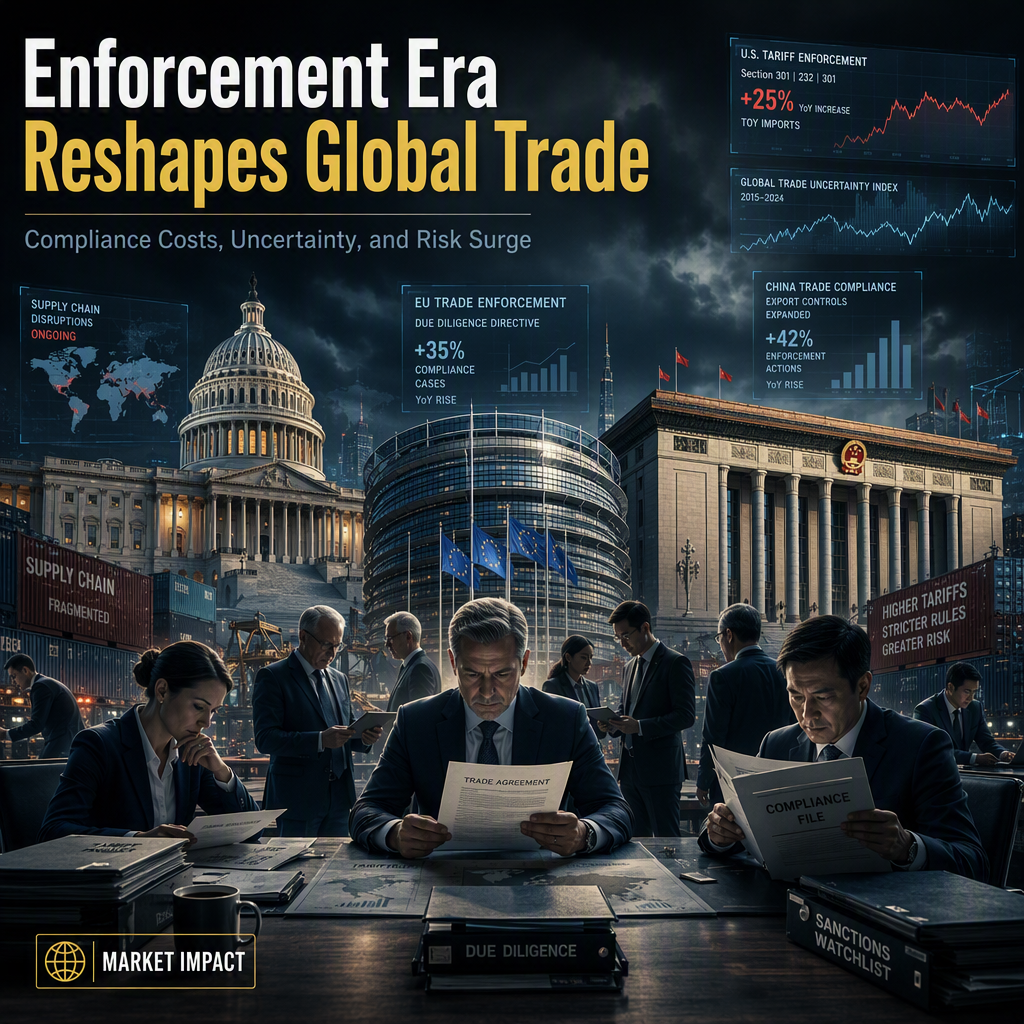
Global trade is undergoing a significant transformation as the United States, European Union, and China—the world's three largest economic blocs—move away from negotiating new trade rules and instead focus on enforcing existing regulations. This shift is fundamentally altering how companies and investors approach international business, with legal triage now becoming central to due diligence for cross-border commerce [1].
The escalation of trade disputes, subsidies investigations, and retaliatory tariffs has increased the importance of strategic planning that accounts for regulatory intervention, market access restrictions, and sudden changes in trade policy. The United States is leveraging tools such as the Inflation Reduction Act to promote domestic manufacturing and scrutinize Chinese investments, while the EU has expanded its Foreign Subsidies Regulation and is actively investigating subsidies to Chinese electric vehicle makers. In response, China is implementing its own countermeasures, including anti-dumping investigations and export controls [1].
These enforcement actions are resulting in a more fragmented global trading system, with companies facing higher compliance costs, increased uncertainty, and the need for constant monitoring of evolving legal landscapes. The EU’s Carbon Border Adjustment Mechanism, which requires importers to account for the carbon emissions of their products, has prompted some affected countries to consider reciprocal measures. Sectors such as automotive, electronics, and green technologies are particularly exposed to these new enforcement regimes, according to recent market analysis [1].
Analysts note that regulatory risk has become as significant as geopolitical risk for investors assessing supply chains and capital allocation. A leading consultancy report states, “Companies can no longer rely on the predictability of multilateral trade agreements. Instead, the focus is on compliance, monitoring enforcement actions, and maintaining flexibility to adapt operations as the legal environment evolves.” This environment is elevating the role of legal and compliance professionals in strategic decision-making. In financial markets, investors are prioritizing companies with strong risk management and diversified supply chains, as price levels in affected sectors have shown increased volatility following major enforcement announcements [1].
CONCLUSION
The shift by the US, EU, and China toward enforcement over new trade rulemaking is increasing compliance costs, uncertainty, and volatility in key sectors. Investors and companies are responding by prioritizing risk management and supply chain diversification. The market impact is high, with regulatory risk now a central concern for global business strategy.