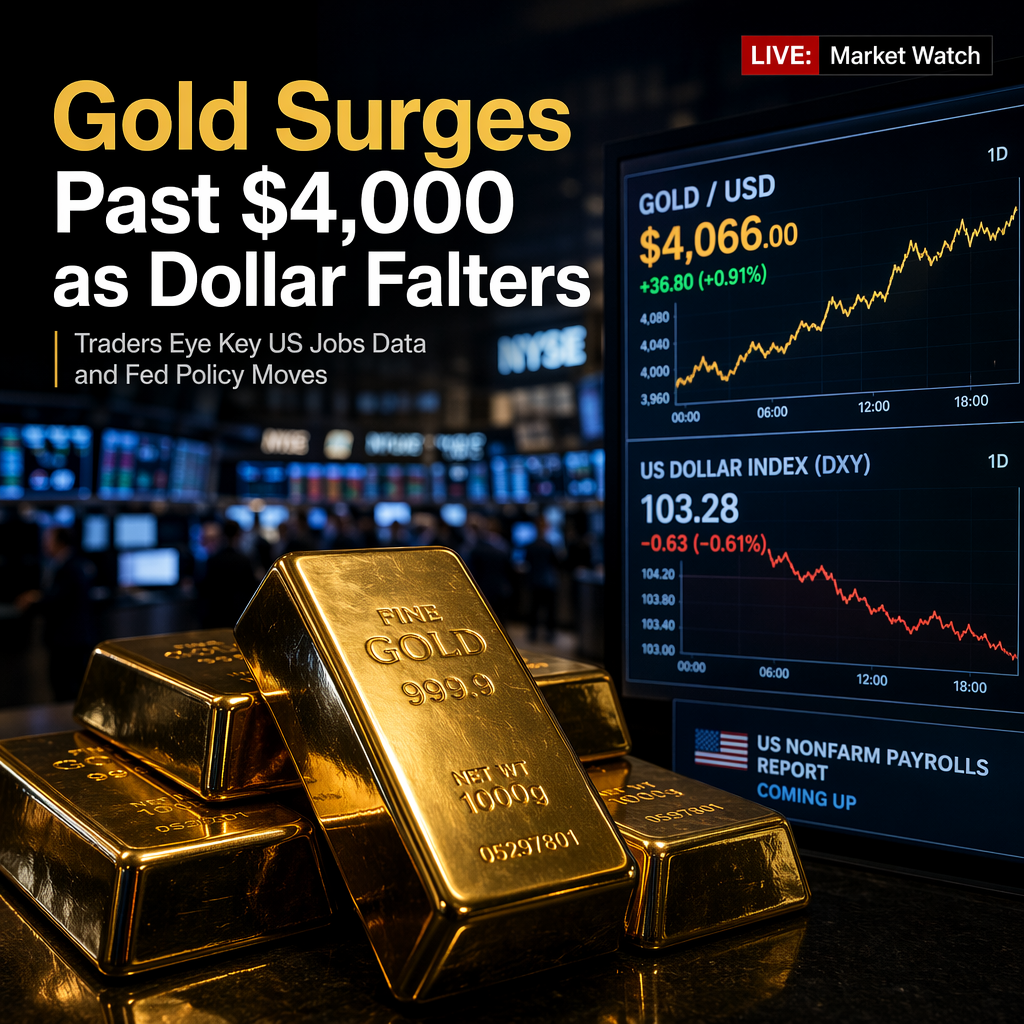
Gold (XAU/USD) traded higher on Thursday, rising nearly 0.87% to around $4,066, as the US Dollar weakened amid speculation of possible intervention by Tokyo following the Japanese Yen's decline to a 40-year low earlier in the week [1]. The precious metal remained within a one-week trading range of $3,950 to $4,100, with traders focused on the upcoming US Nonfarm Payrolls (NFP) report scheduled for release at 12:30 GMT [1]. The US Dollar Index (DXY), which measures the Greenback against a basket of six major currencies, traded near 101.08 after hitting a nine-day low of 100.93 earlier in the day [1], and was reported 0.4% lower at approximately 101.00 in another update [2].
Economists expect the US economy to add 110,000 jobs in June, down from 172,000 in May, with the Unemployment Rate anticipated to remain unchanged at 4.3% [1][2]. The outcome of the NFP report is seen as pivotal for shaping expectations regarding Federal Reserve (Fed) interest rate decisions this year, with markets currently pricing in a 62% probability of a rate hike at the September meeting, according to the CME FedWatch tool [1]. A stronger-than-expected jobs report could reinforce expectations for further rate hikes, while weaker data may temper those expectations [1].
Fed Chair Kevin Warsh has reiterated the central bank's commitment to restoring inflation to its 2% target, stating, "We are in the price stability business," at the European Central Bank (ECB) Forum on Wednesday [1]. However, according to [2], Warsh did not provide any forward-looking policy guidance in his speech at the ECB Forum, instead warning that inflation remains "too high" and emphasizing the need for price stability. This reflects a cautious stance from the Fed, with monetary policy expected to remain restrictive for longer [1][2].
Technical analysis indicates that gold's recovery has stalled below the $4,100 resistance level, with the price holding below both the 200-day and 100-day Simple Moving Averages (SMA), and the Relative Strength Index (RSI) at 38, suggesting lingering downside momentum [1]. Meanwhile, the British Pound (GBP) has surged 0.5% to near 1.3340 against the US Dollar, outperforming its peers amid hopes for continued UK fiscal discipline despite a leadership change [2].
Recent geopolitical developments include a 60-day Memorandum of Understanding (MoU) between the US and Iran that partially reopened the Strait of Hormuz, contributing to a sharp decline in oil prices, with West Texas Intermediate (WTI) crude trading around $67 per barrel, its lowest since February [1]. Indirect talks between the US and Iran in Doha have shown "positive progress," though no significant breakthrough has been announced [1].
CONCLUSION
Gold prices are holding above the key $4,000 level as the US Dollar weakens ahead of the critical US NFP report, which is expected to influence Federal Reserve policy expectations. Market sentiment remains cautious, with technical indicators pointing to lingering downside risks for gold and the Fed maintaining a restrictive stance amid persistent inflation concerns.