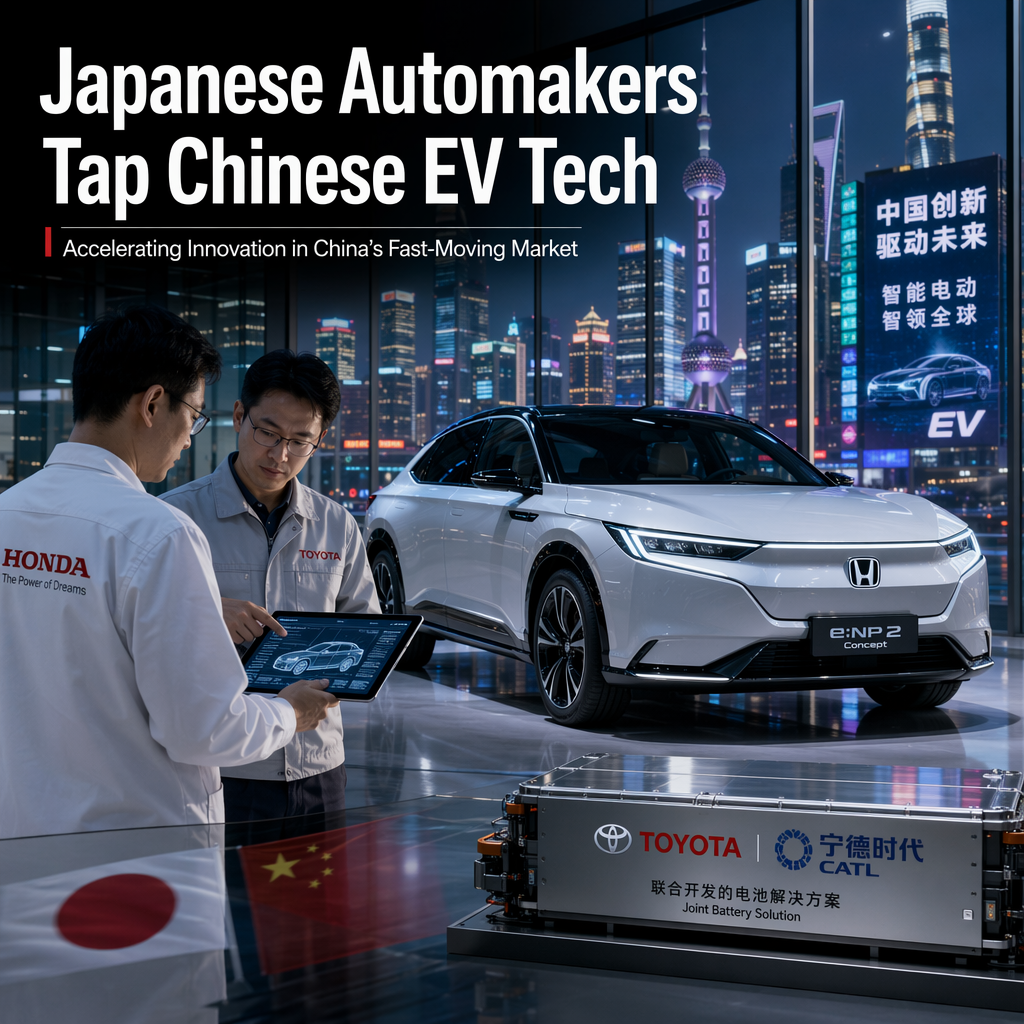
Japanese automakers Honda and Toyota are increasingly adopting Chinese electric vehicle (EV) technology as they strive to catch up with local competitors in the rapidly evolving Chinese EV market [1]. This strategic shift involves a growing reliance on Chinese suppliers, which enables Japanese brands to accelerate product development cycles and reduce production costs—factors deemed critical in the highly competitive Chinese automotive landscape [1].
A prominent example of this collaboration is Toyota's bZ7 electric vehicle, which reportedly shares design similarities with Guangzhou Automobile Group's Hyptec A800, highlighting the deepening technological ties between Japanese and Chinese companies [1]. Industry experts note that Japanese automakers are leveraging China's advanced battery technology and local supply chains to enhance their competitiveness [1].
Market analysts view this approach as a pragmatic response to the rapid innovation cycles in China's EV sector, which are significantly shorter than those in Japan [1]. The trend reflects the broader challenges Japanese automakers face as the global market shifts toward electrification, with pure electric vehicles increasingly dominating sales and consumer preferences [1].
While Japanese carmakers have a strong legacy in hybrid technology, they are now racing to adapt to a market environment where pure EVs are becoming the norm [1].
CONCLUSION
Honda and Toyota's embrace of Chinese EV technology marks a significant strategic pivot as they seek to remain competitive in the fast-moving Chinese market. By leveraging local partnerships and supply chains, Japanese automakers aim to accelerate innovation and reduce costs, underscoring the urgency of adapting to the global shift toward electrification.