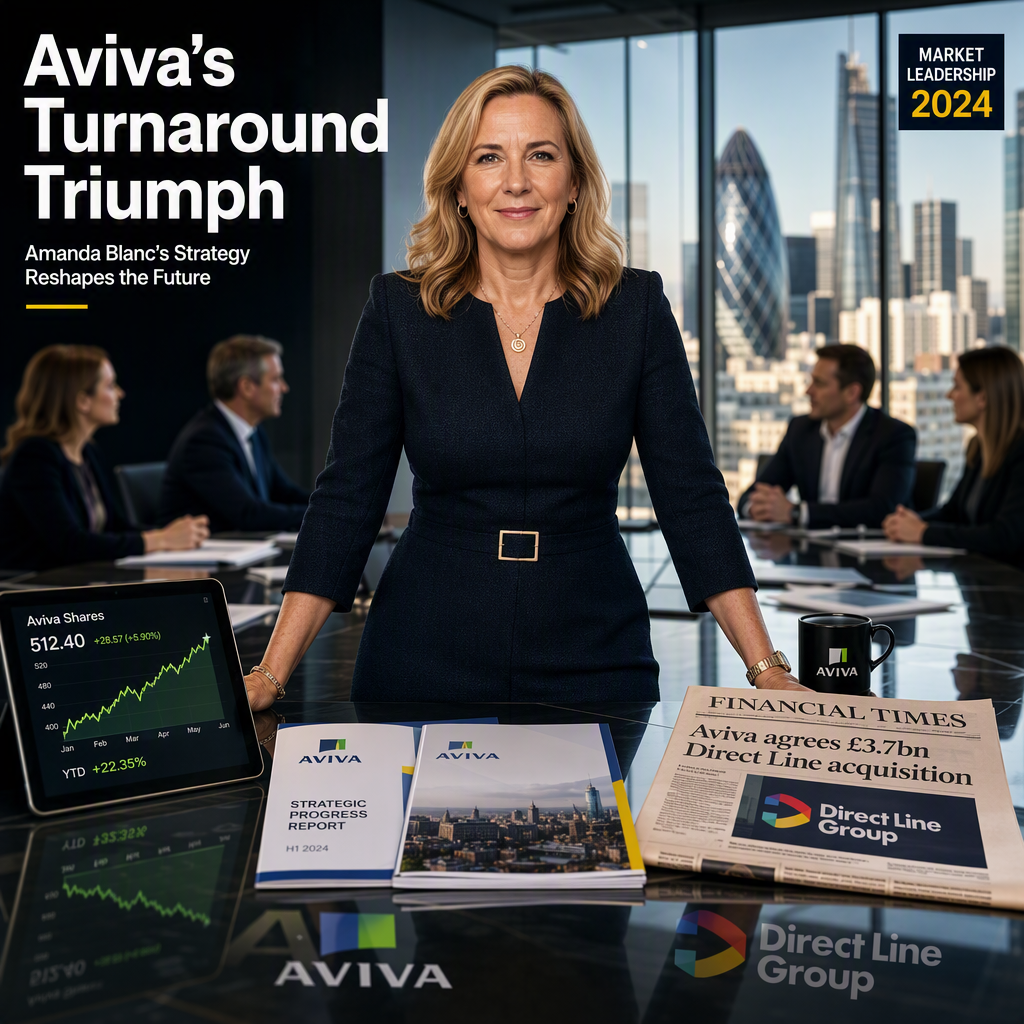
Aviva, one of the U.K.'s most widely held stocks with 22 million customers, has undergone a significant turnaround under CEO Amanda Blanc, who took the helm in July 2020. After years of disappointing share price performance and leadership changes, Blanc implemented a focused strategy that involved raising approximately £8 billion ($10.8 billion) through the disposal of eight businesses, including exits from France, Italy, and Poland. This rationalization allowed Aviva to concentrate on its core markets: the U.K., where it leads in life and general insurance; Canada, where it is the second-largest general insurer; and Ireland, where it ranks third in the market [1].
Since Blanc's appointment, Aviva has returned around £10 billion to investors, including dividends, signaling a strong commitment to shareholder value. The company's strategic shift from deploying capital in slower-growing European markets to focusing on its strengths has been rewarded with robust share price performance [1].
Growth has now become the priority for Aviva, both organically and through acquisitions. The most notable recent move was Aviva's acquisition of its struggling rival Direct Line in December 2024 for £3.7 billion, which secured Aviva a fifth of the U.K. market. This bold acquisition underscores the company's ambition to solidify its market leadership and pursue further expansion [1].
While Aviva's turnaround is widely regarded as one of the most remarkable in recent corporate Britain, the article notes that investors are now turning their attention to the company's next steps, questioning what Amanda Blanc will do for an encore following this period of successful transformation [1].
CONCLUSION
Aviva's focused strategy under Amanda Blanc has delivered substantial returns to investors and strengthened its market position through targeted disposals and a major acquisition. With the turnaround phase largely complete, market participants are now keenly watching for the company's next strategic moves to sustain its growth trajectory.