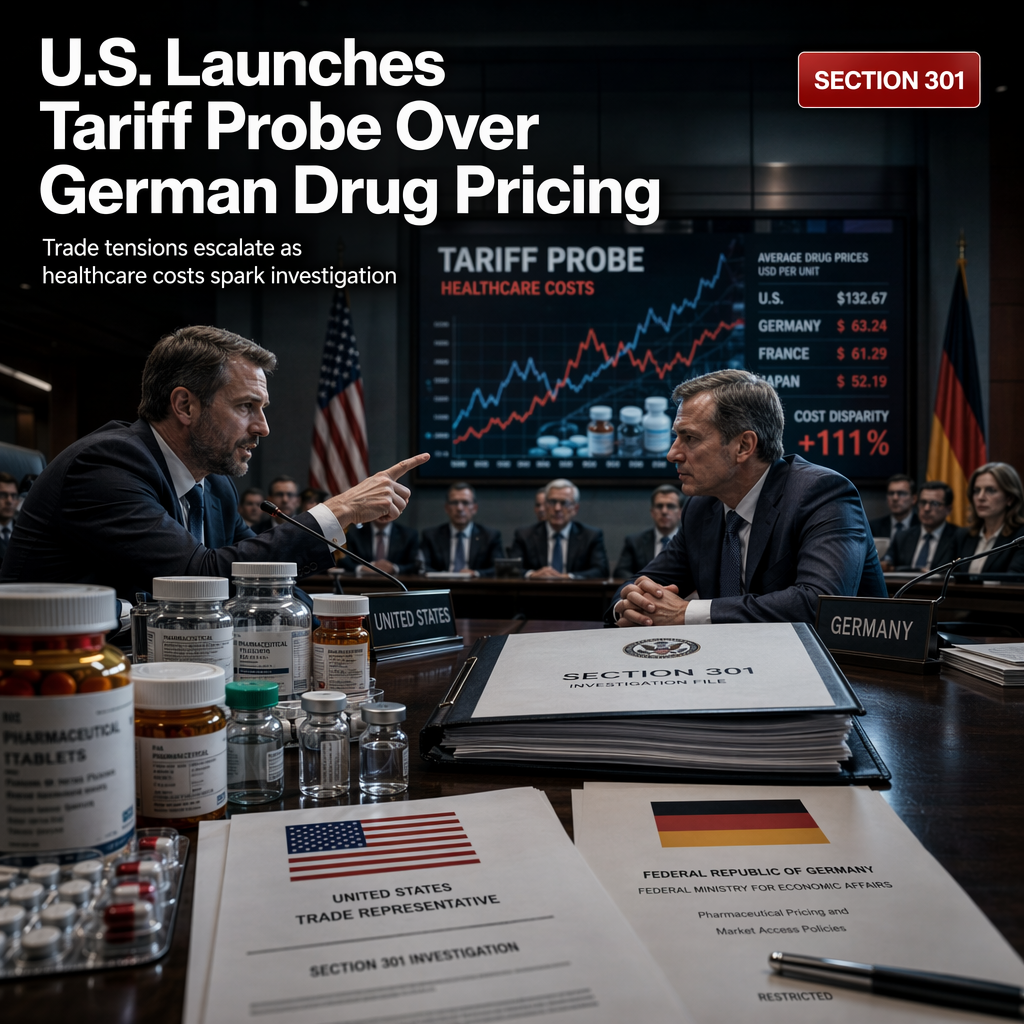
The United States has launched a formal investigation into Germany's pharmaceutical pricing policies, citing concerns over what it describes as 'persistent underpayment' for medicines by Germany as the country seeks to control rising healthcare costs, including drug expenditures [1]. U.S. Trade Representative Jamieson Greer stated that President Trump is determined to ensure American patients do not bear a disproportionate share of global pharmaceutical research and development costs, expressing particular concern over Germany's fast-tracking of legislation aimed at further reducing spending on innovative pharmaceuticals [1]. Greer characterized this legislative move as 'a serious step backwards' [1].
In April, Germany proposed a significant overhaul of its health insurance system to alleviate pressure on public finances, introducing cost-saving measures such as higher discounts for insurance funds from the pharmaceutical industry [1]. This has led several drugmaker executives to warn that they may withdraw or delay the introduction of new medicines in Germany [1]. The proposed legislation is currently under parliamentary review [1].
The U.S. investigation is being conducted under Section 301 of the Trade Act, which permits unilateral action against countries deemed to engage in unfair practices that burden U.S. commerce [1]. Greer emphasized that U.S. trading partners must contribute their fair share to funding research into new medicines and noted that the investigation follows months of discussions with German officials [1].
The Trump administration previously introduced the Most Favored Nation (MFN) drug policy, which ties U.S. medicine prices to lower prices abroad [1]. The German Health Ministry has not yet responded to requests for comment regarding the investigation [1].
CONCLUSION
The U.S. government's Section 301 investigation into Germany's drug pricing policies signals escalating trade tensions and could have significant implications for pharmaceutical markets and transatlantic relations. The outcome of this probe may influence future drug pricing negotiations and market access for pharmaceutical companies in both countries.