
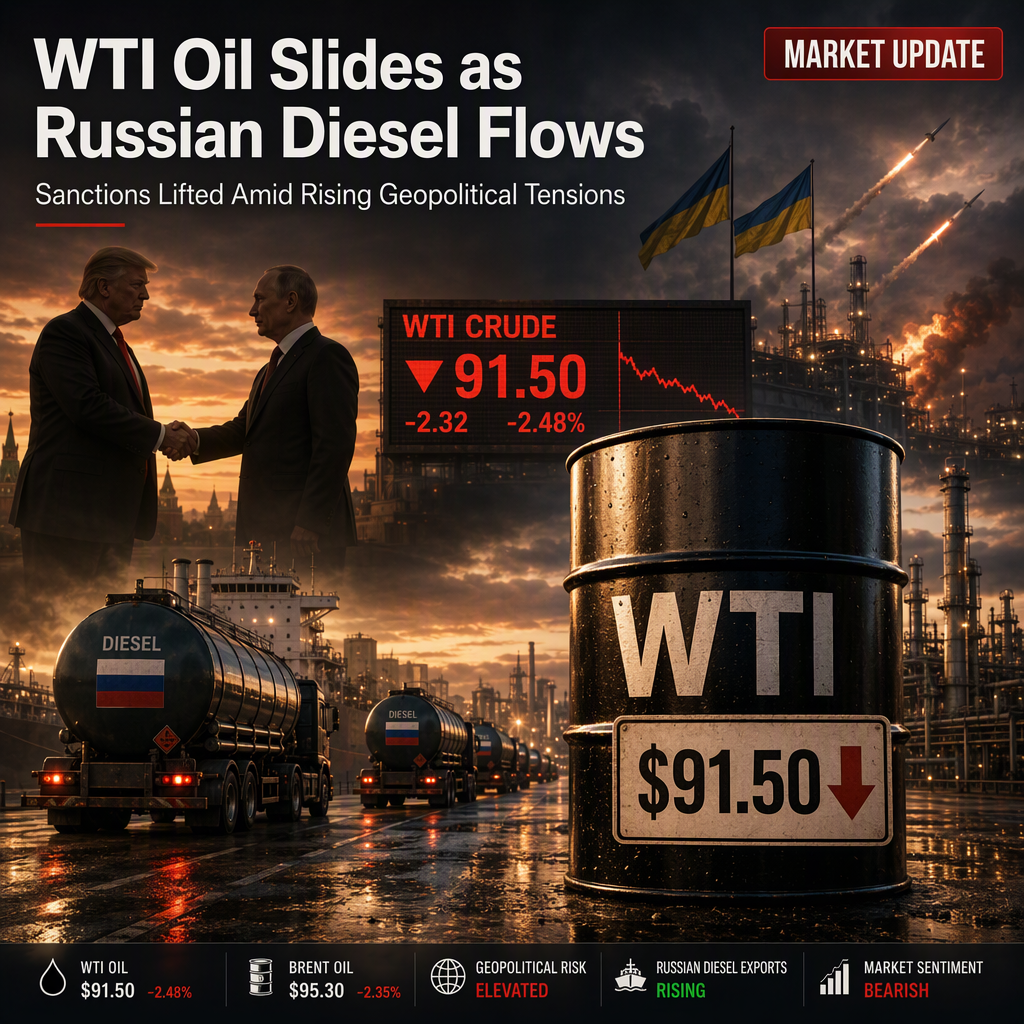
West Texas Intermediate (WTI) crude oil prices declined to around $91.50 per barrel during European trading hours on Tuesday, ending a three-day winning streak. The drop was attributed to the announcement that Russia would supply diesel to global markets, following an agreement between US President Donald Trump and Russian President Vladimir Putin. This development led the Trump administration to temporarily lift US sanctions on Russian fuel, which were originally imposed to restrict Moscow's revenue amid the ongoing war in Ukraine. The influx of Russian diesel is expected to ease tightness in global fuel markets, alleviating some of the supply concerns that had previously driven crude prices higher [1].
Despite the market's reaction to the increased supply, the decision has sparked significant controversy. US lawmakers have criticized President Trump's agreement, arguing that it may violate US law prohibiting Russian energy imports until Russia ceases its aggression against Ukraine. Meanwhile, Ukrainian President Volodymyr Zelenskyy has pledged to continue strikes against Russian targets, citing ongoing attacks by Moscow on Ukraine's energy infrastructure, which he claims breach the 'energy ceasefire' previously announced by Trump [1].
In addition to the developments surrounding Russian diesel, the Trump administration is under growing pressure to support Saudi Arabia in its conflict with Iran-backed Houthi militants in Yemen. This follows recent missile and drone attacks on Riyadh’s main airport, raising further geopolitical concerns [1].
Analysts at Danske Bank observed that Brent crude traded around $105 per barrel on Tuesday morning, down from $107 per barrel the previous night, as markets reassessed the impact of potential Russian diesel flows. This reassessment has led to a modest pullback in oil prices after gains in the previous session [1].
CONCLUSION
The announcement of increased Russian diesel exports and the temporary lifting of US sanctions have led to a decline in WTI and Brent crude prices, as markets anticipate an easing of supply constraints. However, the move has generated political controversy and heightened geopolitical tensions, particularly regarding US-Russia relations and ongoing conflicts in Ukraine and Yemen. Overall, the market response has been moderately negative, reflecting both relief over supply and concern over political risks.