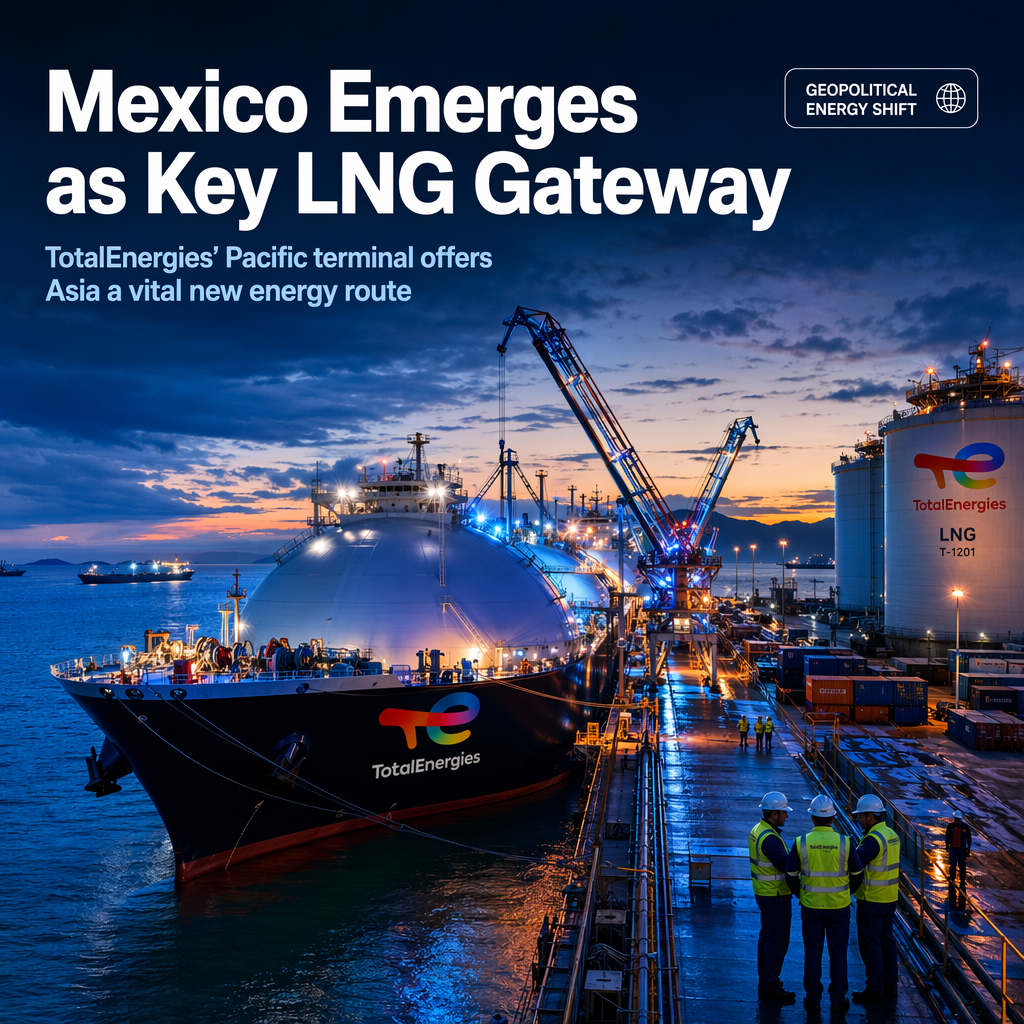
French energy company TotalEnergies has completed its first shipment of liquefied natural gas (LNG) from a new export facility in Mexico to Asia, marking a significant milestone for Mexico's role in the global LNG market [1]. This development comes as Asian importers seek alternative supply routes that bypass traditional chokepoints, such as the Strait of Hormuz, which has faced blockages and heightened risks due to the recent escalation in the Iran war [1].
The new Pacific coast terminal operated by TotalEnergies is positioned as a safer and more reliable supply alternative for Asian buyers, who are increasingly concerned about energy security and supply continuity in light of ongoing geopolitical tensions [1]. Market analysis indicates that LNG prices have remained elevated and slow to normalize, despite the Iran deal and the restart of Qatar's production, as risk premiums persist and supply routes remain uncertain [1].
Industry observers suggest that Pacific coast terminals, including those in Mexico, are set to become crucial supply hubs for Asia in the near term [1]. A senior market analyst described the opening of this route as a "game-changer for Asian LNG buyers," emphasizing that the current 'severe' risk rating for the Hormuz region will continue to drive market sentiment and support elevated price levels [1]. Technical analysis shows that LNG contract prices are holding above key support levels, reflecting ongoing supply concerns and robust demand from Asia [1].
The shipment also coincides with efforts in Japan, South Korea, and Malaysia to maximize LNG imports and revive domestic production of LNG carriers, trends that are expected to influence both spot and long-term contract prices [1]. Market participants are closely monitoring developments in Pacific coast infrastructure, as any disruptions or expansions could have significant impacts on LNG pricing and market flows [1].
CONCLUSION
TotalEnergies' inaugural LNG shipment from Mexico to Asia highlights the growing importance of alternative supply routes amid ongoing geopolitical risks. Elevated LNG prices and continued infrastructure investments suggest that Pacific coast terminals will play a key role in stabilizing Asian energy markets in the near future.