
Asian currencies are navigating a complex global environment, according to MUFG’s Michael Wan, who points to a rally in US Treasuries, a somewhat weaker US Dollar, and declining tech stocks as key external factors influencing the region [1]. Despite these mixed global drivers, Asia’s macroeconomic fundamentals remain robust, highlighted by Taiwan’s September exports surging 61% year-on-year and South Korea’s current account balance reaching approximately 20% of GDP on an annualized basis so far [1].
Wan notes that while some modest slowing in exports is expected, the elevated activity levels suggest that the AI investment trend in Asia is likely to persist into 2027 and beyond [1]. Trade negotiations between China and the European Union are underway, with the outcome of potential EU trade safeguard measures—such as those recently proposed by Germany and France—being closely watched for their impact on Asian foreign exchange sentiment [1].
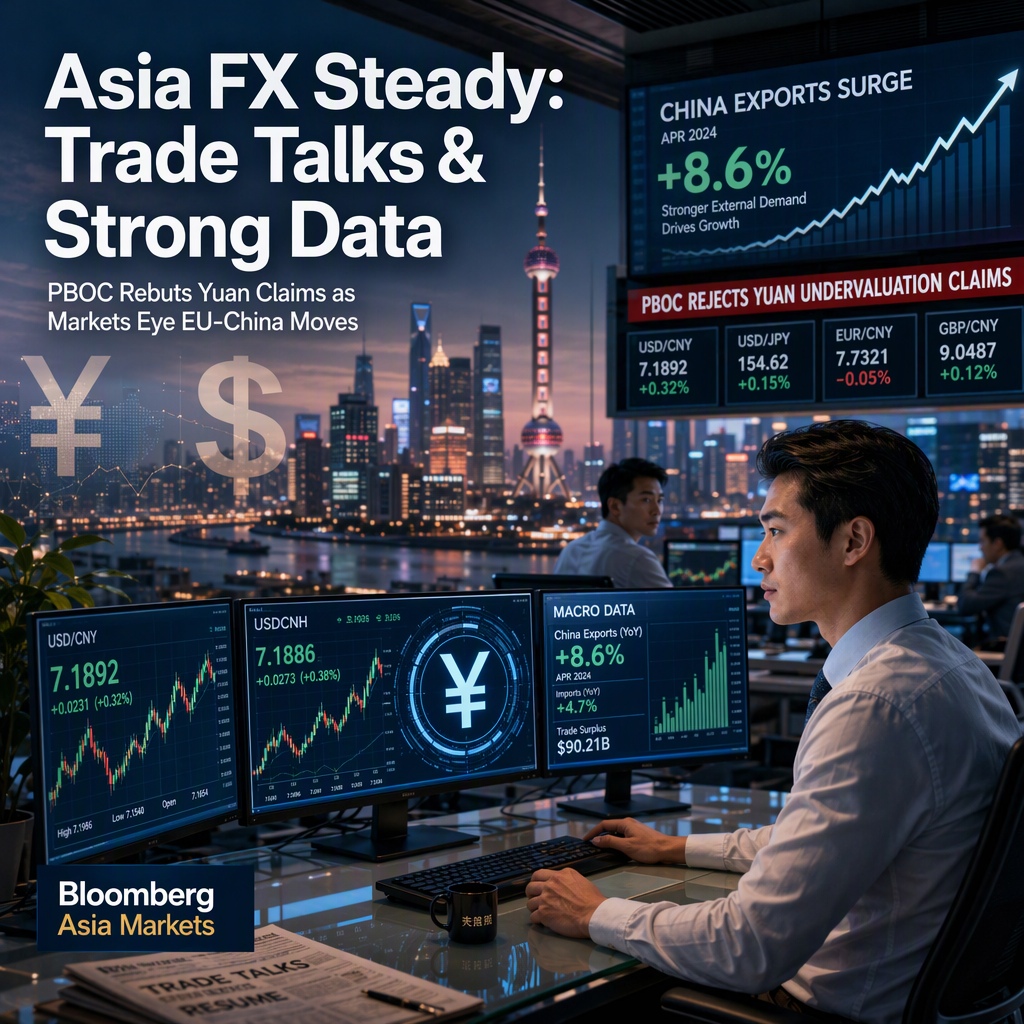
In response to ongoing scrutiny, the People’s Bank of China (PBoC) issued a formal document ahead of the EU-China talks, rejecting claims that the Chinese yuan (CNY) is undervalued and asserting that China has neither the need nor intent to pursue competitive devaluation [1]. The PBoC also pushed back against the IMF’s assessment of the CNY and announced plans to begin reporting some foreign exchange operation data to the IMF in 2027 to enhance transparency [1].
Market implications hinge on the outcome of the EU’s potential trade measures and the PBoC’s stance, with both factors likely to influence Asia FX sentiment in the near term [1].
CONCLUSION
Asia’s resilient macro data and the PBoC’s firm stance on the yuan provide a supportive backdrop for regional currencies, despite global uncertainties. The outcome of EU-China trade negotiations and any resulting policy actions will be critical for future market direction.