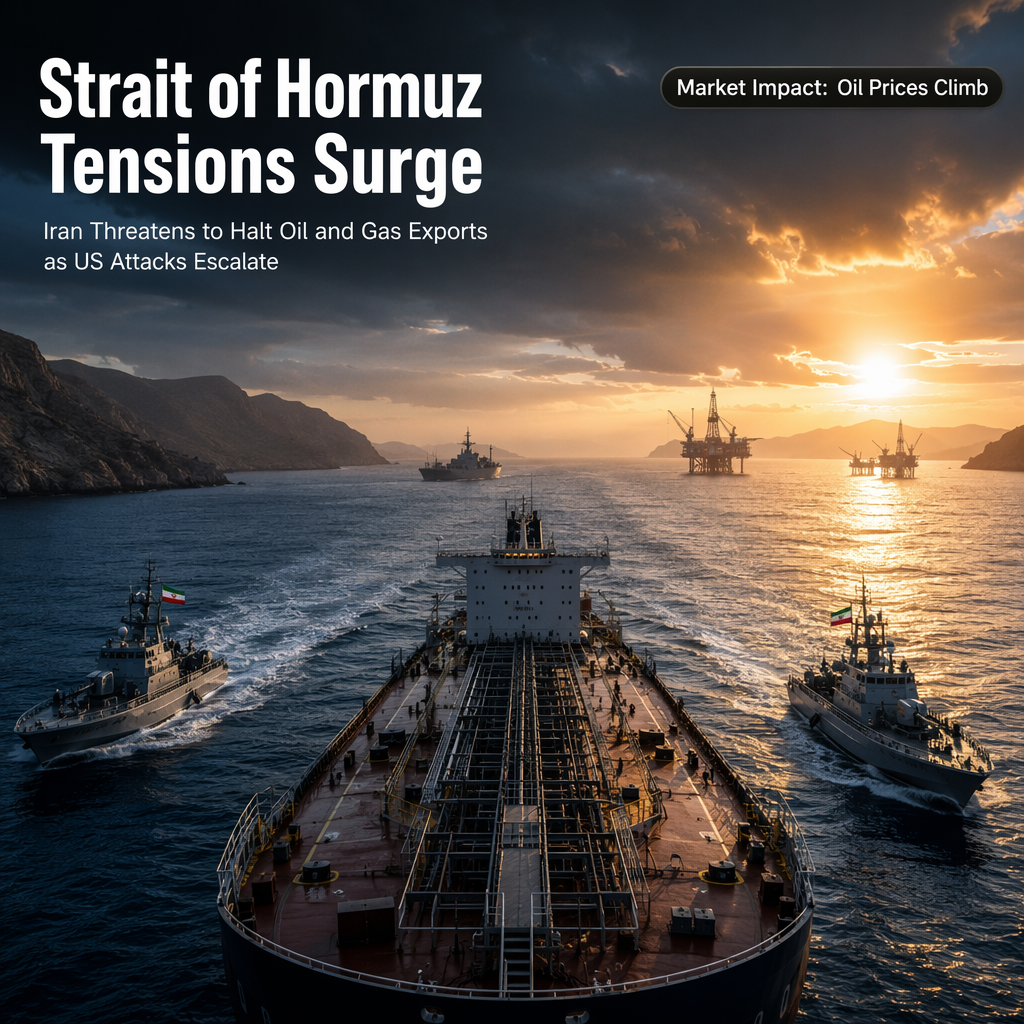
The Iranian Islamic Revolutionary Guards Corps (IRGC) announced that no oil or gas will be exported through the Strait of Hormuz as long as US attacks continue, according to a report from Tasnim news agency on Friday [1]. The IRGC also stated that it launched an attack on a US command centre in Syria's Al-Tanf and targeted a US maritime surveillance radar in Oman [1].
This development has had an immediate impact on the oil market. At the time of writing, the price of West Texas Intermediate (WTI) crude oil rose by 0.37% to $79.22 per barrel [1]. The Strait of Hormuz is a critical chokepoint for global oil and gas shipments, and any threat to its security or accessibility can significantly affect global energy markets [1].
The IRGC's statement signals a potential escalation in regional tensions and raises concerns about the stability of energy supplies. The market reaction, as evidenced by the uptick in WTI prices, reflects heightened anxiety over possible disruptions to oil exports through one of the world's most important maritime routes [1].
No forward-looking statements or analyst opinions were provided in the source article [1].
CONCLUSION
Iran’s IRGC has issued a direct threat to halt oil and gas exports through the Strait of Hormuz in response to ongoing US attacks, immediately pushing WTI oil prices higher. The situation underscores the market’s sensitivity to geopolitical risks in key energy transit regions, with potential for further volatility if tensions escalate.