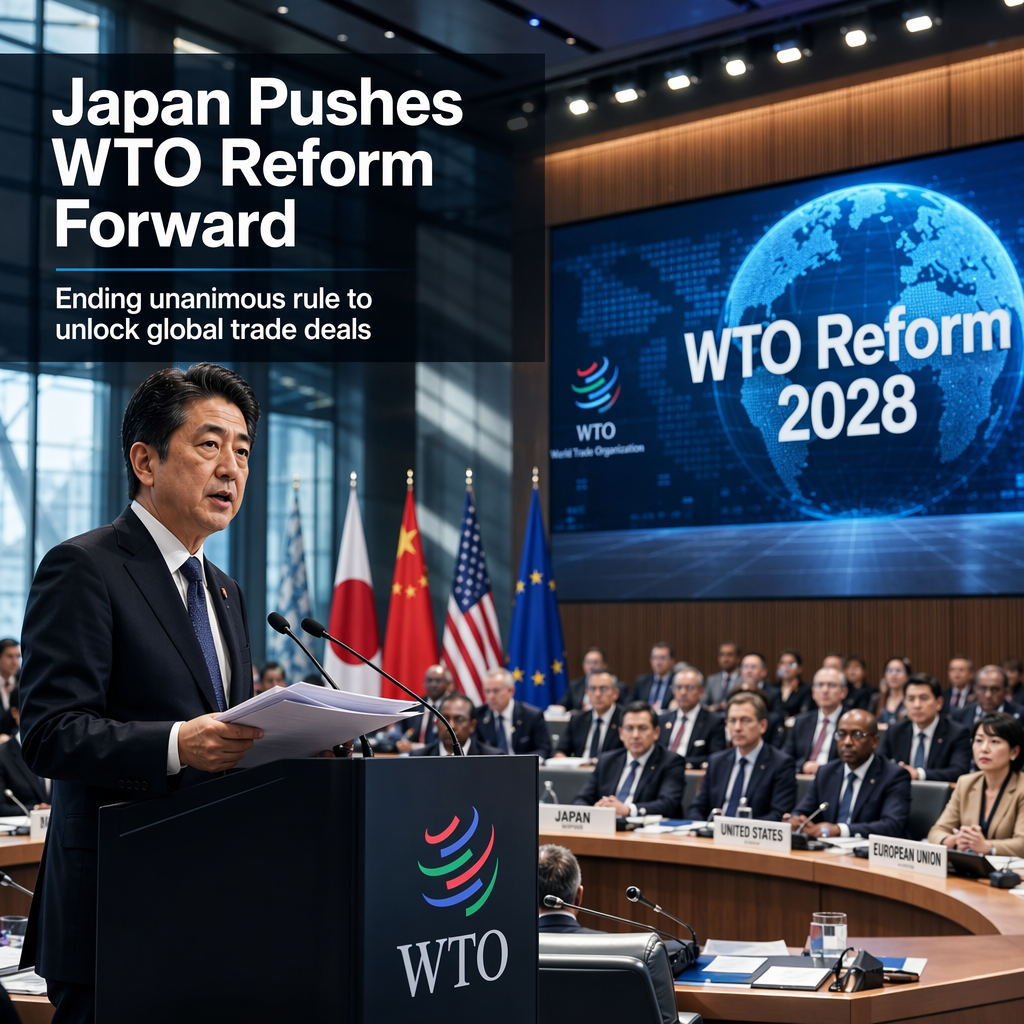
Japan has submitted a set of reform proposals to the World Trade Organization (WTO) aimed at changing the organization's unanimous decision-making process for certain multiparty agreements, in an effort to address the WTO's current dysfunction and facilitate more efficient trade negotiations [1]. The proposals specifically seek to allow some trade deals to be decided without requiring the consent of all member states, a move intended to accelerate decision-making and overcome the frequent stalemates that have hindered progress on key issues [1].
In addition to the proposed rule change, Japan's recommendations include stricter regulations on opaque subsidies, with a particular focus on practices involving China that have been a source of international tension [1]. These measures are designed to enhance transparency and promote fair competition within the global trade system [1].
A Japanese government official emphasized the need for the WTO to adapt to the evolving landscape of international trade, stating, "If we continue to require unanimous consent for every agreement, progress on crucial issues will remain stalled" [1]. The timeline for the adoption of these reforms is set for 2028, providing member states with several years to discuss and negotiate the proposed changes [1].
Japan's initiative reflects a broader movement among WTO members to modernize the organization's rules and ensure its continued effectiveness in resolving trade disputes and facilitating global commerce [1].
CONCLUSION
Japan's proposal to reform the WTO's unanimity rule and regulate opaque subsidies marks a significant step toward modernizing the organization's decision-making process. If adopted, these changes could enhance the WTO's ability to address trade challenges and promote fair competition. The market impact is medium, as the reforms could influence future trade negotiations and dispute resolutions.