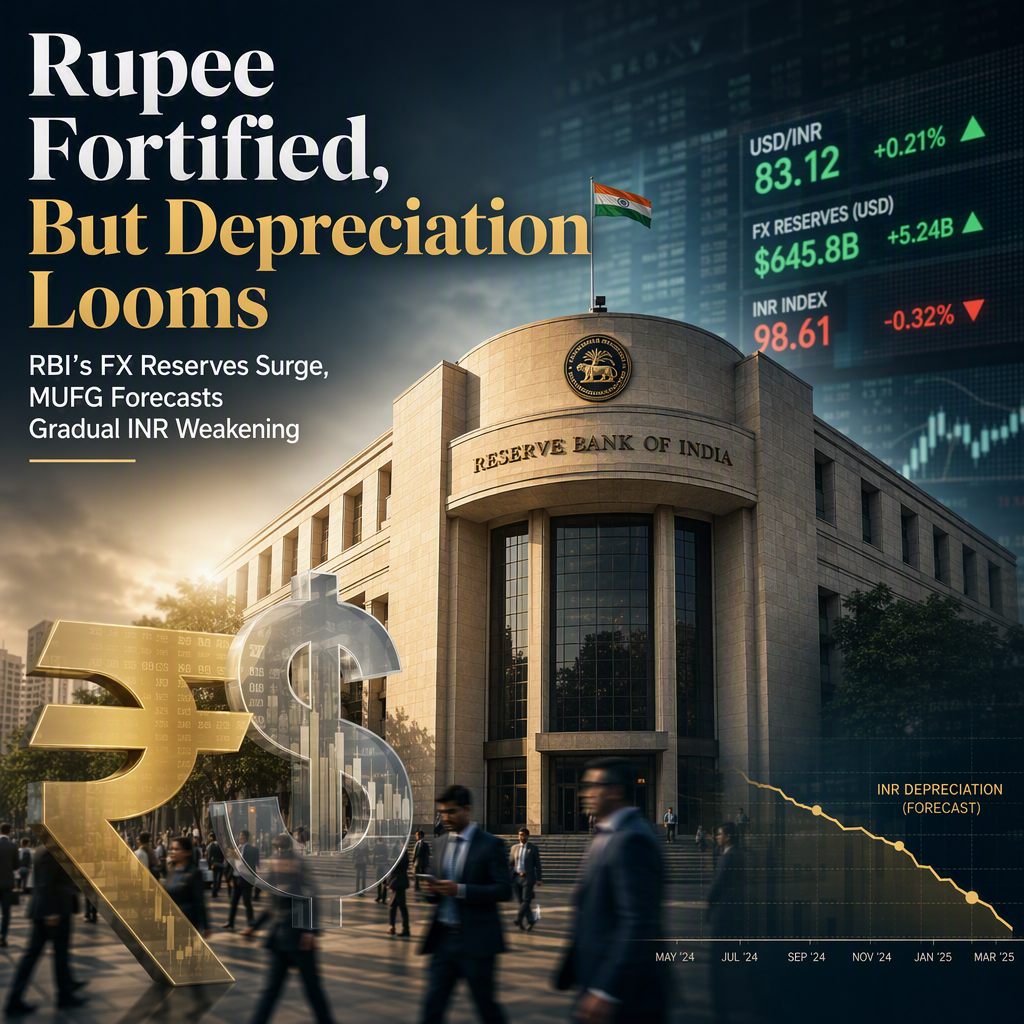
MUFG’s Michael Wan analyzed the Reserve Bank of India's (RBI) foreign exchange measures announced in June 2026, focusing on their impact on the Indian Rupee (INR) and the USD/INR exchange rate. According to Wan, the RBI's initiatives have resulted in a substantial build-up of foreign exchange reserves and liquidity, with the total amount of Dollars attracted through various facilities, including FCNR(B) deposits, reaching a significant US$136 billion as of August 31, and this figure is likely still increasing [1].
The report notes that the RBI’s decision to close the FCNR(B) facility earlier than anticipated was justified in light of the large inflows. Despite these inflows, there was no immediate movement in the USD/INR spot rate, as spot FX transactions only occur if the RBI actively intervenes in the market [1]. The increased reserves provide the RBI with greater capacity to defend the Rupee against weakness, but also introduce challenges related to managing INR liquidity [1].
From a foreign exchange perspective, MUFG believes that the RBI’s measures have significantly reduced the risk of a sharp INR depreciation. However, strong underlying Dollar demand persists, driven by factors such as gross FDI repatriation and a robust IPO issuance pipeline [1]. As a result, MUFG forecasts a gradual rise in USD/INR, projecting the rate to reach 95.50 by December 2026 and 96.50 by June 2027. This outlook implies a steady depreciation of the INR against the Dollar and a modest underperformance relative to other Asian currencies [1].
CONCLUSION
The RBI’s FX measures have strengthened the Rupee’s defenses against sharp depreciation, but MUFG expects a gradual weakening of the INR through mid-2027 due to ongoing Dollar demand. Market participants should anticipate a steady rise in USD/INR, with the Rupee likely to underperform its Asian peers.