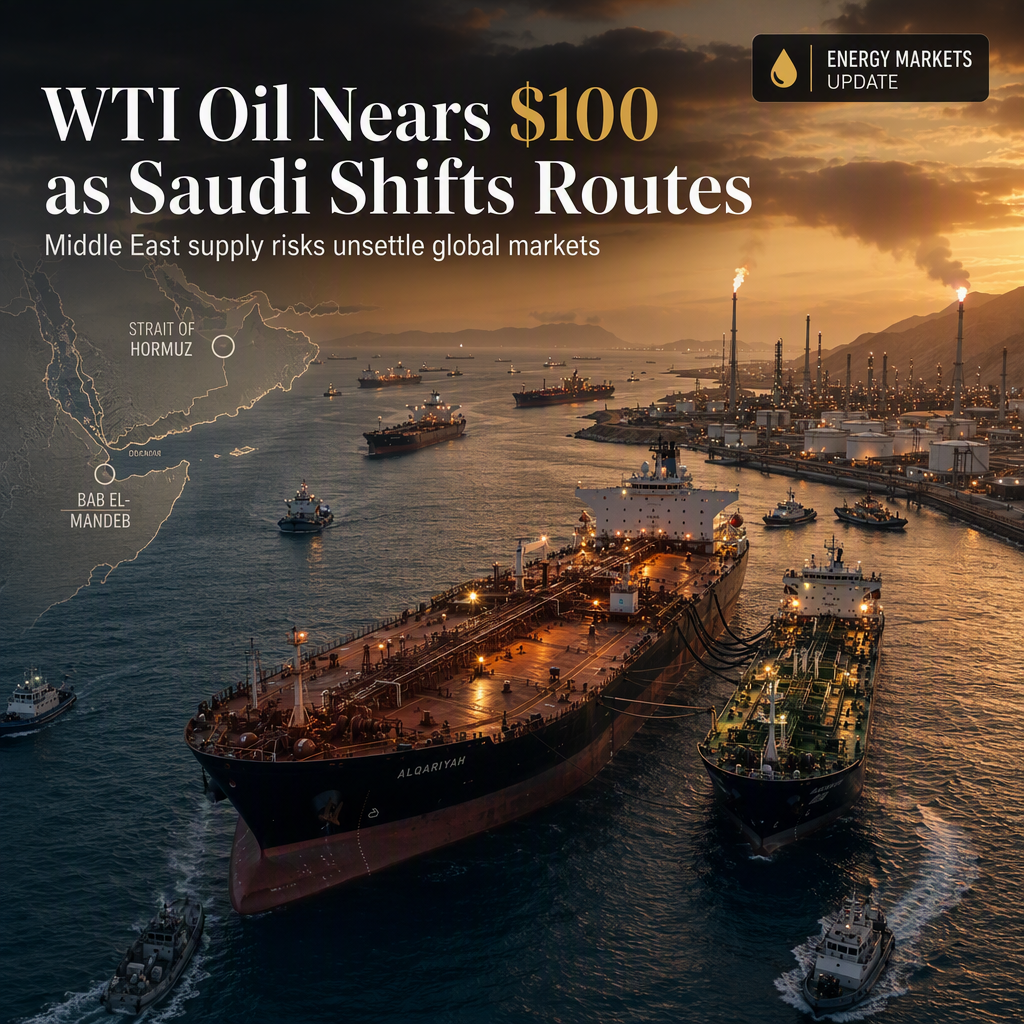
West Texas Intermediate (WTI) oil prices fell to around $100.00 per barrel during European trading hours on Wednesday, following nearly 3% gains the previous day. The decline was triggered by Saudi Arabia offering additional crude cargoes via Oman, a move designed to bypass infrastructure damage caused by recent drone strikes on Saudi Arabia’s critical pipeline to the Red Sea. Saudi state energy producers are arranging ship-to-ship transfers off Oman's Sohar port for Asian refiners, according to sources cited by Reuters [1].
US crude inventories surged by 7.1 million barrels for the week ending September 11, according to American Petroleum Institute (API) figures, sharply contradicting analyst expectations of a 1.6 million barrel drawdown. This unexpected stock build added further downward pressure on oil prices [1]. Despite these bearish factors, crude markets remain vulnerable to a rebound due to ongoing geopolitical friction and supply bottlenecks across the region. Saudi Arabia has reportedly canceled several September deliveries to European buyers after the emergency shutdown of its East-West pipeline, with no set timeline for reopening. Iran-backed Houthi militants have renewed localized attacks, intensifying supply risks [1].
Rabobank’s Senior Macro Strategist Bas van Geffen emphasized that the damage to Saudi Arabia’s pipeline increases Iran’s leverage, forcing Saudi Arabia to pivot back to oil exports through the Strait of Hormuz. He also highlighted additional supply risks stemming from Houthi control of key areas around the Bab el-Mandeb strait and rumors of mines in the waterway, which constrain tanker movements. Rabobank has updated its energy forecasts in response to these escalating risks, noting that prices of crude and refined products are drawing renewed political scrutiny. US Senate Majority Leader Thune stated he is 'open to exploring' a diesel export ban to ease domestic price pressures [2].
Meanwhile, North African output is under strain as Libya’s national oil company halted operations across two major oilfields and a key pumping station due to persistent local protests, further restricting global crude flows [1]. The broader energy market has shifted higher on news of re-escalation, and there is speculation that supply chain disruptions could prompt more countries to deploy military assets to the region [2].
CONCLUSION
WTI oil prices have retreated amid Saudi Arabia’s rerouting of exports and a surprise surge in US crude inventories, but supply risks remain elevated due to ongoing Middle East tensions and disruptions in Libya. Rabobank has updated its energy forecasts, and policymakers are considering measures to address rising prices. The market remains highly sensitive to further geopolitical developments and supply chain disruptions.