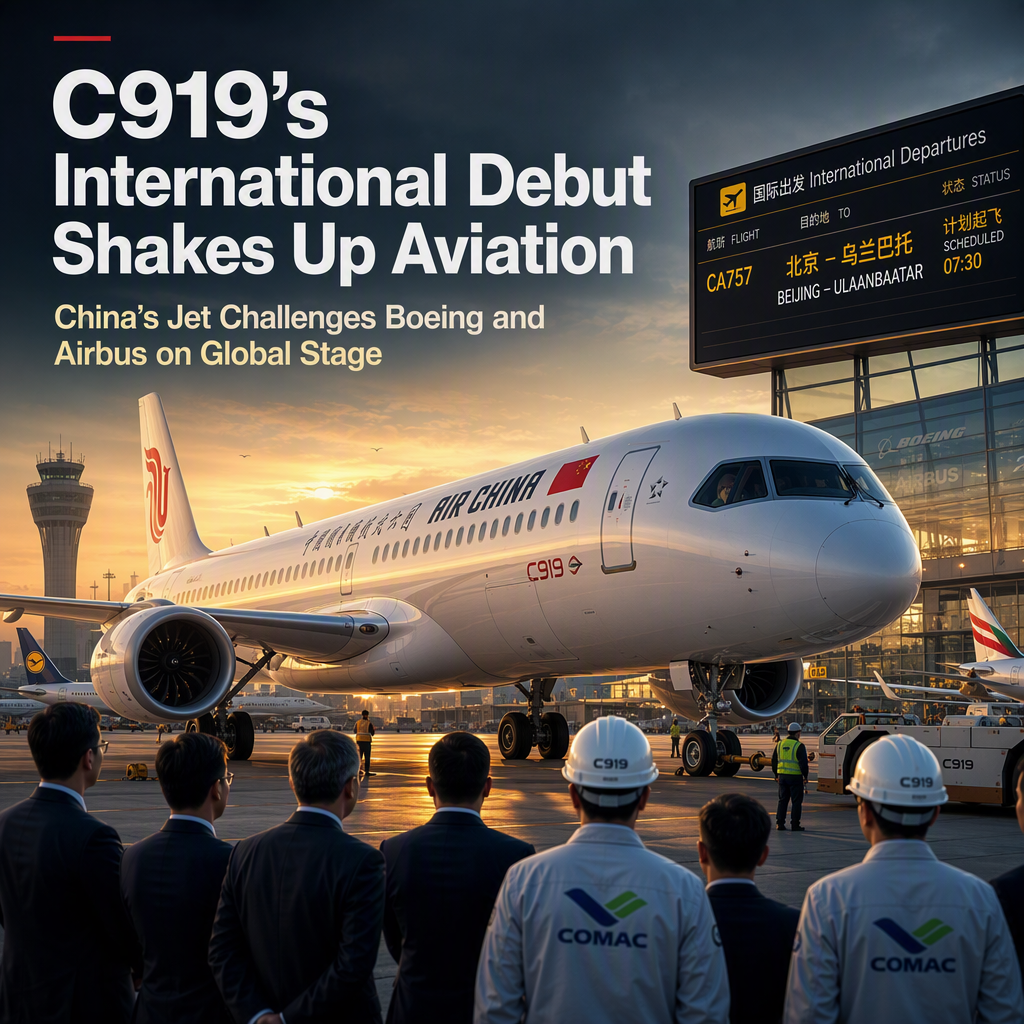
China's domestically produced C919 narrow-body jet, manufactured by the Commercial Aircraft Corporation of China (COMAC), completed its first scheduled international flight on Wednesday, marking a significant milestone in the company's efforts to enter markets traditionally dominated by Boeing and Airbus [1]. Air China is operating a daily round-trip service between Beijing and Ulaanbaatar, Mongolia, using the C919, which is designed to compete directly with the Boeing 737 and Airbus A320 in the global narrow-body segment [1].
Industry analysts are closely monitoring the C919's performance on international routes, emphasizing that reliability and efficiency will be crucial for its adoption by airlines outside China [1]. The aircraft's debut is seen as a critical test of China's ability to compete in the global aviation industry, with potential implications for supply chains, aircraft leasing markets, and future procurement decisions by airlines in Asia and beyond [1].
While no immediate financial data or trading advice was released with the flight announcement, the milestone is expected to generate increased interest in COMAC's aircraft from both domestic and foreign carriers [1]. Market sentiment among aviation observers suggests that successful international operations could lead to more orders, although technical standards and regulatory approvals remain significant hurdles for broader adoption [1].
The C919's operational performance, fuel efficiency, and passenger feedback will be closely watched, as these are critical metrics for airline adoption and financial viability [1]. Technical analysis will focus on the aircraft's avionics, engine performance, and maintenance requirements compared to established models from Boeing and Airbus [1].
CONCLUSION
The C919's first international flight represents a pivotal step for China's ambitions in the commercial aerospace sector. While the market response is cautiously optimistic, the aircraft's future success will depend on its operational reliability and ability to meet international technical standards.