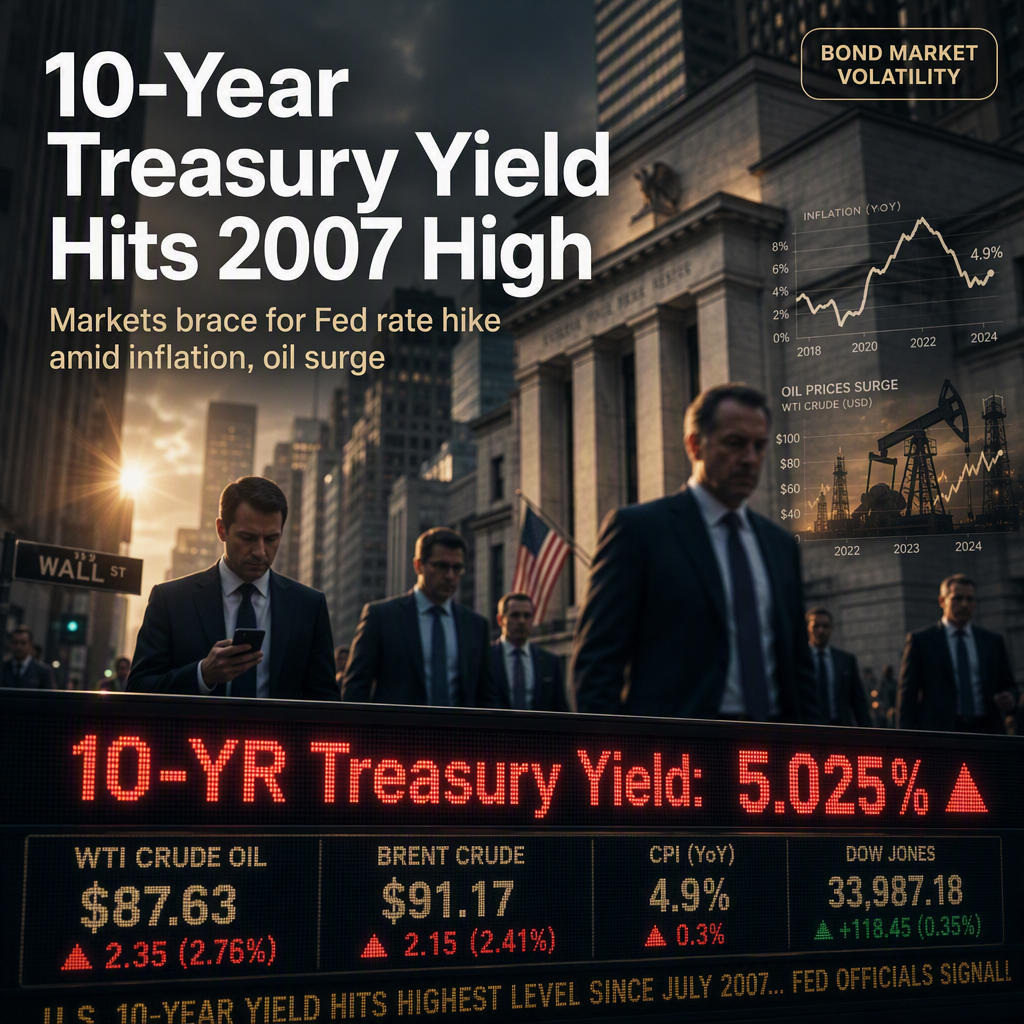
On September 15, 2026, the benchmark 10-year U.S. Treasury yield climbed to 5.025% as of 1:10 a.m. ET, marking its highest level since 2007, amid a deepening sell-off in U.S. government debt ahead of the Federal Reserve's upcoming interest-rate decision [1]. The 10-year yield had briefly crossed the 5% threshold on Monday before retreating slightly [1]. The 30-year Treasury bond yield also rose, up over 5 basis points to 5.384%, while the 2-year Treasury note yield increased by about 4 basis points to 4.68% [1].
This surge in yields comes as markets anticipate a potential quarter-point rate hike by the Federal Reserve, with traders pricing in a more than 92% probability of such a move, following August inflation data that remained well above the Fed's 2% target [1]. According to Jonathan Liang, Standard Chartered's CIO of fixed income and FX, "U.S. 10-year treasuries are highly sensitive to inflation expectations, and with inflation gauges still above the Fed's target of 2%, we believe this tight correlation will likely persist for a while" [1].
Experts also highlighted the strong relationship between oil prices and Treasury yields, noting that elevated crude prices could further push yields higher as energy costs feed into inflation expectations [1]. The one-month rolling correlation between front-month West Texas Intermediate crude and the 10-year Treasury yield has reached 0.96, according to BMO Capital Markets [1]. Steve Sosnick, chief strategist at Interactive Brokers, commented, "Speaking simplistically, higher oil prices lead to higher inflation expectations and vice versa," and added that the current geopolitical drivers behind oil prices and global inflation have tightened this correlation significantly [1]. He further stated, "As long as oil prices remain firm and continue to drift higher, this will add pressure to interest rates" [1].
CONCLUSION
The 10-year Treasury yield's rise to its highest level since 2007 signals heightened market anxiety over persistent inflation and the likelihood of further Fed rate hikes. Elevated oil prices and their strong correlation with Treasury yields suggest continued upward pressure on interest rates. Investors should brace for increased volatility in the bond market as the Federal Reserve's policy decision approaches.