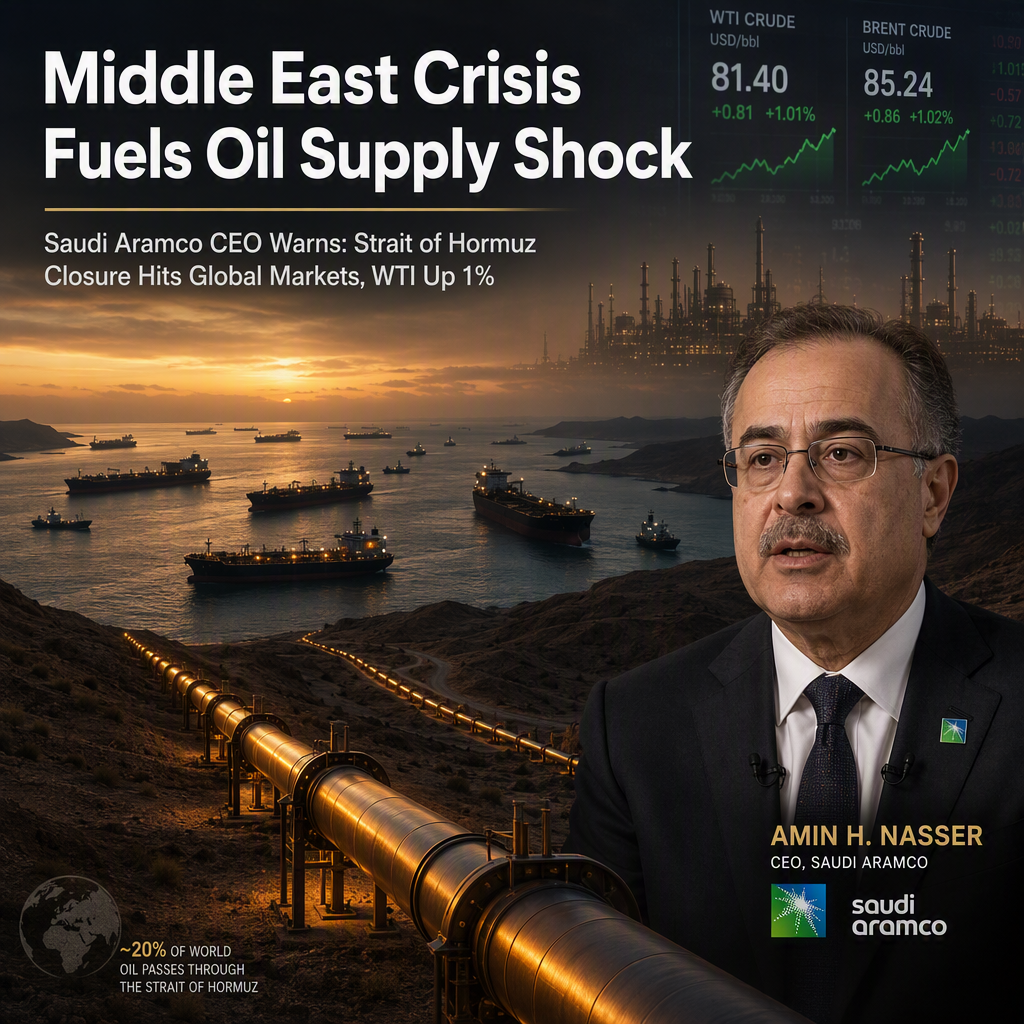
Saudi Aramco CEO Amin H. Nasser stated during the European trading session on June 4, 2024, that the ongoing geopolitical crisis in the Middle East continues to exacerbate what he described as the biggest supply shock in history. Nasser highlighted that an average of 11 million barrels of liquids supply has been removed from the market each day, despite resilient demand, resulting in the loss of over 2.6 billion barrels of oil destined for critical industries globally [1]. He further explained that Aramco's east-west pipeline and global inventories have helped mitigate the supply shock, reducing the net loss to approximately 1.8 billion barrels [1].
Nasser emphasized the severity of the situation, noting that current trade flows through the Strait of Hormuz—a vital passage for nearly 20% of global energy supply—are at just a tenth of pre-conflict levels. He warned that the world continues to lose more than 100 million barrels for each week the strait remains closed, and even if it were reopened today, it would take up to 18 months at an average rate of 2.1 million barrels per day to replenish depleted inventories [1]. The CEO also pointed out a disconnect between futures and physical oil markets, as evidenced by strong refining margins and tightness in refined product markets, with the global refining system heavily stretched [1].
Nasser cautioned that any major unplanned or prolonged refinery shutdowns could place even greater pressure on the global energy supply system. He noted that Asian countries have already been significantly affected, with crude oil imports reduced by around 6 million barrels per day at the peak of the crisis [1]. Despite the challenges, Nasser stated that there has been no material impact on Aramco's capabilities following the July attacks and that the company will continue to utilize all available export routes, including Bab el Mandab, the Suez Canal, the SUMED pipeline, and Hormuz [1].
Market reaction to Nasser's remarks was immediate, with WTI Oil prices rising by 1% to approximately $79.50 at the time of reporting [1]. Nasser expressed hope for a resolution that would restore normal shipping and stabilize the market but cautioned that normalization would take time [1].
CONCLUSION
Saudi Aramco CEO Amin H. Nasser's comments underscore the ongoing severity of the Middle East supply shock and its far-reaching impact on global oil markets. The immediate uptick in WTI Oil prices reflects market sensitivity to supply disruptions and the uncertainty surrounding the reopening of critical shipping routes. While Aramco remains operationally resilient, the outlook for market normalization remains cautious and dependent on geopolitical developments.