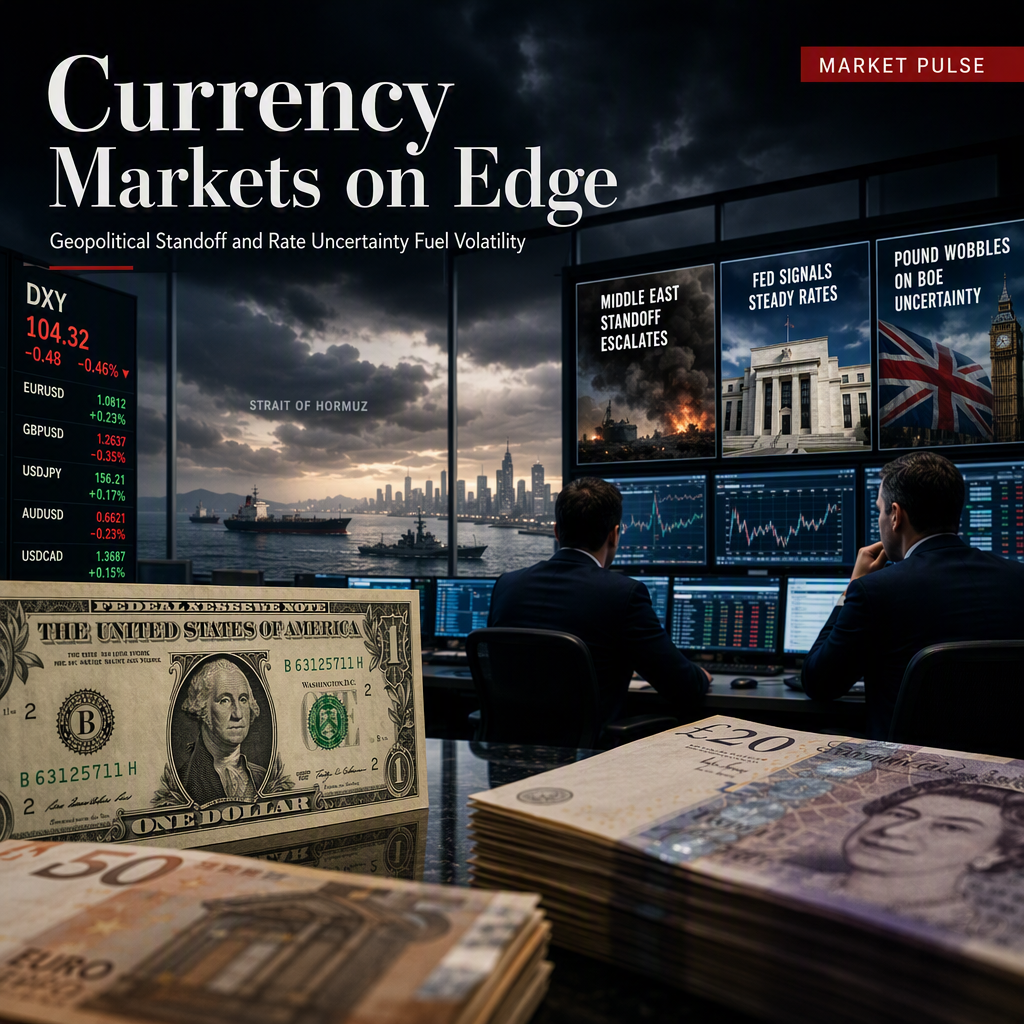
Currency markets are experiencing heightened volatility as geopolitical uncertainty in the Middle East and diverging central bank policy signals weigh on investor sentiment. The US Dollar Index (DXY) is extending gains for the second consecutive day, trading around 100.00 during the European session on Tuesday, supported by mounting tensions following US President Donald Trump’s declaration that his recent proposal to Iran represents a 'last chance' for diplomatic resolution. Trump’s decision to call off a major military strike was accompanied by expectations of formal negotiations to safeguard the Strait of Hormuz and address US concerns regarding Iran’s nuclear program. However, Iranian leadership swiftly rejected the overture, with General Mohsen Rezaei warning that Tehran would not allow a second corridor in the Strait and threatening to target any foreign military forces deployed to enforce such measures [1].
Amid these developments, financial markets are digesting economic policy cues from the US Federal Reserve. The central bank left interest rates unchanged in July, and traders are currently pricing in a 65% probability of a 25-basis-point rate hike at the Fed's upcoming September meeting, according to the CME FedWatch tool [1]. Fed’s Williams reiterated confidence in the current rate policy, emphasizing that it is 'well positioned' to achieve the 2% inflation goal and signaling a steady-hawkish stance. The FXS Fed Sentiment Index fell by 1.47 points to 146.76, indicating a modest pullback in perceived hawkishness but remaining well above the neutral mark, suggesting continued hawkish communication from the Fed [1].
In Europe, the Euro is trading flat against the British Pound, just below 0.8570, after a moderate bounce from last week's lows. The lack of key economic releases in the Eurozone and UK, combined with contradictory reports from the Middle East, is keeping investors cautious. An attack on a cargo vessel in the Gulf was reported earlier Tuesday, further straining the peace process and contributing to market uncertainty [2]. Eurozone and UK final Manufacturing PMI data was revised lower on Monday, with UK factory activity showing the largest correction. Traders are awaiting Services PMI figures on Wednesday and Eurozone Retail Sales on Thursday before making significant directional bets [2].
Analysts at TD see Bank of England (BoE) monetary policy as a source of weakness for the Pound, despite a hawkish 6-3 vote split at the latest BoE decision. Most policymakers remain cautious on interest rates, and TD warns that further paring back of September BoE rate hike pricing could weigh on GBP. They believe the initial Pound rally was overdone and should be faded versus the EUR and USD [2].
CONCLUSION
Geopolitical tensions in the Middle East and cautious central bank policy signals are driving currency market volatility, with the US Dollar holding firm and the Euro and Pound trading cautiously. Market participants are closely watching upcoming macroeconomic releases and central bank decisions for further direction. The overall sentiment remains moderately positive but fragile, with medium market impact expected as uncertainty persists.