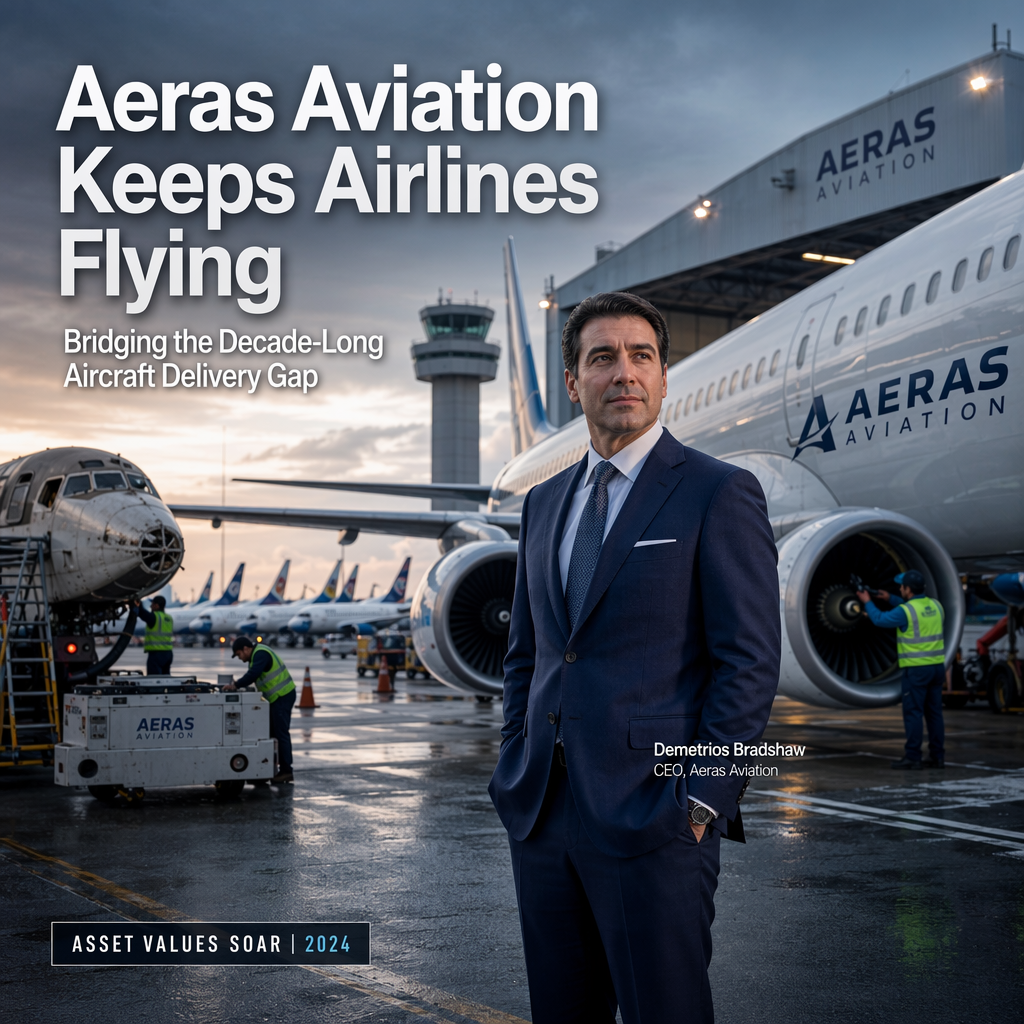
Aeras Aviation, led by founder and CEO Demetrios Bradshaw, is playing a pivotal role in the commercial aviation sector as airlines grapple with a significant gap between aircraft orders and actual fleet availability. Boeing and Airbus currently have a combined order backlog of approximately 15,800 aircraft, equating to nearly ten years of production at present build rates. New narrowbody delivery slots are being quoted as far out as the late 2030s and, for certain configurations, even into the 2040s. This means that airlines placing orders for new A320neo or 737 MAX jets today may not receive them until a child born this year is finishing high school [1].
The situation is further complicated by technical issues affecting existing fleets. A powder-metal flaw in Pratt & Whitney’s geared turbofan engine, which powers a significant portion of the A320neo family, has necessitated accelerated inspections and repairs. At its peak, this issue grounded roughly 38% of the global A320neo fleet, with maintenance shop visits extending from the typical 60-90 days to over 300 days, and the backlog for repairs stretching into 2027 and 2028 [1].
In response to these challenges, Aeras Aviation specializes in sourcing, leasing, repairing, and remarketing engines and aircraft assets, enabling airlines to keep older planes in service while they await new deliveries. The value of serviceable engines and aircraft has surged, with asset and lease rates reaching multi-decade highs as airlines and lessors strive to maintain operational capacity. Bradshaw emphasizes that the most valuable asset in aviation is the one that can fly immediately, underscoring the strategic importance of keeping existing fleets operational [1].
The current market dynamics have shifted the traditional view of aircraft as depreciating assets. Instead, the reuse and extension of 'green time'—the remaining service life on engines and airframes—has become a central strategy for airlines, impacting decisions on fares, capacity, and route planning [1].
CONCLUSION
Aeras Aviation is addressing a critical need in the aviation industry by keeping existing fleets operational amid unprecedented delivery delays and technical challenges. With aircraft and engine values at multi-decade highs, the company's focus on asset management and reuse is reshaping industry economics and strategy. The market impact is significant, as airlines increasingly rely on firms like Aeras to bridge the gap between current demand and future supply.