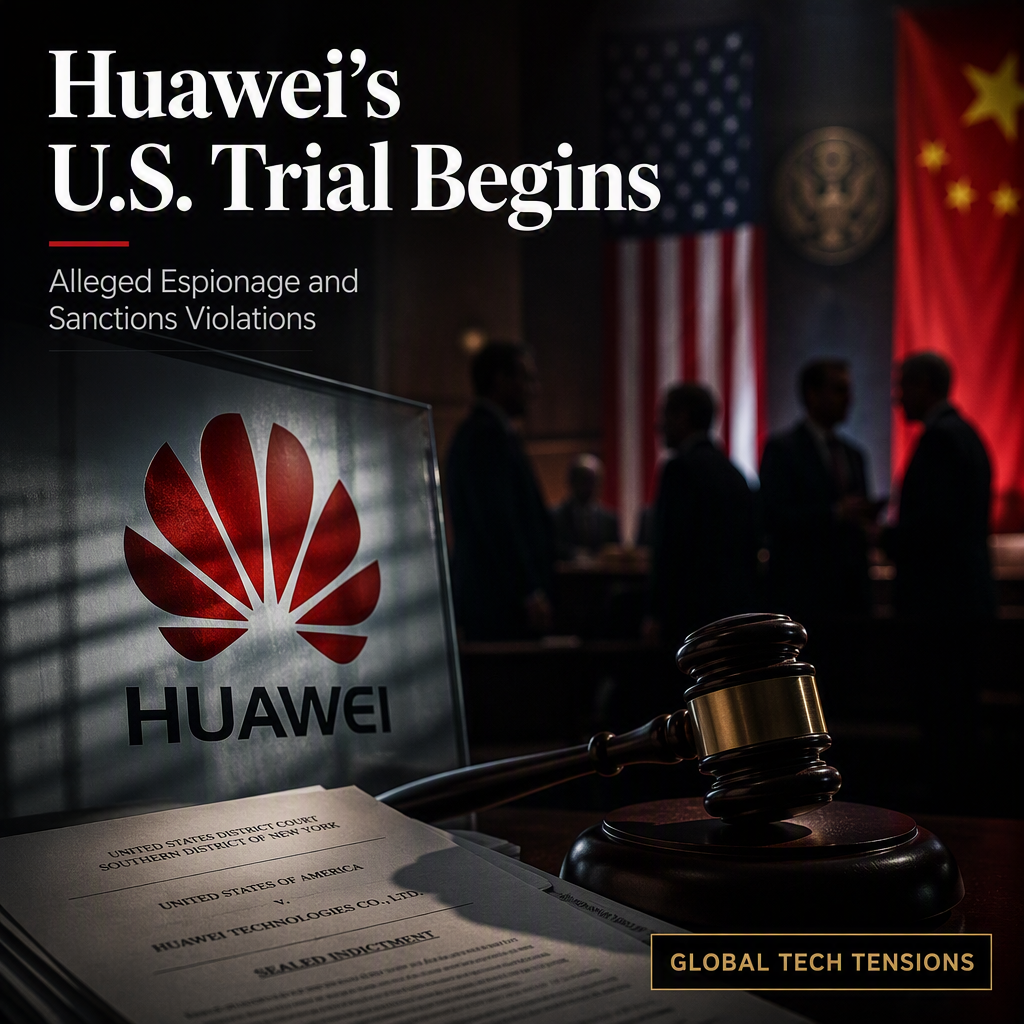
Criminal proceedings against Chinese telecommunications company Huawei began on Wednesday in a U.S. federal court, marking a pivotal moment in a case that has been ongoing for nearly eight years [1]. The prosecution accuses Huawei and its subsidiaries of engaging in a pattern of corporate espionage, including the theft of trade secrets from American firms and deliberate cover-ups of these activities [1]. Additionally, the company is alleged to have violated U.S. sanctions on Iran, further intensifying scrutiny on its global operations [1].
During the opening statements, prosecutor Taylor Stout outlined the U.S. government's case, emphasizing the alleged 'theft, lies, cover-ups' by Huawei [1]. The trial is expected to last several weeks, with both sides set to present extensive evidence and witness testimony [1].
Huawei has categorically denied all allegations, asserting that it has not stolen any trade secrets nor violated any U.S. sanctions on Iran [1]. The company maintains that it operates independently and in compliance with all applicable laws [1].
The outcome of this trial is anticipated to have significant implications for U.S.-China technology competition, global supply chains, and the future of Huawei's business operations outside China [1].
CONCLUSION
The commencement of Huawei's U.S. trial marks a critical juncture in the ongoing tensions between Washington and Beijing. The verdict could reshape the competitive landscape for global technology firms and influence the regulatory environment for cross-border business operations.